Earthquake flood coverage WA: Strengthening Your Home’s Defenses

Washington homeowners face real threats from earthquakes and floods, yet most standard policies leave you exposed. Your home could suffer devastating damage without earthquake and flood coverage in WA, and the financial consequences can be catastrophic.

At Secord Agency – A Trucordia Business, we help homeowners understand what protection actually works. This guide walks you through your coverage options and the steps to secure your home against Washington’s natural disasters.

Why Washington Homeowners Face Real Earthquake and Flood Risk

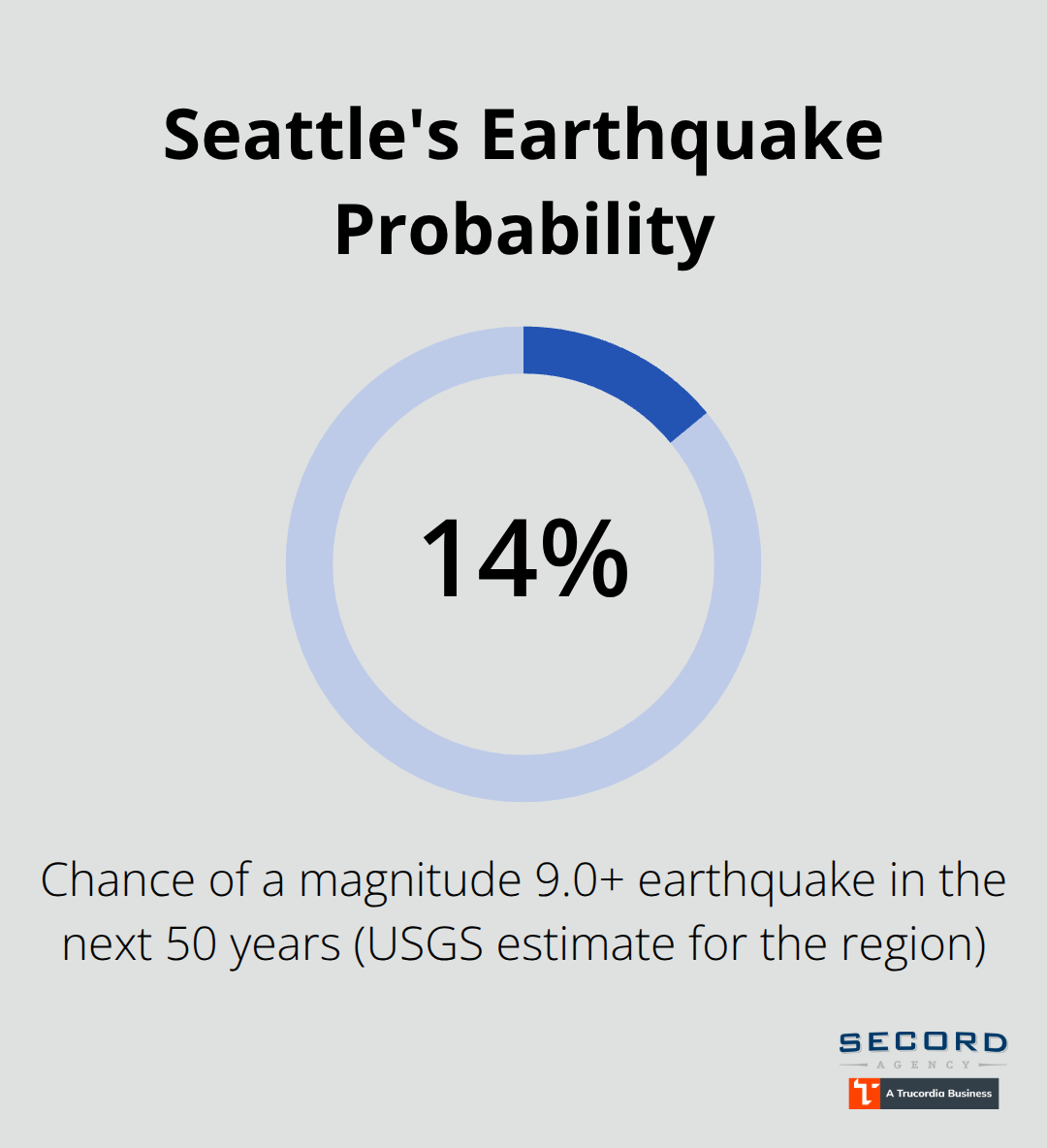
Washington sits on one of the most seismically active regions in the United States. The Washington Geological Survey and USGS confirm that Washington has one of the highest risks of large and damaging earthquakes because of its geologic setting and population distribution. The Cascadia Subduction Zone poses the most significant threat, capable of producing catastrophic earthquakes that would affect the entire state. Beyond seismic activity, Washington homeowners also contend with substantial flood risk. Areas near rivers, streams, and coastal zones experience regular flooding, particularly during heavy rainfall and spring snowmelt. If you live in a flood-prone area, standard homeowners insurance provides zero protection-the National Flood Insurance Program explicitly states that typical homeowners policies do not cover flood damage, which means you must purchase separate flood insurance to have any financial protection at all.

What Your Standard Policy Actually Leaves Out

Standard homeowners insurance covers fire, theft, and wind damage, but it completely excludes earthquake and flood damage. Your policy will not pay a single dollar if an earthquake damages your foundation, cracks your walls, or collapses your roof. Similarly, if floodwater enters your home and destroys your belongings, furniture, and structural elements, your standard policy denies the claim. The Washington Office of the Insurance Commissioner confirms that earthquake insurance requires a separate policy with its own deductible, typically 10% or higher of your home’s insured value. In high-seismic regions like Washington, these deductibles can be substantial-meaning you pay a larger amount out of pocket before coverage kicks in. Flood insurance through the National Flood Insurance Program operates independently, with its own premiums and deductibles based on your property’s flood zone designation and elevation. The financial gap between what you think you’re covered for and what you actually are covered for can reach hundreds of thousands of dollars in earthquake or flood damage.

The Real Cost of Being Uninsured

A moderate earthquake causes structural damage to a typical Washington home that easily exceeds $100,000 in repairs. Flood damage averages even higher in affected areas, with water damage, mold remediation, and structural repairs often totaling $50,000 to $250,000 or more (depending on severity and duration of standing water). Without earthquake or flood insurance, you absorb these costs entirely from savings, loans, or delayed repairs that compound damage over time. Properties in flood zones without flood insurance become difficult to refinance or sell, as lenders require proof of coverage. The longer you wait to secure coverage, the higher your premiums may become, and you cannot file a claim for damage that occurred before your policy took effect.

Why Waiting Creates More Problems

Delaying your decision to purchase earthquake and flood coverage leaves your home vulnerable during the months or years you remain unprotected. Each season brings new weather patterns and seismic activity that could trigger a claim you cannot file. Homeowners who postpone this protection often face higher premiums when they finally apply, as insurers adjust rates based on current risk assessments and market conditions. Additionally, if you experience any water damage or seismic events before your policy activates, you have no recourse-insurance companies will not cover pre-existing damage or events that occurred before your coverage began.

Understanding what your current policy excludes is the first step toward protecting your home. The next section walks you through the specific coverage options available to Washington homeowners and how each type of insurance works to fill these dangerous gaps.

Your Coverage Options in Washington

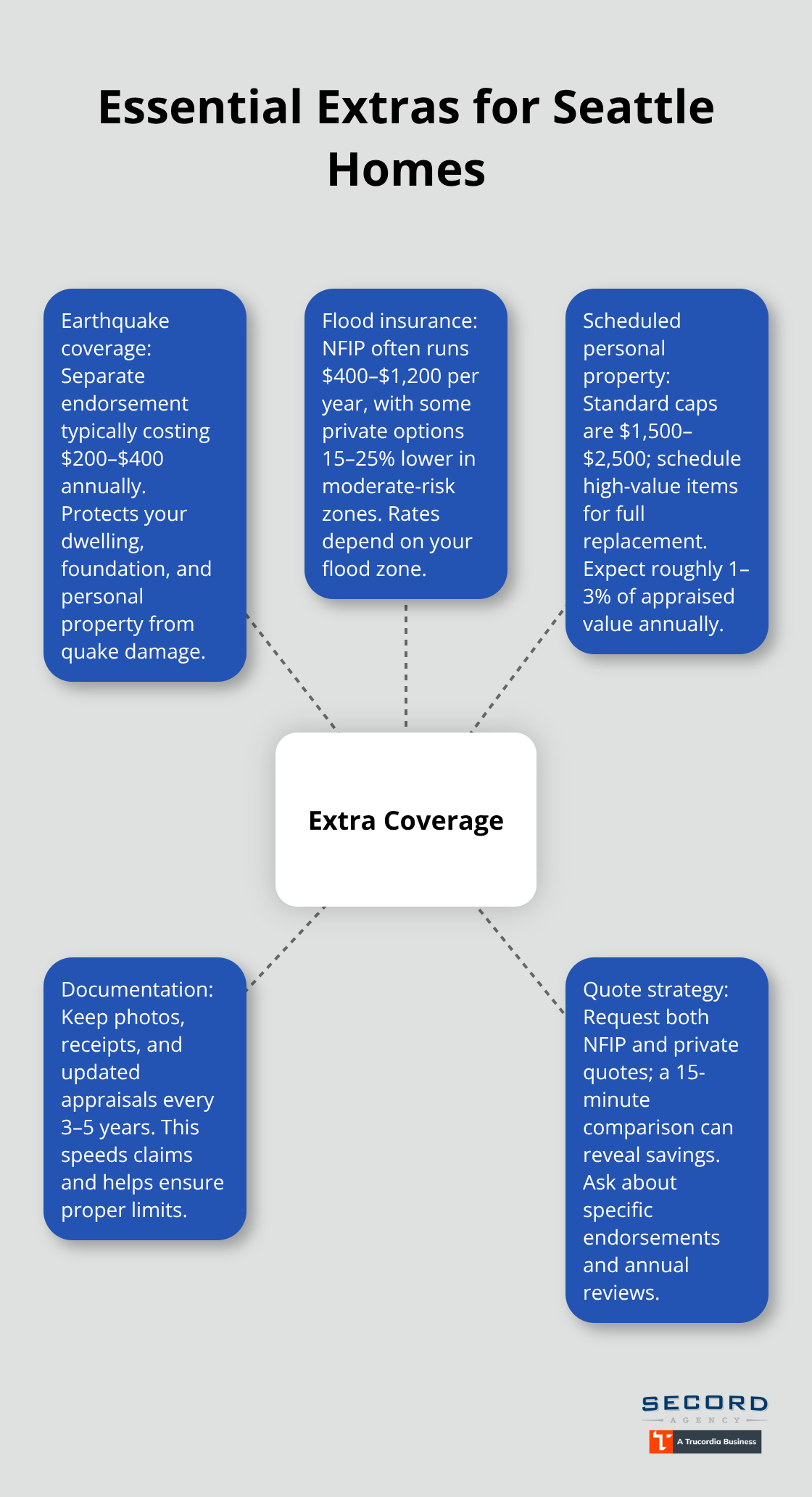
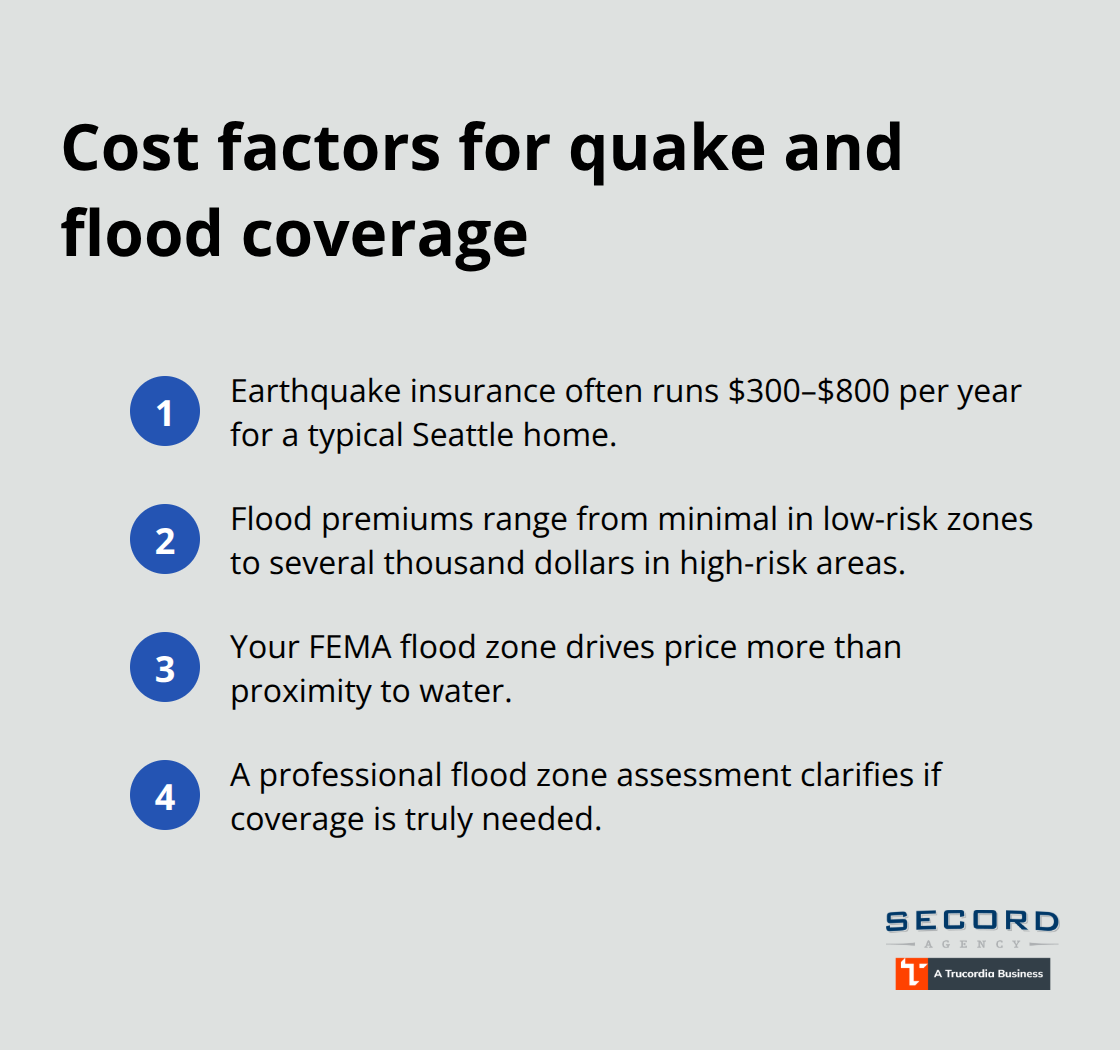
Earthquake insurance and flood insurance operate as completely separate products from your standard homeowners policy, and understanding how each one works is essential before you purchase. Earthquake insurance covers structural damage to your home caused by seismic activity, including foundation cracks, wall damage, roof collapse, and damage to attached structures like garages. The Washington Office of the Insurance Commissioner reports that earthquake deductibles in Washington typically range from 10% to 25% of your home’s insured value, meaning if your home is insured for $500,000, you could pay $50,000 to $125,000 out of pocket before coverage begins. Wood-framed homes generally qualify for lower premiums than brick or masonry construction because they flex better during earthquakes and sustain less damage. When you receive a quote, insurers will assess your home’s construction type, year built, foundation condition, and proximity to active faults.

Percentage chart showing common earthquake insurance deductibles for Washington homeowners - Earthquake flood coverage WA

The National Flood Insurance Program handles flood coverage separately, and this insurance pays for water damage from heavy rain, river overflow, storm surge, or rapid snowmelt-but not from backed-up sewers or groundwater unless you purchase additional endorsements. Flood insurance premiums depend on your property’s flood zone designation and elevation relative to the base flood elevation; homes in high-risk flood zones pay substantially more than those in moderate or low-risk areas. If you have a mortgage in a flood-prone area, your lender will require you to purchase flood insurance as a condition of the loan. Private insurers in Washington now offer alternatives to the National Flood Insurance Program through what’s called the private flood insurance market, and these policies sometimes provide broader coverage or lower deductibles than government programs.

What Earthquake Insurance Actually Covers

Earthquake insurance reimburses you for repairs to your home’s structure, built-in appliances, and permanently attached systems that earthquakes damage directly. This includes foundation repairs, wall reconstruction, roof damage, chimney collapse, and damage to electrical, plumbing, and HVAC systems. However, earthquake policies exclude certain items: they do not cover contents like furniture, electronics, or clothing unless you purchase an optional contents endorsement, and they do not cover damage from fires that start after the earthquake (though your standard homeowners policy may cover that fire). Most earthquake policies also exclude damage from tsunamis or landslides that seismic activity triggers, so if you live near the coast or on steep terrain, you need to ask about these specific hazards separately.

Flood Insurance Details That Matter

Flood insurance covers water damage to your home’s structure and contents (if you purchase the contents option), but it excludes damage from sump pump failure, sewer backup, or water that seeps through basement walls over time. The National Flood Insurance Program caps coverage at $250,000 for the structure and $100,000 for contents, which may not be enough for high-value homes in Washington. Private flood insurers sometimes offer higher limits, and comparing these options with an independent agent who understands Washington’s specific flood zones will save you money and ensure adequate protection.

How Construction Type Affects Your Rates

Your home’s construction materials significantly influence what insurers charge for earthquake coverage. Wood-framed homes typically cost less to insure because wood absorbs seismic energy better than rigid materials like brick or concrete block. Homes built before modern building codes took effect (especially those constructed before the 1970s) often face higher premiums because they lack the structural reinforcements that newer homes include. Insurers will examine your foundation type, roof attachment method, and whether your home sits on soft soil or bedrock-all factors that determine how much shaking your structure can withstand.

Comparing Private and Government Flood Programs

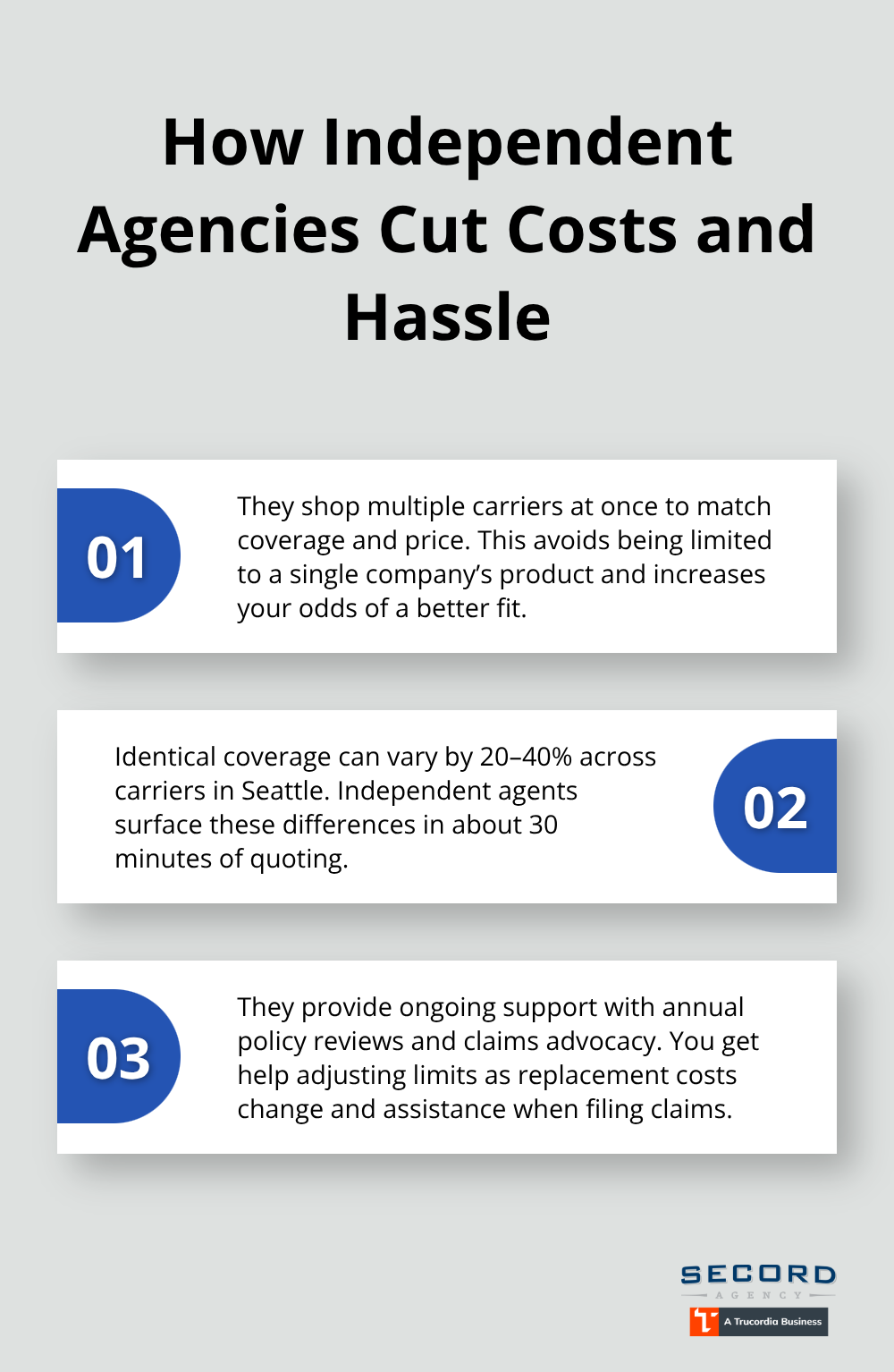
The National Flood Insurance Program provides the baseline flood coverage most homeowners purchase, but private flood insurers have expanded their presence in Washington over the past several years. Private policies sometimes offer higher coverage limits, lower deductibles, or faster claims processing than the government program. An independent insurance agent can compare quotes from multiple carriers (both government and private) to show you which option fits your property and budget best. This comparison takes the guesswork out of choosing between programs and helps you avoid overpaying for coverage you don’t need or underpaying for protection that leaves gaps.

Now that you understand what earthquake and flood insurance actually covers, the next step involves assessing your specific property’s risk level and comparing quotes from multiple carriers to find the right protection for your situation.

Securing Your Home Through Smart Assessment and Comparison

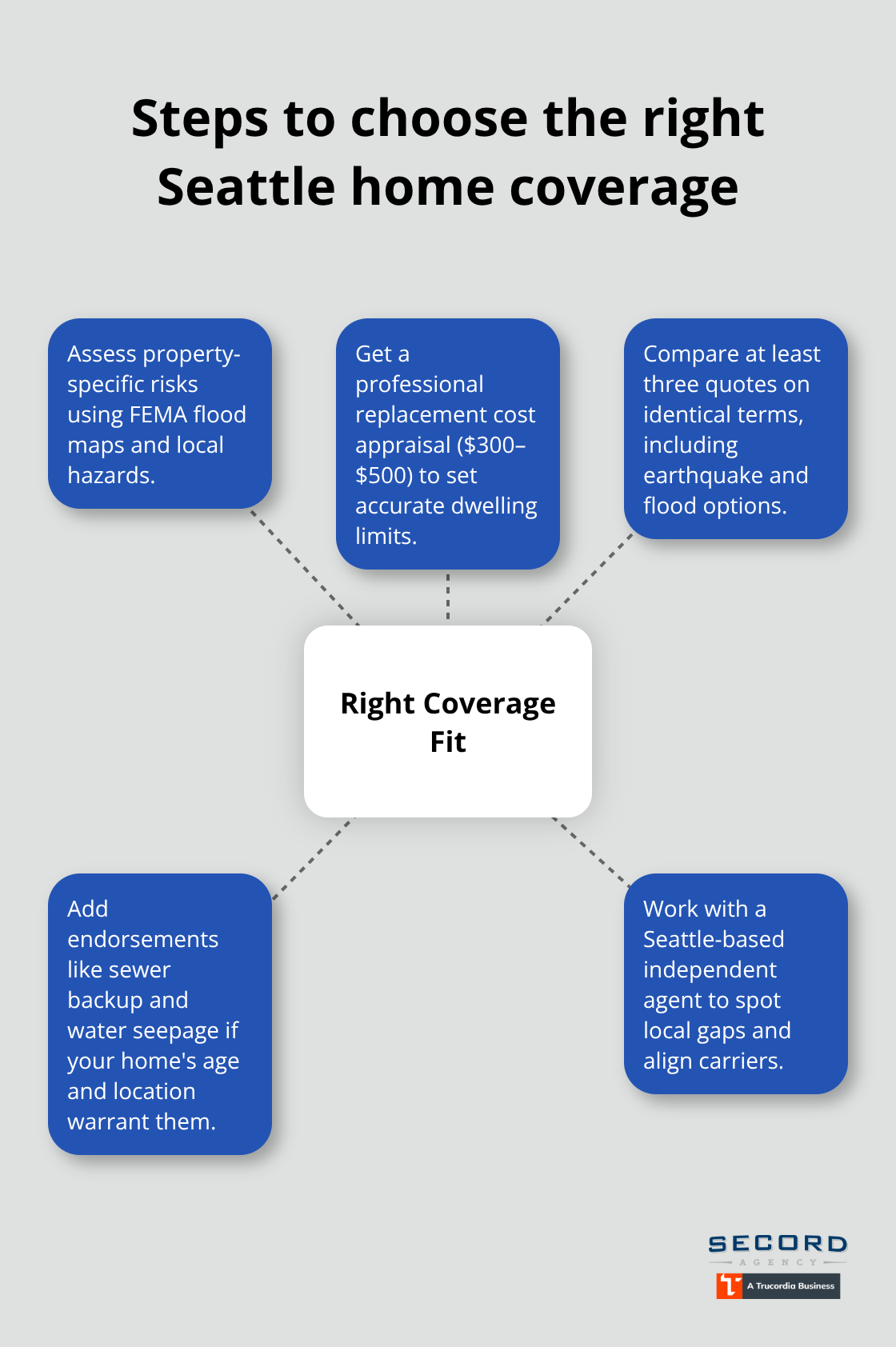
Identify Your Property’s Specific Risk Level

Start by determining exactly what risks your property faces. The Washington Geological Survey maintains detailed earthquake hazard maps showing proximity to active faults, and flood maps identify your property’s specific flood zone designation. Visit the Washington Geologic Hazard Planning Map to see whether your home sits in a high-risk earthquake zone, moderate-risk area, or low-risk zone-this directly affects your premiums and deductible options. For flood risk, check FEMA’s Flood Map Service Center to learn your property’s base flood elevation and zone designation; homes in high-risk zones (marked as A or AE) face mandatory flood insurance requirements if you have a mortgage, while moderate-risk properties (zone X with shading) may still benefit from coverage depending on your risk tolerance.

Compare Quotes From Multiple Carriers

Once you know your risk level, contact multiple carriers for quotes rather than accepting the first offer. We recommend getting quotes from at least three different insurers because earthquake and flood premiums vary dramatically based on each carrier’s underwriting criteria. Some insurers price wood-frame homes significantly lower than others, and private flood carriers sometimes undercut the National Flood Insurance Program by 20-40% for the same coverage. When comparing quotes, ensure you’re looking at identical deductibles and coverage limits across all options-a $50,000 deductible changes the math entirely compared to a $10,000 deductible, even if the premium appears lower.

Document your home’s construction details (year built, foundation type, square footage, roof material) before requesting quotes so you receive accurate pricing rather than estimates that change after inspection. This preparation saves time and produces reliable comparisons across carriers.

Choose the Right Deductible for Your Situation

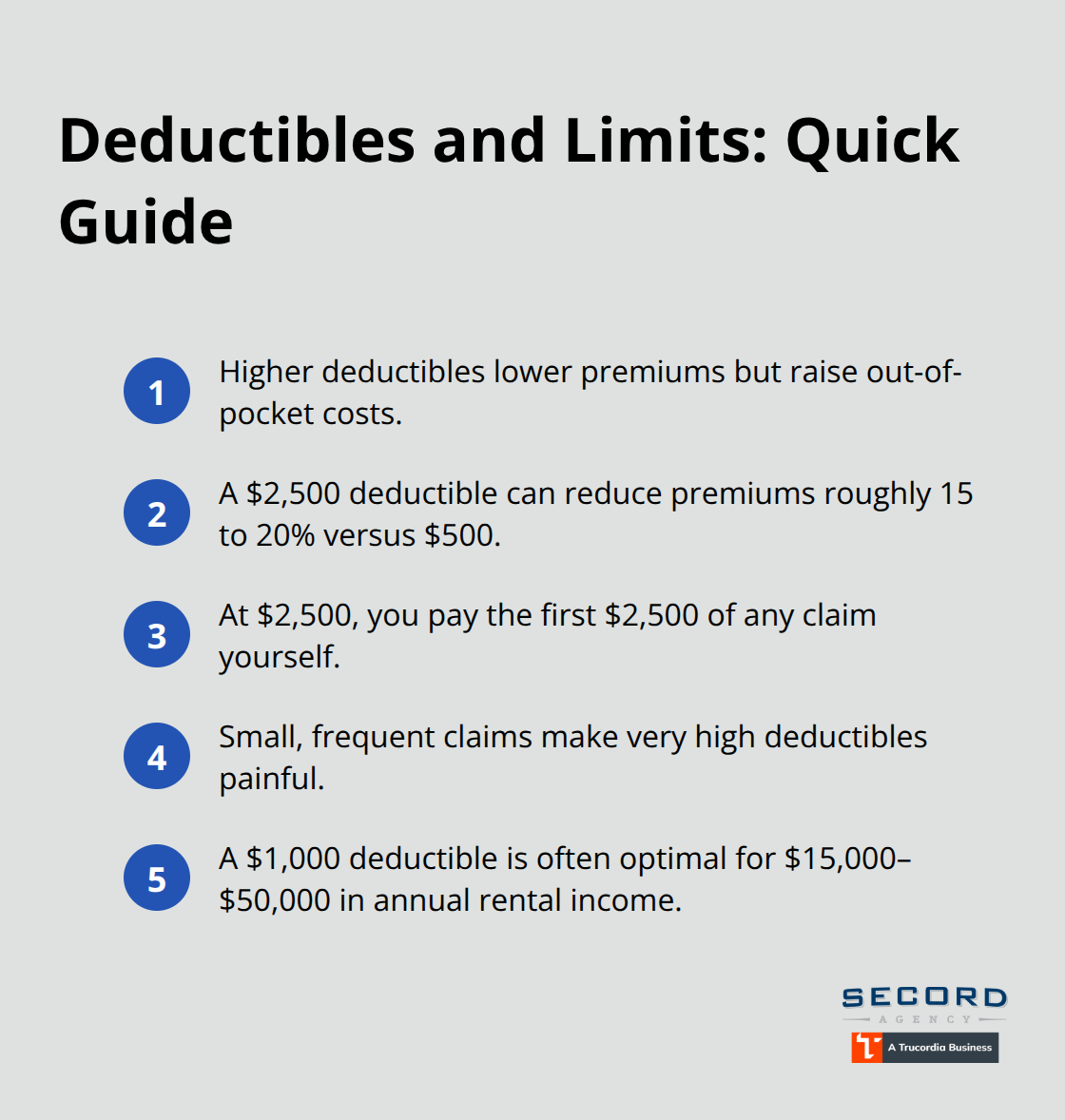
Review your existing homeowners policy immediately to confirm what it excludes, then decide whether a high deductible (which lowers your premium but requires more out-of-pocket spending after a disaster) or a lower deductible makes sense for your financial situation. High deductibles work best if you have substantial savings to cover repairs; low deductibles cost more monthly but protect you if damage is moderate rather than catastrophic. Your financial capacity determines which option serves you better.

Schedule Annual Policy Reviews and Home Assessments

After purchasing earthquake and flood coverage, schedule a policy review annually and especially after major home improvements, property value increases, or life changes like retirement. Insurance companies adjust rates regularly, and your coverage limits may no longer match your home’s current replacement cost-homes in Washington appreciate faster than many owners realize, meaning your policy from three years ago could leave you significantly underinsured today. Combine your policy review with a home hardening assessment to strengthen your property’s resilience against seismic activity and water damage.

Final Thoughts

Waiting to purchase earthquake and flood coverage WA leaves your home exposed to financial ruin that standard homeowners insurance will not cover. Washington’s seismic activity and flood risk strike homes every year, and homeowners without proper protection face devastating losses that can reach $100,000 to $250,000 or more in repairs. The cost of remaining uninsured far exceeds the monthly premiums you’ll pay for earthquake and flood insurance.

Your next step is straightforward: assess your property’s risk level using the Washington Geological Survey maps and FEMA flood zone tools, then request quotes from multiple carriers to compare your options. We at Secord Agency – A Trucordia Business work with multiple carriers to find coverage that matches your property’s specific needs and your budget. Our team provides personalized guidance to help you choose the right deductibles, coverage limits, and policy options without confusion.

Contact us today to get started with a quote and protect your home against Washington’s natural disasters.

Earthquake flood policy WA: Protecting Your Home From Natural Disasters

Washington homeowners face real threats from earthquakes and flooding, yet most standard insurance policies leave these disasters uncovered. An earthquake flood policy in WA is essential protection that many residents overlook until it’s too late.

At Secord Agency – A Trucordia Business, we help homeowners understand what coverage actually protects their property and finances when natural disasters strike. This guide walks you through your options so you can make informed decisions about your home’s safety.

What Makes Earthquakes and Floods Different Threats in Washington

Earthquake Risk in the Cascadia Region

Washington sits in one of the most seismically active regions in the country. The Cascadia Subduction Zone, which runs along the coast, poses a significant earthquake risk that most homeowners underestimate. A major earthquake in this zone could cause widespread damage across the state, yet many residents assume their standard homeowners policy covers this peril-it doesn’t. The Cascadia region also experiences volcanic activity and landslides, which add complexity to your protection strategy.

Why Floods Strike Outside High-Risk Zones

Floods present an equally serious but different threat than earthquakes. Nearly one-third of flood insurance claims come from properties outside high-risk zones according to FEMA, meaning your home doesn’t need to sit in a designated flood plain to face water damage. Just one inch of water inside your home can cause more than $25,000 in damage according to the National Flood Insurance Program.

Hub-and-spoke visual showing why flood risk in Washington extends beyond mapped high-risk zones. - Earthquake flood policy WA

In Washington specifically, both seasonal heavy rains and rapid snowmelt create flooding conditions that standard homeowners policies explicitly exclude.

The Coverage Gap in Standard Policies

Your existing homeowners insurance covers wind, hail, lightning, and wildfires-but it absolutely does not cover earthquakes or floods. This gap catches thousands of Washington homeowners off guard every year. If an earthquake damages your foundation, cracks your walls, or causes your home to shift on its foundation, your standard policy pays nothing. If a flood inundates your basement, damages your furnishings, or forces you to relocate temporarily, you remain uninsured.

Understanding Your True Risk

FEMA data shows people in flood plains are about 27 times more likely to experience a flood during a 30-year mortgage than to experience a fire, yet homeowners often prioritize fire coverage and ignore water risk. This statistic reveals how most residents misalign their protection with actual threats. The solution requires separate policies: earthquake insurance and flood insurance through the National Flood Insurance Program or private carriers. These distinct coverages address what standard homeowners policies explicitly exclude, leaving you exposed without them.

What Earthquake and Flood Insurance Actually Cover

How Earthquake Insurance Protects Your Home

Earthquake insurance operates as a completely separate product from your standard homeowners policy and protects your home’s structure, attached structures like garages, and personal property inside from earthquake damage. The coverage limits and deductibles vary significantly by insurer, and most earthquake policies in Washington carry deductibles of 10 to 25 percent of the home’s insured value. If your home is insured for $500,000 and your deductible is 15 percent, you pay $75,000 out of pocket before insurance kicks in. This high deductible reflects the catastrophic nature of seismic events and the financial risk insurers face when covering widespread damage across entire regions.

Three key points explaining how earthquake insurance deductibles work for Washington homeowners.

Understanding Flood Insurance Through NFIP

Flood insurance through the National Flood Insurance Program covers damage to your home’s structure, foundation, and personal property from overflow of inland or tidal waters, heavy rain, and rapid snowmelt. NFIP policies currently insure nearly $1.3 trillion in coverage across about 4.7 million policyholders nationwide, and in Washington, this protection is available through FEMA’s program or private insurers. The critical detail most homeowners miss: NFIP policies include a standard 30-day waiting period before coverage becomes effective, so waiting until storm season arrives means you cannot purchase protection in time.

NFIP Versus Private Flood Insurance

Choosing between NFIP and private flood insurance requires comparing actual quotes and understanding your specific risk level. NFIP premiums are based on flood risk determined by FEMA flood maps, and you can obtain a free quote through the NFIP Quote Tool to see exact costs for your property. Private insurers often provide competitive alternatives with different deductible options and coverage limits tailored to your home’s value. The comparison process takes time, but the savings and customization options make it worthwhile for most Washington homeowners.

Coverage Enhancements Worth Considering

Additional endorsements can strengthen your protection significantly. Sump pump backup coverage for flood policies protects you if your sump pump fails during heavy rain, while loss of use coverage reimburses temporary housing if a flood forces you to evacuate. For earthquake protection, some insurers offer endorsements that reduce your deductible if you retrofit your home with cripple wall bracing and other earthquake-resistant upgrades. These enhancements address specific vulnerabilities in your property and can make the difference between partial recovery and full financial protection.

Moving Forward With Your Coverage Decision

Standard NFIP flood insurance and earthquake insurance from private carriers fill the gaps your homeowners policy leaves open, but the specific terms, limits, and deductibles you select determine whether you achieve true protection or remain partially exposed. Your next step involves assessing your property’s actual risk level and comparing quotes from multiple carriers to find the right combination of coverage and cost for your situation.

Choosing the Right Coverage for Your Washington Home

Determine Your Flood Risk First

Start with FEMA’s Flood Map Service Center to identify whether your property sits in a designated high-risk zone or moderate-to-low risk area. This free tool provides the flood zone designation that directly affects your insurance requirements and premiums. If you have a mortgage from a government-backed lender and your home is in a high-risk zone, flood insurance becomes mandatory. However, FEMA data shows nearly one-third of flood claims originate from properties outside these zones, so checking your status takes minutes and removes guesswork from your decision.

Assess Your Earthquake Vulnerability

Washington residents should assume their property faces seismic exposure given the Cascadia Subduction Zone’s threat level. Your specific risk depends on your home’s construction type, age, and foundation condition. Homes built before 1980 with concrete block or unreinforced masonry foundations face significantly higher damage risk than newer structures with modern engineering. Be honest about your home’s vulnerabilities when calculating whether you need earthquake coverage or can afford higher deductibles.

Obtain Multiple Quotes Before Deciding

Obtain quotes from at least three sources before committing to any policy. For flood insurance, start with a free quote through the NFIP Quote Tool to establish a baseline cost, then contact two private insurers to compare premiums and deductible options. NFIP policies include a standard 30-day waiting period, so purchasing in July means coverage won’t activate until September-a critical timing issue during Washington’s rainy season. For earthquake insurance, request quotes from multiple carriers because premiums vary dramatically based on how each insurer rates seismic risk, and deductibles ranging from 10 to 25 percent of your home’s insured value create vastly different out-of-pocket costs when disaster strikes.

Match Coverage Limits to Replacement Cost

When comparing quotes, focus on coverage limits that match your home’s actual replacement cost rather than its market value, since insurance pays to rebuild, not to sell. Review your homeowners policy limits alongside earthquake and flood quotes to verify your total coverage across all three policies reflects what it would actually cost to rebuild your home from the foundation up (including site clearing and code upgrades that local building departments now require after major damage). Many homeowners discover they underinsured their homes by 30 to 40 percent when they compare replacement cost estimates against their policy limits. This exercise prevents painful gaps when you file a claim.

Compact checklist of steps to compare NFIP and private options and account for waiting periods. - Earthquake flood policy WA

Final Thoughts

Washington homeowners who wait until disaster strikes to address earthquake and flood protection face financial devastation that standard homeowners insurance cannot prevent. Nearly one-third of flood claims originate from properties outside high-risk zones, and the Cascadia Subduction Zone poses a genuine seismic threat affecting your home’s vulnerability regardless of location. An earthquake flood policy in WA fills the gaps your existing coverage leaves open, transforming potential losses of tens of thousands into manageable claims.

Your protection strategy requires three immediate actions. First, check your property’s flood risk through FEMA’s Flood Map Service Center, then obtain quotes from at least three sources for both flood and earthquake coverage (note that NFIP flood policies include a 30-day waiting period, so purchasing in advance of storm season matters significantly). Second, compare coverage limits across your homeowners, flood, and earthquake policies to verify your total protection matches your home’s actual replacement cost, not its market value. Third, contact us at Secord Agency – A Trucordia Business to review your current coverage and receive quotes that reflect your actual risk level and budget.

We at Secord Agency – A Trucordia Business work with Washington homeowners to fill these coverage gaps and provide the protection that standard policies exclude. Our team shops multiple carriers to deliver earthquake and flood coverage alongside your existing homeowners policy, ensuring you have comprehensive protection when disaster strikes. Local expertise matters because your agent understands Cascadia seismic risk, Washington’s seasonal flooding patterns, and how different insurers rate these perils in your specific area.

Policy review service WA: Ongoing Guidance From A Trusted Advisor

Most people don’t review their insurance policies until something goes wrong. By then, it’s often too late to fix coverage gaps that could cost you thousands.

At Secord Agency – A Trucordia Business, we’ve seen how quickly life changes-a new home, a growing family, a career shift. Your insurance needs to keep pace. A policy review service in WA helps you stay protected as your circumstances evolve.

Why Coverage Gaps Expose You to Real Financial Risk

Most Policies Fall Out of Sync With Your Life

Most people assume their insurance policies still match their lives. They don’t. Washington experiences rapid demographic shifts, housing market volatility, and regulatory changes that directly impact what you need to protect. Coverage gaps expose clients to five-figure financial exposure-a homeowner who adds a rental property without updating their policy faces liability gaps, or someone who buys a second vehicle but never adjusts auto coverage leaves themselves underinsured. These aren’t edge cases; they’re patterns that happen regularly.

Insurance Products Change Faster Than You Realize

Insurance products evolve constantly. Carriers adjust their underwriting standards, introduce new coverage options, and discontinue old ones. Rates shift based on claims data, inflation, and competitive pressure. What made financial sense two years ago may now cost 20 percent more or leave critical exposures unprotected.

Illustration of a 20 percent increase in insurance costs over two years - Policy review service WA

Washington’s specific environment matters here. The state’s weather patterns create unique risks-flooding in certain regions, earthquake exposure statewide, and wind damage in coastal areas. Standard policies often exclude or limit these protections unless you actively add them. Without a systematic review, you operate on the assumption that your coverage still works for your current situation.

Life Transitions Create Immediate Coverage Needs

Life changes compound these problems. Getting married, having children, changing jobs, inheriting property, or starting a business fundamentally alters your insurance needs. Yet most people don’t think about their policies during these transitions. They only act when they remember, which is often months or years later. The financial cost of that delay can be severe.

If something happens in the gap period-a water damage claim denied because flood coverage lapsed, or an accident where liability limits prove insufficient-you pay out of pocket. Your kids grow up and move into their own apartments. Your income increases and you acquire more assets worth protecting. Your career takes you from office work to running a business with new liability exposures. Waiting until these changes feel “settled” means operating unprotected for months.

A Structured Review Catches Problems Before They Cost You

A structured review process catches gaps before they become expensive problems. We recommend formal policy reviews whenever your life situation shifts and at minimum every two years even if nothing changes. This isn’t theoretical advice-real circumstances move faster than memory. The next section explains what happens during a comprehensive policy review and how it protects your financial future.

What Happens During a Comprehensive Policy Review

Inventory Your Coverage Against Your Assets

A comprehensive policy review starts with a complete inventory of everything you own and every policy protecting it. Pull together your auto declarations, homeowners or renters policies, umbrella coverage, and any specialty policies covering valuable items or specific exposures. This inventory phase matters because most people cannot accurately recall what’s actually covered without seeing the documents. Then compare your current coverage limits against your actual assets and liabilities. A home worth $650,000 with $500,000 in dwelling coverage creates a $150,000 gap if total loss occurs. A vehicle financed with a $35,000 loan but carrying only $15,000 in collision coverage means you’d owe $20,000 out of pocket after an accident. These specific mismatches appear during the review process and almost never get caught otherwise.

Compact checklist of common coverage mismatches to fix during a policy review - Policy review service WA

Assess Your Liability Exposure Realistically

Liability limits protect your personal assets when someone sues you. Washington courts have awarded judgments exceeding $2 million in serious injury cases. If your homeowners policy carries $300,000 in liability and you face a $1.5 million judgment, the difference comes directly from your personal assets. The review identifies these dangerous gaps systematically rather than leaving them to chance. Your actual liability exposure depends on factors like property value, business activities, and the number of people who regularly visit your home or use your vehicles.

Eliminate Overlaps That Drain Your Budget

The second phase examines overlaps and unnecessary duplication that waste your money. Some people carry multiple policies covering the same risk because they don’t realize coverage transfers when they change insurers or because life circumstances changed but old policies remained. Duplicate water damage coverage, overlapping liability on rental properties, and redundant coverage on vehicles no longer owned appear frequently. Identifying and eliminating these duplicates typically saves $500 to $1,500 annually depending on your situation.

Receive Tailored Recommendations for Your Situation

The final phase produces specific recommendations tailored to your actual circumstances. Rather than suggesting generic coverage increases, recommendations reflect exact limits based on your home value, income level, assets to protect, and Washington-specific risks like earthquake exposure or flood zones. If you own a second property, specific coverage structures apply to your situation. If you’re self-employed, liability limits match your business type and revenue. These recommendations come from understanding your complete financial picture, not from templates applied to everyone equally. The next section explains how local advisors provide the ongoing guidance that keeps your policies current as your life evolves.

How Local Advisors Provide Personalized Ongoing Guidance

Washington-Specific Risks Require Local Expertise

A local advisor understands the insurance landscape in Washington in ways national carriers and online platforms cannot replicate. Washington’s geography creates distinct insurance challenges-earthquake exposure statewide, flooding in low-lying areas, wind damage near water, and weather volatility that shifts year to year. A national insurer applies generic underwriting standards; a local advisor recognizes that a home in Shoreline faces different risks than one in Spokane, and that your coverage should reflect those differences precisely. Local advisors also track Washington-specific regulatory changes, carrier availability in your region, and how local market conditions affect your rates and options. This knowledge translates into concrete advantages: better coverage structures tailored to actual regional risks, faster identification of gaps specific to Washington properties, and recommendations that account for how carriers price risk in this state rather than nationally averaged assumptions.

Hub-and-spoke diagram of benefits provided by a Washington-based insurance advisor

Regular Check-Ins Prevent Coverage Drift

Regular check-ins create accountability that prevents coverage from falling out of sync with your life. We at Secord Agency – A Trucordia Business recommend formal reviews every two years at minimum, and additional reviews whenever your life circumstances shift-a new property purchase, business launch, major asset acquisition, or significant income change. Between reviews, a trusted local advisor maintains contact through quarterly or semi-annual check-ins focused on specific triggers: Has anything changed with your home or vehicles? Have you acquired new assets? Have you started a business or taken on rental property? These conversations catch gaps before they create exposure.

Advocates Who Support Your Claims

When claims happen, a local advisor advocates on your behalf rather than leaving you to navigate the process alone. Your advisor reviews your claim against policy language, identifies coverage that applies, and communicates with adjusters to maximize what your policy covers. This support matters most when stress runs high and the claim process feels overwhelming. A local advisor translates policy language into plain terms and explains exactly what happens next.

Guidance Through Policy Changes

During policy changes-whether switching carriers, adjusting coverage limits, or adding protections-a local advisor explains exactly what you gain, lose, and why the recommendation fits your situation. This ongoing relationship transforms insurance from something you ignore until disaster strikes into an active financial protection strategy that evolves with your life.

Final Thoughts

Coverage gaps expose you to financial loss that strikes without warning, and waiting until a claim arrives means paying out of pocket for protection you should have had in place. A policy review service in WA identifies those gaps before they cost you thousands, and the process itself is straightforward-inventory your assets, assess what protects them, eliminate waste, and receive tailored recommendations. Your life changes constantly, insurance products evolve, and Washington’s specific risks shift with market conditions, so regular reviews keep your coverage aligned with reality rather than letting it drift into obsolescence.

Working with a local advisor transforms how you approach insurance entirely, shifting it from something you ignore until disaster strikes into an active financial protection strategy that evolves with your circumstances. That advisor understands Washington’s insurance landscape, tracks changes affecting your coverage, and maintains regular contact to catch gaps before they become expensive problems (when claims happen, they fight on your behalf). This ongoing relationship creates accountability that prevents the coverage drift affecting most people and ensures your protection stays current as your life unfolds.

We at Secord Agency – A Trucordia Business help Washington families and business owners protect what matters most through personalized advice and ongoing policy reviews. Contact Secord Agency to schedule your comprehensive policy review and identify what gaps might be exposing you to unnecessary risk.