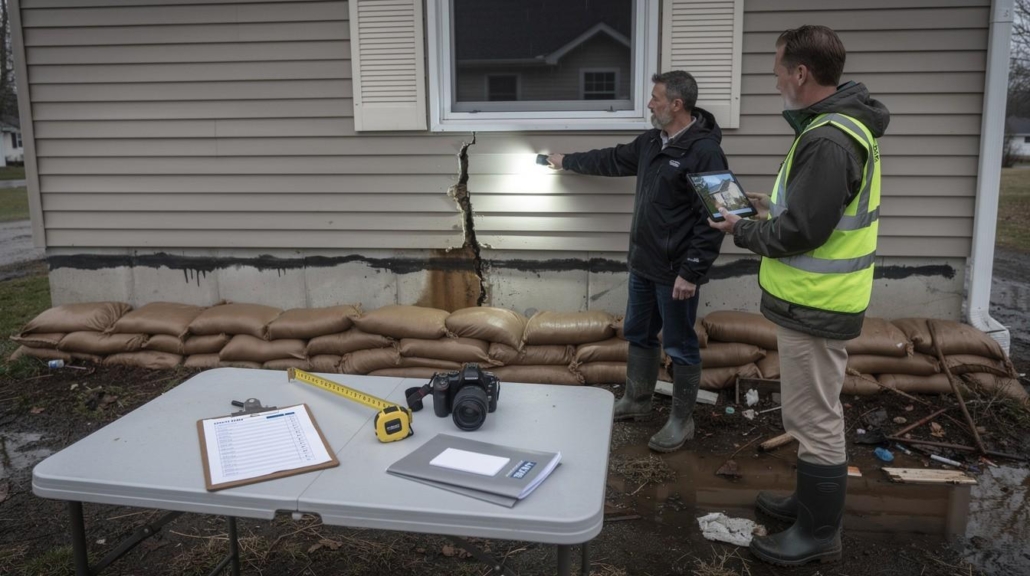
Earthquake flood policy WA: Protecting Your Home From Natural Disasters
Washington homeowners face real threats from earthquakes and flooding, yet most standard insurance policies leave these disasters uncovered. An earthquake flood policy in WA is essential protection that many residents overlook until it’s too late.
At Secord Agency – A Trucordia Business, we help homeowners understand what coverage actually protects their property and finances when natural disasters strike. This guide walks you through your options so you can make informed decisions about your home’s safety.
What Makes Earthquakes and Floods Different Threats in Washington
Earthquake Risk in the Cascadia Region
Washington sits in one of the most seismically active regions in the country. The Cascadia Subduction Zone, which runs along the coast, poses a significant earthquake risk that most homeowners underestimate. A major earthquake in this zone could cause widespread damage across the state, yet many residents assume their standard homeowners policy covers this peril-it doesn’t. The Cascadia region also experiences volcanic activity and landslides, which add complexity to your protection strategy.
Why Floods Strike Outside High-Risk Zones
Floods present an equally serious but different threat than earthquakes. Nearly one-third of flood insurance claims come from properties outside high-risk zones according to FEMA, meaning your home doesn’t need to sit in a designated flood plain to face water damage. Just one inch of water inside your home can cause more than $25,000 in damage according to the National Flood Insurance Program.
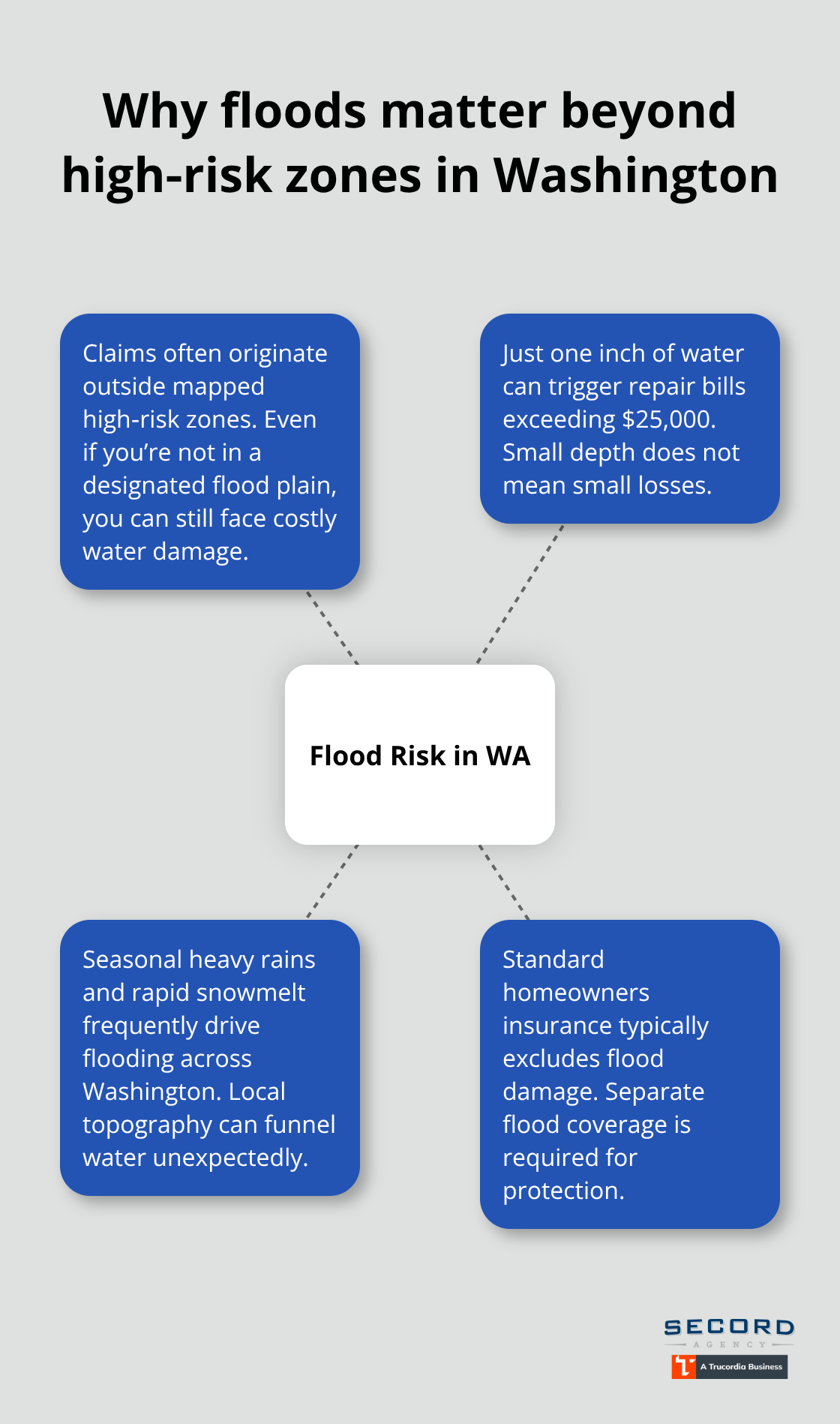
In Washington specifically, both seasonal heavy rains and rapid snowmelt create flooding conditions that standard homeowners policies explicitly exclude.
The Coverage Gap in Standard Policies
Your existing homeowners insurance covers wind, hail, lightning, and wildfires-but it absolutely does not cover earthquakes or floods. This gap catches thousands of Washington homeowners off guard every year. If an earthquake damages your foundation, cracks your walls, or causes your home to shift on its foundation, your standard policy pays nothing. If a flood inundates your basement, damages your furnishings, or forces you to relocate temporarily, you remain uninsured.
Understanding Your True Risk
FEMA data shows people in flood plains are about 27 times more likely to experience a flood during a 30-year mortgage than to experience a fire, yet homeowners often prioritize fire coverage and ignore water risk. This statistic reveals how most residents misalign their protection with actual threats. The solution requires separate policies: earthquake insurance and flood insurance through the National Flood Insurance Program or private carriers. These distinct coverages address what standard homeowners policies explicitly exclude, leaving you exposed without them.
What Earthquake and Flood Insurance Actually Cover
How Earthquake Insurance Protects Your Home
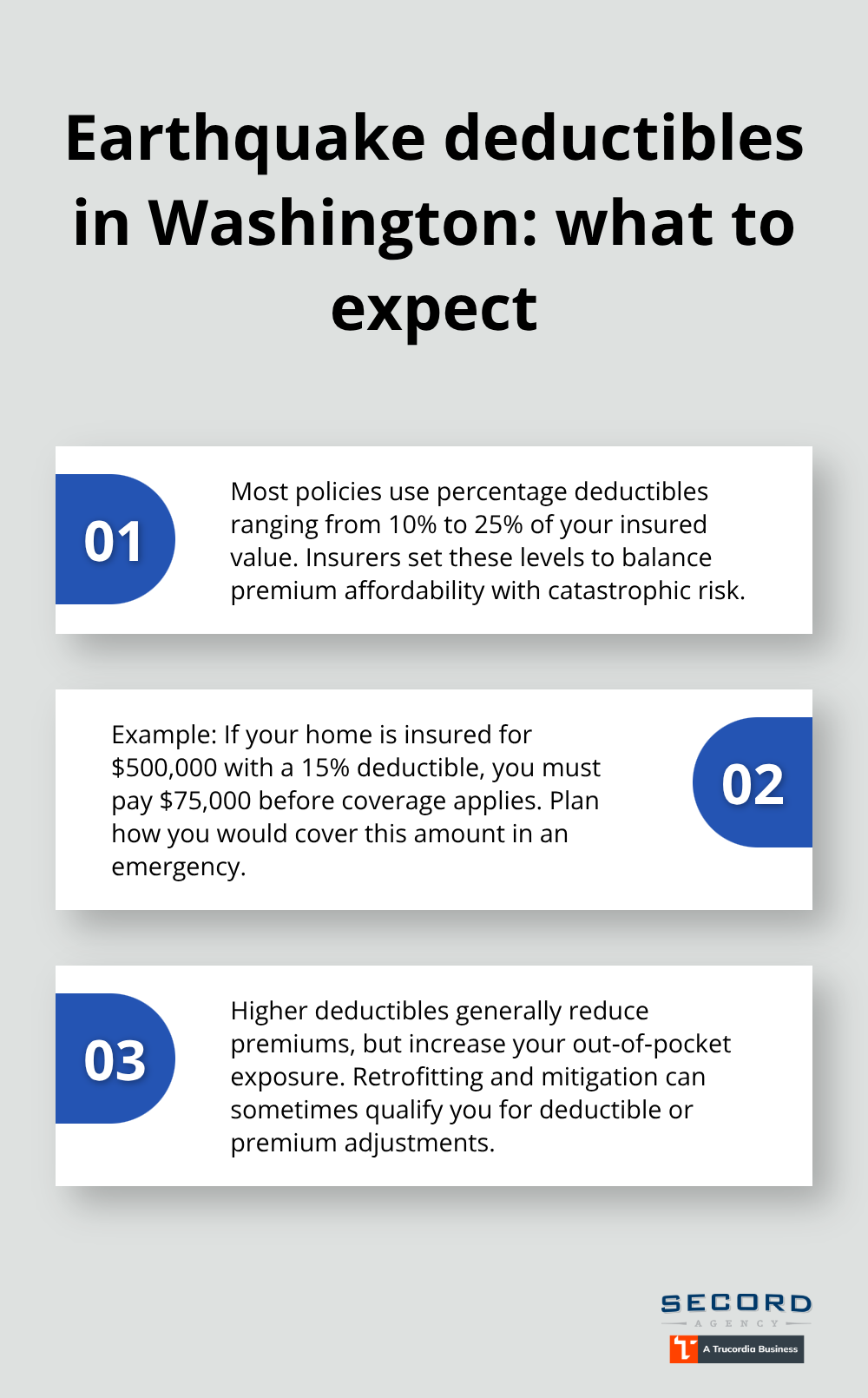
Earthquake insurance operates as a completely separate product from your standard homeowners policy and protects your home’s structure, attached structures like garages, and personal property inside from earthquake damage. The coverage limits and deductibles vary significantly by insurer, and most earthquake policies in Washington carry deductibles of 10 to 25 percent of the home’s insured value. If your home is insured for $500,000 and your deductible is 15 percent, you pay $75,000 out of pocket before insurance kicks in. This high deductible reflects the catastrophic nature of seismic events and the financial risk insurers face when covering widespread damage across entire regions.
Understanding Flood Insurance Through NFIP
Flood insurance through the National Flood Insurance Program covers damage to your home’s structure, foundation, and personal property from overflow of inland or tidal waters, heavy rain, and rapid snowmelt. NFIP policies currently insure nearly $1.3 trillion in coverage across about 4.7 million policyholders nationwide, and in Washington, this protection is available through FEMA’s program or private insurers. The critical detail most homeowners miss: NFIP policies include a standard 30-day waiting period before coverage becomes effective, so waiting until storm season arrives means you cannot purchase protection in time.
NFIP Versus Private Flood Insurance
Choosing between NFIP and private flood insurance requires comparing actual quotes and understanding your specific risk level. NFIP premiums are based on flood risk determined by FEMA flood maps, and you can obtain a free quote through the NFIP Quote Tool to see exact costs for your property. Private insurers often provide competitive alternatives with different deductible options and coverage limits tailored to your home’s value. The comparison process takes time, but the savings and customization options make it worthwhile for most Washington homeowners.
Coverage Enhancements Worth Considering
Additional endorsements can strengthen your protection significantly. Sump pump backup coverage for flood policies protects you if your sump pump fails during heavy rain, while loss of use coverage reimburses temporary housing if a flood forces you to evacuate. For earthquake protection, some insurers offer endorsements that reduce your deductible if you retrofit your home with cripple wall bracing and other earthquake-resistant upgrades. These enhancements address specific vulnerabilities in your property and can make the difference between partial recovery and full financial protection.
Moving Forward With Your Coverage Decision
Standard NFIP flood insurance and earthquake insurance from private carriers fill the gaps your homeowners policy leaves open, but the specific terms, limits, and deductibles you select determine whether you achieve true protection or remain partially exposed. Your next step involves assessing your property’s actual risk level and comparing quotes from multiple carriers to find the right combination of coverage and cost for your situation.
Choosing the Right Coverage for Your Washington Home
Determine Your Flood Risk First
Start with FEMA’s Flood Map Service Center to identify whether your property sits in a designated high-risk zone or moderate-to-low risk area. This free tool provides the flood zone designation that directly affects your insurance requirements and premiums. If you have a mortgage from a government-backed lender and your home is in a high-risk zone, flood insurance becomes mandatory. However, FEMA data shows nearly one-third of flood claims originate from properties outside these zones, so checking your status takes minutes and removes guesswork from your decision.
Assess Your Earthquake Vulnerability
Washington residents should assume their property faces seismic exposure given the Cascadia Subduction Zone’s threat level. Your specific risk depends on your home’s construction type, age, and foundation condition. Homes built before 1980 with concrete block or unreinforced masonry foundations face significantly higher damage risk than newer structures with modern engineering. Be honest about your home’s vulnerabilities when calculating whether you need earthquake coverage or can afford higher deductibles.
Obtain Multiple Quotes Before Deciding
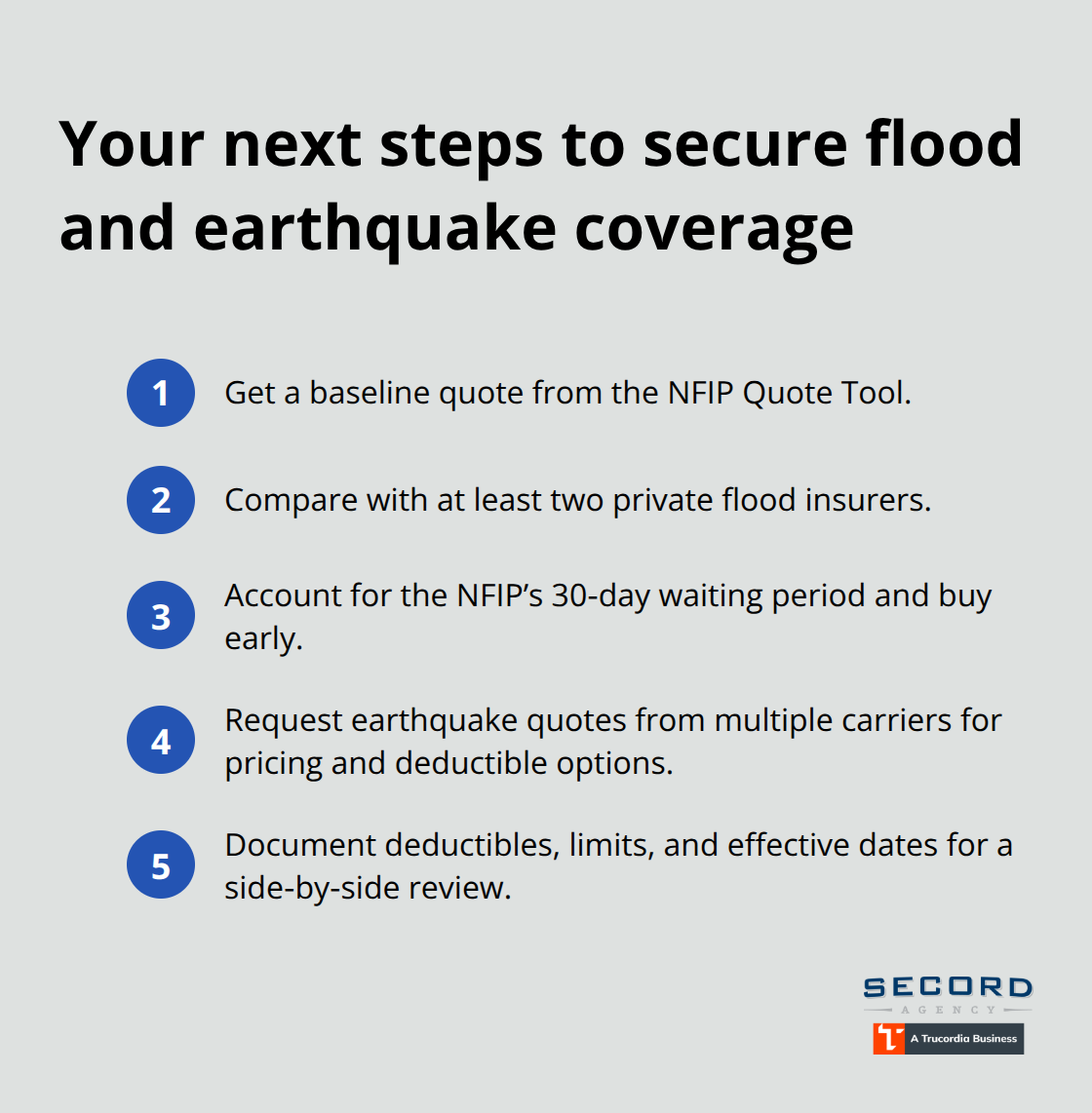
Obtain quotes from at least three sources before committing to any policy. For flood insurance, start with a free quote through the NFIP Quote Tool to establish a baseline cost, then contact two private insurers to compare premiums and deductible options. NFIP policies include a standard 30-day waiting period, so purchasing in July means coverage won’t activate until September-a critical timing issue during Washington’s rainy season. For earthquake insurance, request quotes from multiple carriers because premiums vary dramatically based on how each insurer rates seismic risk, and deductibles ranging from 10 to 25 percent of your home’s insured value create vastly different out-of-pocket costs when disaster strikes.
Match Coverage Limits to Replacement Cost
When comparing quotes, focus on coverage limits that match your home’s actual replacement cost rather than its market value, since insurance pays to rebuild, not to sell. Review your homeowners policy limits alongside earthquake and flood quotes to verify your total coverage across all three policies reflects what it would actually cost to rebuild your home from the foundation up (including site clearing and code upgrades that local building departments now require after major damage). Many homeowners discover they underinsured their homes by 30 to 40 percent when they compare replacement cost estimates against their policy limits. This exercise prevents painful gaps when you file a claim.
Final Thoughts
Washington homeowners who wait until disaster strikes to address earthquake and flood protection face financial devastation that standard homeowners insurance cannot prevent. Nearly one-third of flood claims originate from properties outside high-risk zones, and the Cascadia Subduction Zone poses a genuine seismic threat affecting your home’s vulnerability regardless of location. An earthquake flood policy in WA fills the gaps your existing coverage leaves open, transforming potential losses of tens of thousands into manageable claims.
Your protection strategy requires three immediate actions. First, check your property’s flood risk through FEMA’s Flood Map Service Center, then obtain quotes from at least three sources for both flood and earthquake coverage (note that NFIP flood policies include a 30-day waiting period, so purchasing in advance of storm season matters significantly). Second, compare coverage limits across your homeowners, flood, and earthquake policies to verify your total protection matches your home’s actual replacement cost, not its market value. Third, contact us at Secord Agency – A Trucordia Business to review your current coverage and receive quotes that reflect your actual risk level and budget.
We at Secord Agency – A Trucordia Business work with Washington homeowners to fill these coverage gaps and provide the protection that standard policies exclude. Our team shops multiple carriers to deliver earthquake and flood coverage alongside your existing homeowners policy, ensuring you have comprehensive protection when disaster strikes. Local expertise matters because your agent understands Cascadia seismic risk, Washington’s seasonal flooding patterns, and how different insurers rate these perils in your specific area.