Washington Homeowners Policy Options: A Practical Guide to Coverage

Washington homeowners face unique insurance challenges that most standard policies don’t fully address. From earthquake risks to heavy rainfall, your coverage needs differ significantly from other states.

We at Secord Agency – A Trucordia Business created this guide to help you navigate Washington homeowners policy options with confidence. You’ll learn what coverage is mandatory, how to spot gaps in your protection, and which risks deserve special attention in the Pacific Northwest.

What’s Actually Required for Washington Homeowners

Washington state doesn’t legally mandate homeowners insurance, but your mortgage lender certainly does. If you skip coverage, your lender will purchase lender-placed insurance on your behalf-and you’ll pay significantly more for substantially less protection. Lender-placed policies typically cost 50 to 100 percent higher than standard homeowners policies while offering minimal coverage. That’s the first hard truth: you’re getting insurance either way, so choosing your own policy makes financial sense. Your lender requires you to maintain coverage at all times, and any lapse in protection gives them legal grounds to force their own policy onto your property.

Your Policy Must Cover the Dwelling and Liability

Standard homeowners coverage in Washington includes four core components: dwelling protection, personal property coverage, liability protection, and additional living expenses. Dwelling coverage pays to repair or rebuild your home’s structure after a covered loss, while personal property coverage protects your belongings from fire, theft, wind, and vandalism. Liability coverage is where most homeowners underestimate their exposure. According to the Insurance Information Institute, liability claims can reach six figures when someone is seriously injured on your property. Medical payments coverage, typically included at $1,000 minimum, helps cover immediate medical expenses for guests, but you should strongly consider higher liability limits between $100,000 and $500,000 depending on your assets and neighborhood. Additional living expenses coverage reimburses temporary housing, meals, and other costs if your home becomes uninhabitable after a covered event.

Washington’s Weather and Geology Create Specific Coverage Needs

Wind and hail damage accounts for approximately 39.4 percent of all homeowners insurance claims in Washington, according to the Insurance Information Institute. Freezing and water damage represents another 23.5 percent of claims, primarily from burst pipes during winter months. Lightning strikes and fires make up about 24.8 percent of claims. These aren’t theoretical risks-they’re the actual breakdown of what homeowners file claims for every year. Standard policies cover all three categories, but coverage gaps emerge quickly. Mold remediation, for example, is typically excluded unless the mold results directly from a covered peril like a burst pipe, and even then, many policies cap mold coverage at $5,000 to $10,000. Earthquake coverage is completely absent from standard policies and requires a separate endorsement or rider. Flood damage from rising groundwater or overflowing bodies of water is also excluded, forcing you to purchase separate flood insurance through the National Flood Insurance Program if you’re in a high-risk zone. Landslides, common in parts of Washington, are excluded from standard policies unless you add specific earth movement coverage.

Why You Need a Local Agent to Spot Your Coverage Gaps

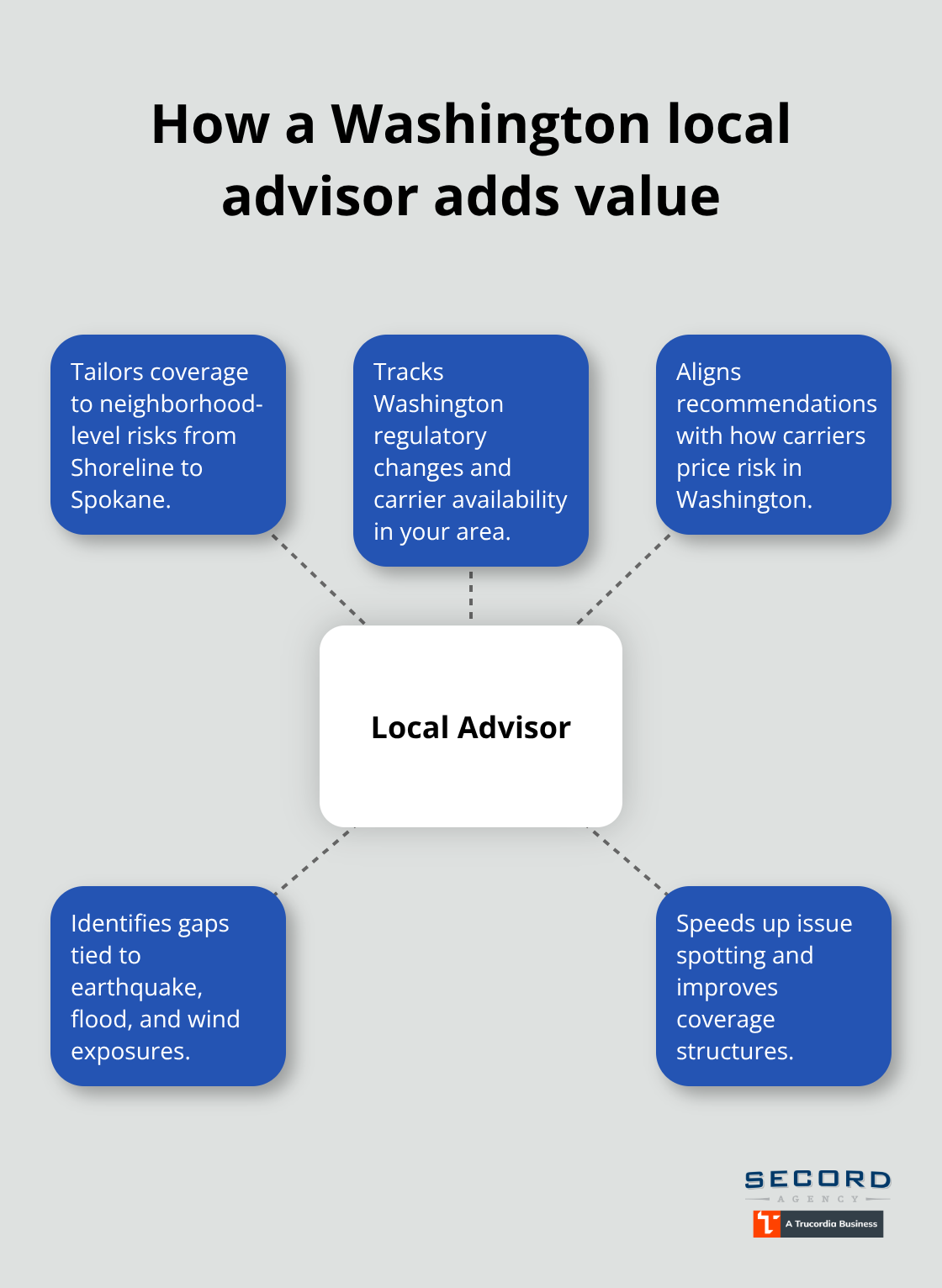
Shopping for homeowners insurance online might feel convenient, but Washington’s specific risks demand personalized guidance. An independent agent who understands Pacific Northwest conditions can identify which endorsements matter most for your property and location. A local agent can shop multiple carriers to find coverage that actually fits your home and budget. We help you understand what your standard policy excludes and which add-ons prevent expensive gaps. This personalized approach takes more time than a generic quote, but it protects you from discovering coverage holes after a loss occurs.

Picking the Right Policy Type for Your Washington Home

HO-3 Policies Cover All Perils Except Those Explicitly Excluded

HO-3 policies dominate the Washington market because they cover all perils except those specifically excluded, which means you get broad protection without listing every single covered event. This differs fundamentally from older HO-2 policies that only cover named perils, forcing you to prove that your specific loss falls into a pre-approved category. If your roof sustains damage from an unusual weather event, an HO-3 policy covers it unless explicitly excluded; an HO-2 policy requires you to verify that exact peril was named in your contract. The National Association of Insurance Commissioners data shows HO-3 policies represent the standard across Washington and most of the country for good reason.

However, HO-3 policies still exclude earthquakes, floods, and earth movement, which means you cannot escape those gaps by shopping around-you must add separate coverage. Wind and hail damage, which represents 2.8 percent of Washington claims, is included in all standard HO-3 policies, so this coverage doesn’t differentiate between insurers. Where carriers diverge is in water damage exclusions, mold limits, and how aggressively they enforce maintenance requirements. Some insurers deny claims for frozen pipes if your home lacks adequate heat during winter, while others apply this restriction only to seasonal properties.

Ask Carriers Directly About Their Specific Exclusions

You need to ask each carrier directly about their specific exclusions for water backup, sewer damage, and mold remediation rather than assuming all HO-3 policies work identically. Mold remediation, for example, is typically excluded unless the mold results directly from a covered peril like a burst pipe, and even then, many policies cap mold coverage at $5,000 to $10,000. Landslides, common in parts of Washington, are excluded from standard policies unless you add specific earth movement coverage. This personalized approach to comparing carriers takes more time than collecting generic quotes, but it protects you from discovering coverage holes after a loss occurs.

Match Deductibles and Limits Across All Quotes

Comparing quotes requires more than collecting numbers and picking the lowest premium. Request quotes with identical deductibles, dwelling limits, and liability amounts so you’re actually comparing apples to apples-a $500 deductible quote from one carrier isn’t comparable to a $1,000 deductible quote from another. The Washington State Department of Insurance recommends obtaining at least three quotes before deciding. Deductible selection directly impacts your monthly payment, with higher deductibles typically reducing premiums by 15 to 25 percent, but only choose a higher deductible if you can actually pay it after a loss without financial hardship. A $2,500 deductible saves money monthly but creates real risk if you can’t cover that amount when your roof needs repair.

Set Dwelling Coverage to Match Replacement Cost, Not Market Value

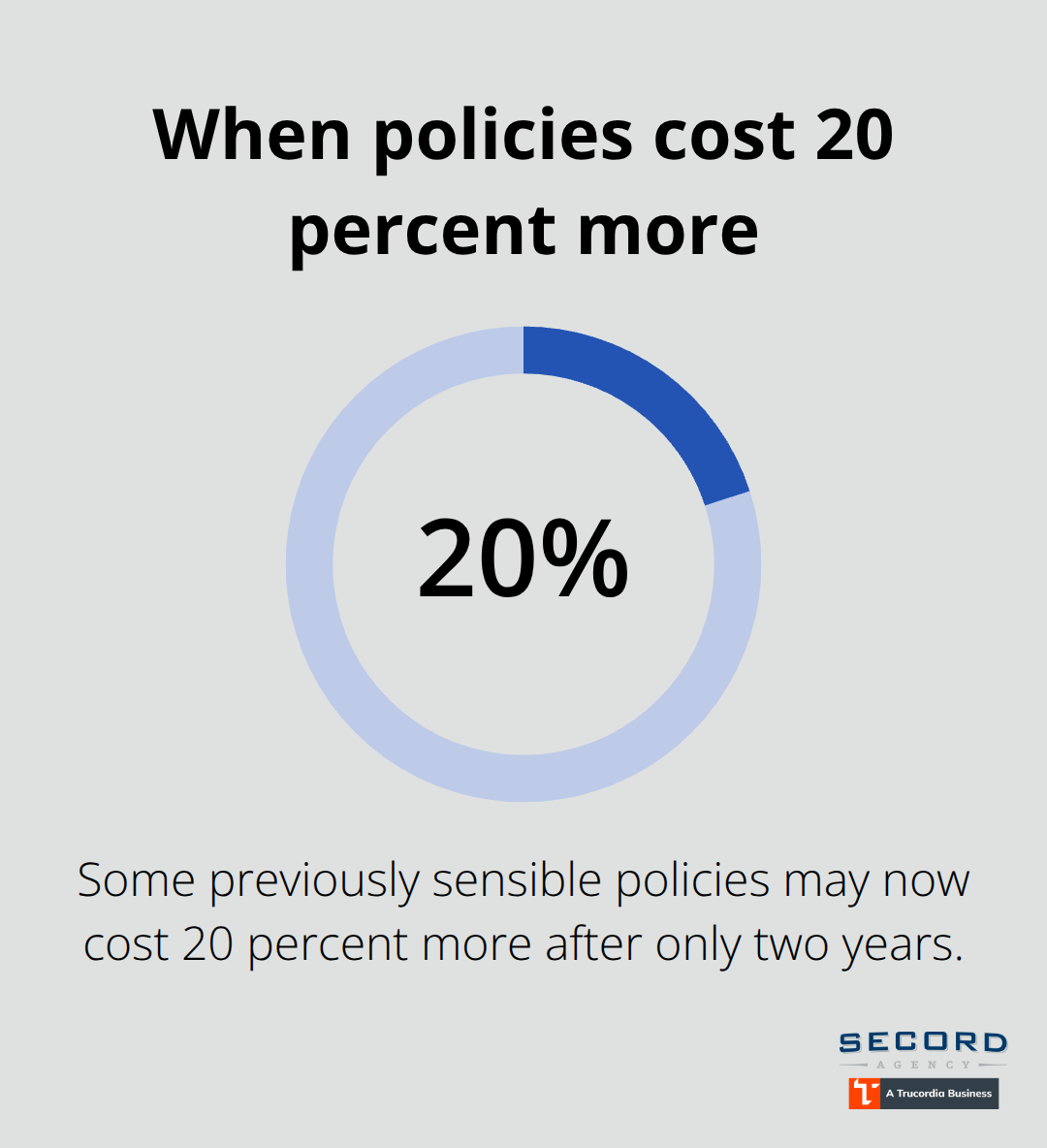
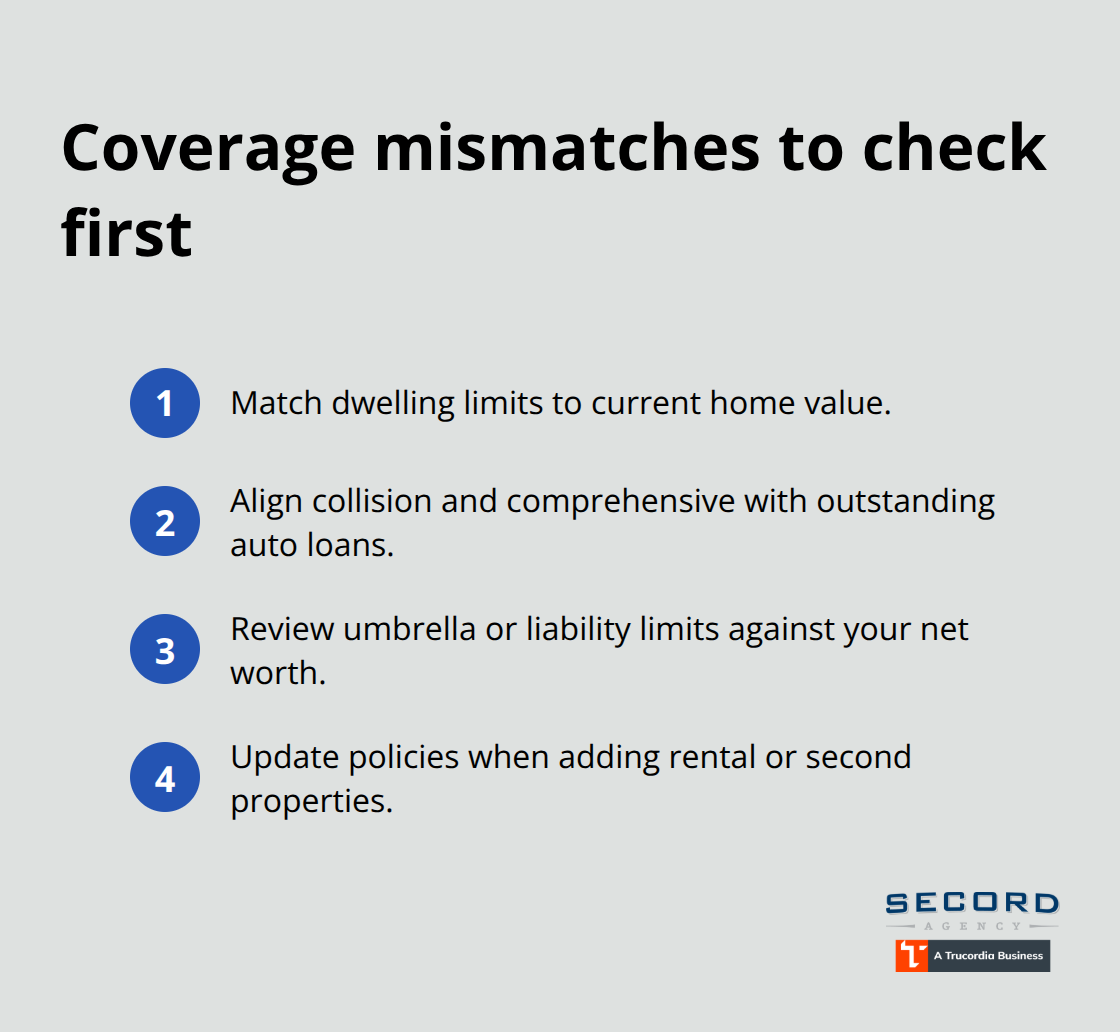
Dwelling coverage should match your home’s replacement cost, not its market value-a home worth $400,000 might cost $550,000 to fully rebuild due to labor and material costs, and underinsuring by even 20 percent can trigger coinsurance penalties that reduce claim payments significantly. Personal property coverage typically runs at 50 to 70 percent of your dwelling limit, but if you own jewelry, art, collectibles, or high-value tools, standard policies cap coverage on those items between $1,500 and $2,500 per category. You’ll need scheduled personal property riders for anything beyond those limits. Liability coverage between $100,000 and $300,000 makes sense for most Washington homeowners, though higher limits cost surprisingly little extra-adding umbrella liability coverage for an additional $1 million in protection typically costs $150 to $300 annually.

Evaluate How Carriers Handle Claims and Local Service

When you receive quotes, ask each carrier how they handle claim disputes and whether they have local adjusters in Washington, because processing speed matters enormously when your home is damaged and you need temporary housing covered immediately under additional living expenses. An independent agent who understands Pacific Northwest conditions can identify which endorsements matter most for your property and location and shop multiple carriers to find coverage that actually fits your home and budget. This local expertise becomes invaluable when you file a claim and need someone who knows Washington’s specific risks and how different insurers respond to them.

Washington-Specific Risks That Standard Policies Leave Exposed

Earthquake Coverage Protects Against the Inevitable Pacific Northwest Threat

Earthquake damage isn’t covered by any standard HO-3 policy sold in Washington, which means your home sits completely unprotected against the Cascade Subduction Zone threat that seismologists consider inevitable. The chances that an earthquake as large as magnitude 9.0 will occur along the zone within the next 50 years are about one in ten. Adding earthquake insurance costs between $300 and $800 annually depending on your home’s age, construction type, and location, but the alternative is facing a $200,000 to $500,000+ rebuild bill entirely out of pocket.

Key facts about earthquake insurance for Washington homeowners - Washington homeowners policy options

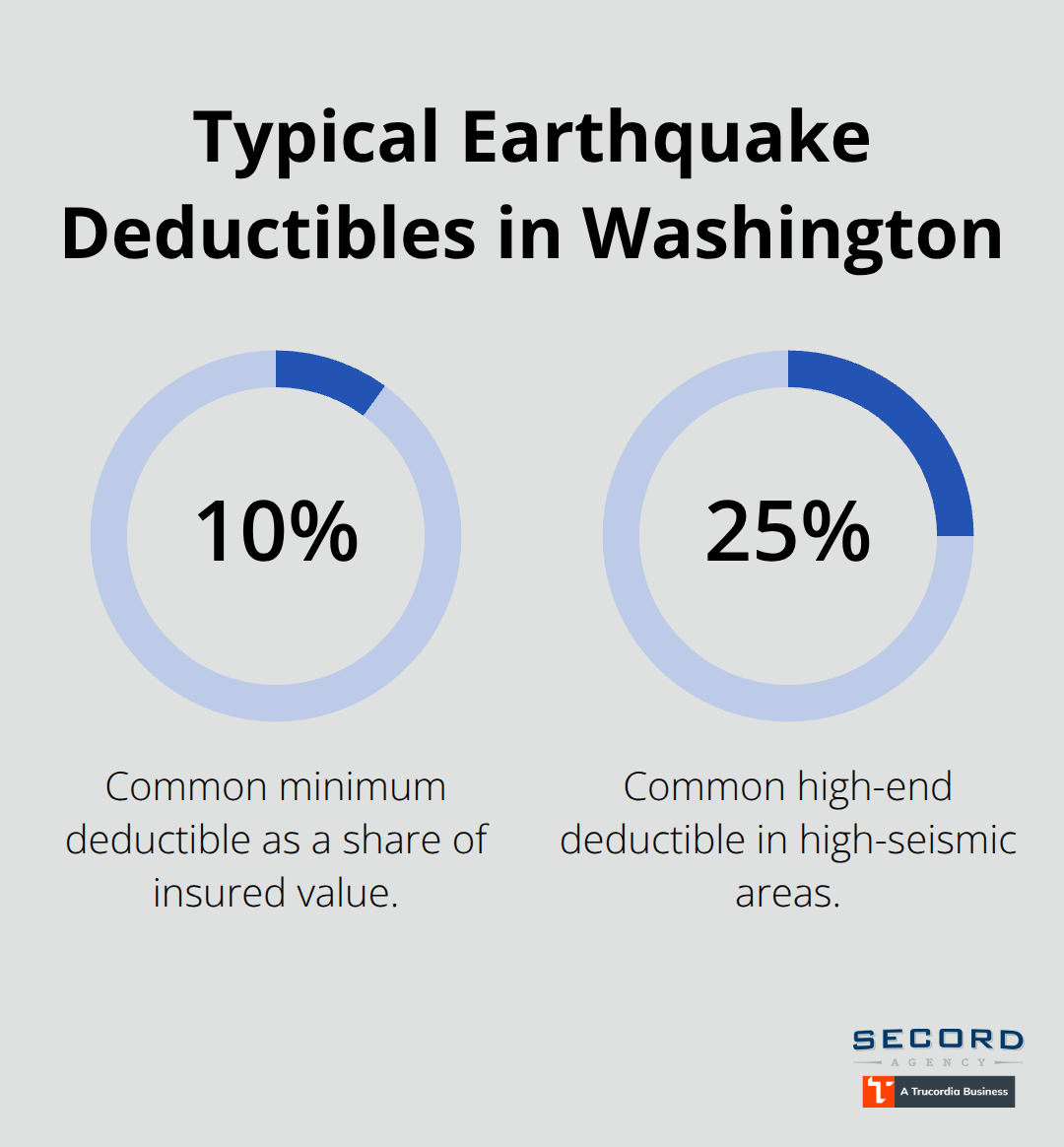
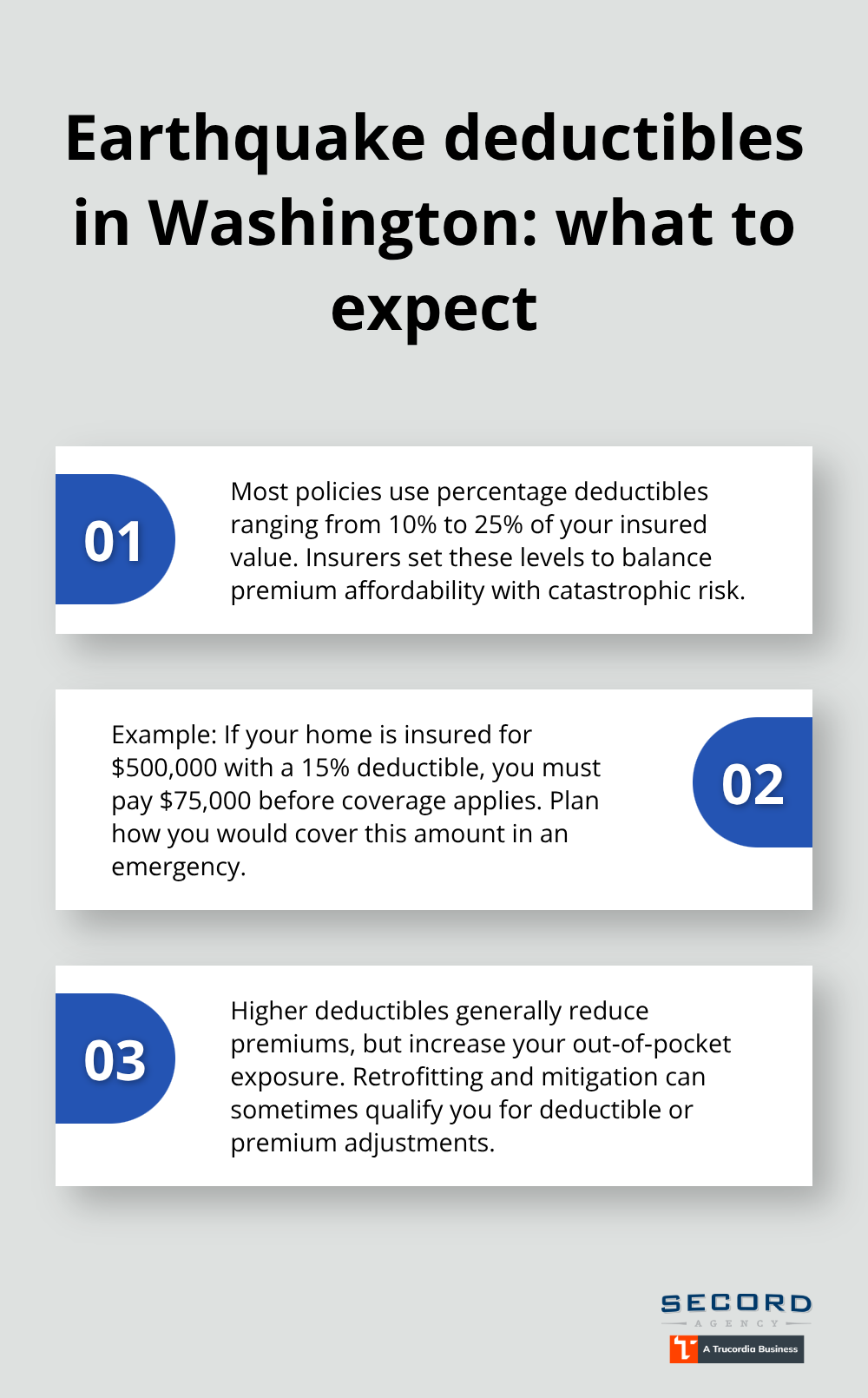
Earthquake coverage works differently than standard homeowners insurance because it typically includes a 15 to 25 percent deductible rather than a flat dollar amount, meaning you absorb that percentage of damage before coverage kicks in. A home valued at $500,000 with a 20 percent deductible means you pay $100,000 before insurance covers anything, so this coverage only makes financial sense if you can actually afford that deductible when an earthquake strikes.

Flood Insurance Addresses Water Damage That Standard Policies Exclude

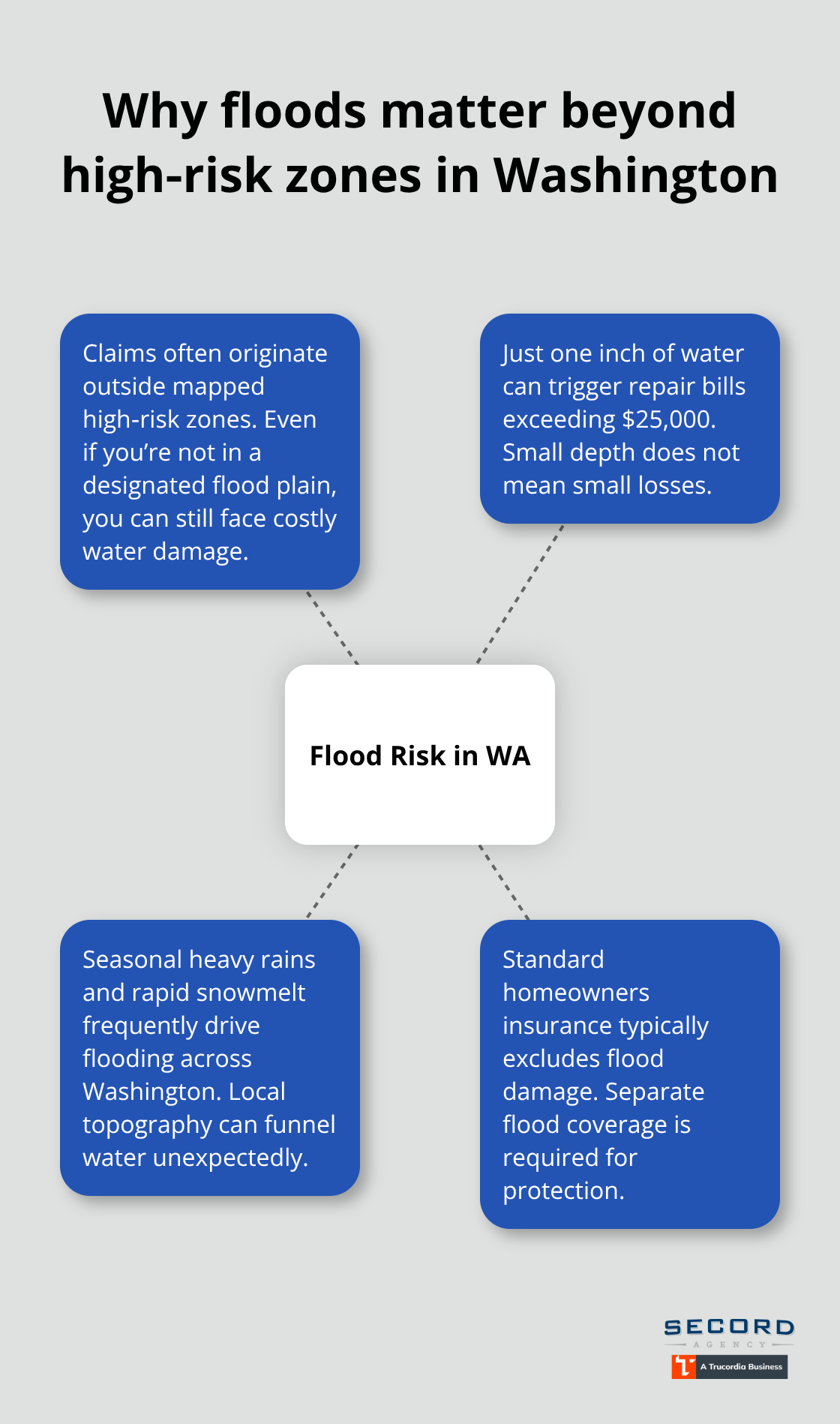
Flood insurance requires equally direct thinking. If you’re in a high-risk flood zone according to FEMA maps, your lender will mandate separate flood coverage through the National Flood Insurance Program, but even outside those zones, heavy rainfall and burst pipes create water damage scenarios that standard policies exclude. The distinction matters enormously: sudden internal events like a burst pipe are covered under standard policies, but gradual seepage, long-term leaks, or water intrusion from outside are excluded.

Flooding from rising groundwater or overflowing rivers and streams requires flood insurance, which costs $400 to $1,200 annually for typical Washington homes. Understanding your total insurance cost requires seeing all three pieces together-homeowners, earthquake, and flood-rather than evaluating homeowners coverage in isolation.

Wind and Storm Damage Protection Depends on Your Roof’s Condition

Wind and storm damage protection is already built into standard HO-3 policies since wind and hail account for 39.4 percent of Washington claims according to the Insurance Information Institute, but this coverage gap appears in specific situations. If your roof is over 20 years old or in poor condition, some carriers restrict wind coverage or charge higher premiums, so you need to disclose your roof’s actual age and condition when getting quotes.

Metal roofs and impact-resistant shingles can reduce premiums by 10 to 15 percent because they withstand hail and wind better than standard asphalt shingles. Older homes with wood shake roofs face additional restrictions because insurers view them as fire hazards in wildfire-prone areas, potentially excluding fire coverage entirely unless you upgrade.

Bundle Earthquake and Flood Quotes With Your Homeowners Policy

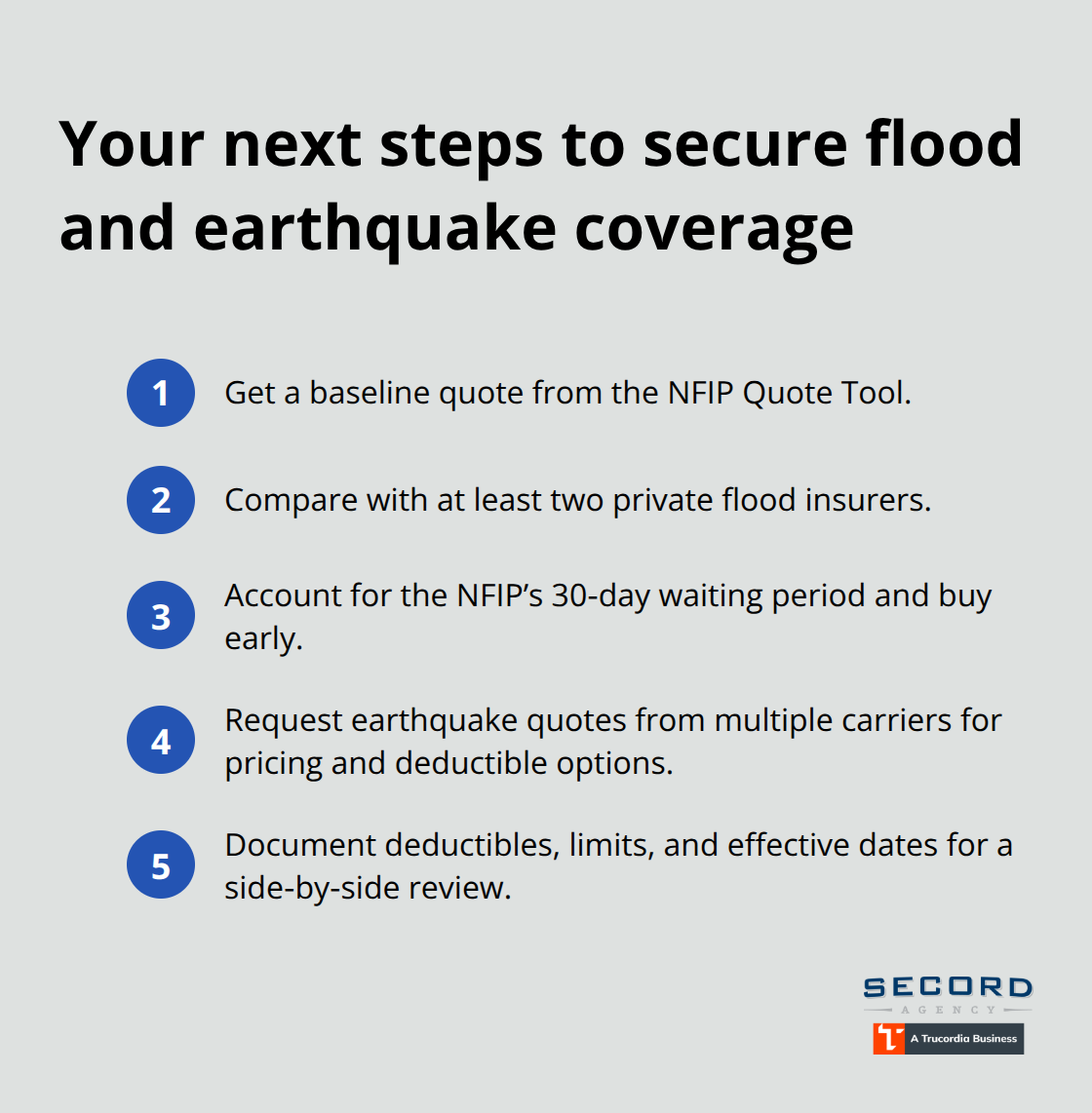
Getting earthquake and flood quotes at the same time you shop homeowners policies makes financial sense because bundling discounts sometimes apply. An independent agency that shops multiple carriers can identify which combination of coverage and carriers produces the lowest total cost while maintaining adequate protection across all three policy types.

Final Thoughts

Washington homeowners face a straightforward reality: selecting your own policy beats allowing your lender to impose expensive, minimal coverage on your property. The Washington homeowners policy options available to you range from basic HO-3 coverage to fully customized packages with earthquake, flood, and specialized endorsements, but your specific home’s location, age, and financial situation determine the right choice. Start by setting your dwelling coverage at replacement cost rather than market value, then add liability protection between $100,000 and $300,000 based on your assets.

Request quotes with identical deductibles and limits from at least three carriers so you actually compare equivalent policies. Ask each insurer directly about their specific exclusions for water damage, mold, and sewer backup instead of assuming all HO-3 policies work identically. Then add earthquake and flood quotes to see your total annual insurance cost across all three policy types, because evaluating homeowners coverage alone ignores the gaps that will cost you tens of thousands after a loss.

Review your coverage annually, especially after home improvements or renovations, since underinsuring by even 20 percent triggers coinsurance penalties that reduce claim payments significantly. We at Secord Agency – A Trucordia Business shop multiple carriers to find Washington homeowners policy options that fit your home and budget while maintaining adequate protection against Pacific Northwest risks. Contact us for personalized guidance on earthquake coverage, flood insurance, and the homeowners policy that protects your most valuable asset.

Landlord Liability Coverage Seattle: Protect Your Investment with Confidence

Owning rental property in Seattle comes with real financial exposure. Tenant injuries, property damage claims, and lawsuits can drain your savings fast.

Landlord liability coverage Seattle protects you from these costly risks. We at Secord Agency – A Trucordia Business help property owners build the right insurance strategy for their specific situation.

What Landlord Liability Coverage Actually Covers

The Real Cost of Liability Claims

Landlord liability coverage protects you when a tenant or guest gets injured on your property and sues for damages. This coverage pays for medical bills, legal defense costs, and court settlements-expenses that can devastate your finances without proper protection.

What Your Policy Actually Covers

The policy covers injuries that happen because of your negligence as a property owner, not because of tenant misconduct. If a guest slips on ice you failed to clear from the entryway or falls through a rotten deck board, your liability coverage responds. It does not cover intentional acts, criminal behavior, or injuries the tenant caused through their own carelessness. Most Seattle landlords need at least $500,000 per occurrence in liability protection, though Washington’s comparative negligence laws make higher limits prudent for larger portfolios.

Legal Exposure and Lender Requirements

Washington State imposes no legal mandate to carry landlord liability insurance, but your mortgage lender almost certainly does. If you still owe money on the property, your lender’s loan documents require you to maintain landlord insurance. Beyond lender requirements, the Residential Landlord-Tenant Act creates substantial legal exposure. You must maintain habitable conditions, handle repairs promptly, and follow strict eviction procedures-failures in any of these areas invite lawsuits.

Hidden Risks That Standard Policies Exclude

Earthquake risk in the Cascadia Subduction Zone carries a 10–15% probability of a magnitude 9.0 event within the next 50 years according to the Washington Geological Survey, yet standard policies exclude earthquake damage entirely. Flooding affects more than 175,000 structures in mapped Washington floodplains and is similarly excluded unless you add coverage. These statistics show that liability and property risks are not theoretical-they happen regularly to Seattle landlords.

Pairing strong liability limits with property damage coverage and specialized endorsements for earthquake and flood is the only realistic way to protect your investment. The next section explores the specific types of liability coverage available and how each one addresses different aspects of your exposure.

Coverage Types That Actually Protect Your Rental Investment

General liability coverage forms the foundation of protection, but it alone leaves significant gaps. This coverage handles injuries to tenants or guests on your property and covers your legal defense if someone sues. However, the standard limit of $300,000 to $500,000 per occurrence falls short in Seattle’s high-cost environment. Washington’s comparative negligence laws mean courts can assign partial blame to you even when a tenant shares responsibility for an accident. A tenant slips on your icy stairs while checking their phone-the court might still hold you 40% liable. That $500,000 limit disappears quickly when medical bills, legal fees, and settlements stack up.

Why $500,000 Limits Fail Seattle Landlords

Most Seattle landlords start with inadequate liability limits. The premium difference between $500,000 and $1,000,000 per occurrence is modest-typically 10–15% more annually-making the upgrade practical rather than optional.

Reasons to raise liability limits above $500k - Landlord liability coverage Seattle

You should try $1,000,000 per occurrence for any landlord with multiple properties or higher-value units. This threshold reflects the real cost of serious injury claims in Washington courts, where juries award substantial damages for permanent injuries.

Property Damage Claims Exceed Expectations

Property damage and loss coverage handles the physical destruction of your building and lost rental income during repairs. This is where most landlords underestimate their exposure. Average property damage claims in Washington exceeded $9,800 in 2022 according to the Washington State Office of the Insurance Commissioner, but catastrophic events cost far more. A kitchen fire that displaces tenants for three months means zero rent while you still pay the mortgage. Seattle’s reconstruction costs run $350–$500 per square foot, so a modest 2,000-square-foot building costs $700,000 to $1,000,000 to rebuild.

Your dwelling coverage limit must reflect these real numbers, not some theoretical value. Replacement cost value policies, not actual cash value, are non-negotiable in Seattle. An actual cash value policy subtracts depreciation, leaving you thousands short when you need to rebuild. You must verify your coverage limits match current Seattle construction costs, not the price you paid five years ago.

Umbrella Policies Protect Against Catastrophic Awards

Umbrella liability policies sit above your general liability coverage and activate only after that limit exhausts. Common requirements include $300,000 to $500,000 in auto liability coverage and similar amounts for homeowners or renters liability. A $1,000,000 umbrella policy costs roughly $200–$400 annually and provides catastrophic protection. This matters because a serious injury lawsuit-say a tenant’s permanent spinal injury from a fall you could have prevented-easily exceeds $1,000,000 in damages. Medical care, lost wages, and pain-and-suffering awards in Washington courts regularly surpass this threshold.

Umbrella policies also cover gaps that general liability excludes, making them especially valuable for landlords with older properties or higher-risk tenant situations. Without an umbrella, your personal assets become targets if a judgment exceeds your liability limit. This combination costs less than most people assume and protects your long-term investment growth far more effectively than hoping for luck.

The specific coverage limits you need depend on your property’s age, condition, and tenant profile. The next section walks you through how to assess these factors and select the right policy for your situation.

Selecting the Right Coverage for Your Property’s Actual Risks

Document Your Property’s Specific Hazards

Your property’s age, condition, and tenant profile determine which liability limits and endorsements you genuinely need. A newer building with owner-occupied units demands different coverage than a 40-year-old fourplex in a high-traffic neighborhood. Walk the building and note maintenance issues, system ages, and areas where tenants or guests are most likely to get injured. Icy entryways in winter, worn deck railings, old electrical systems, and poorly lit stairwells create measurable liability exposure.

Properties over 25 years old face harder placement and typically require $300,000 to $500,000 in liability limits just to get quotes, according to FirstMark Insurance Group. If your roof exceeds 10 years, carriers scrutinize water damage claims more carefully. Document everything-maintenance records, repair dates, and system upgrades-because insurers use this information to set your premium and determine whether they’ll offer coverage at all.

Invest in Maintenance to Lower Premiums

Properties with recent roof, plumbing, or electrical work qualify for better rates and broader coverage options, sometimes reducing premiums by 5–10% compared to similar buildings with deferred maintenance. Obtain bids for any planned repairs before renewal to show insurers you’re investing in risk reduction; this positioning often improves both premium and coverage terms.

Require Tenant Insurance Coverage

Your tenant situation shapes coverage needs significantly. High-turnover rental markets with shorter leases carry different risks than long-term tenancies.

Hub-and-spoke of actions to align coverage with property risk - Landlord liability coverage Seattle

Require tenants to maintain renters insurance and verify proof of active policies at lease signing and during occupancy. This single requirement cuts your exposure substantially because tenant negligence won’t trigger your policy if they carry their own coverage.

Compare Multiple Carriers and Policy Forms

Compare quotes across multiple carriers because pricing varies dramatically. FirstMark Insurance Group notes that newer commercial properties typically have 8–10 preferred carriers while older buildings have access to more than 20 carriers, giving you substantial shopping power. Request quotes for DP-2 and DP-3 forms side by side so you see the actual premium difference-often 15–25% separates them, making DP-3’s broader coverage worthwhile for most Seattle landlords.

Final Thoughts

Protecting your Seattle rental investment requires landlord liability coverage Seattle that matches your property’s actual risks, not generic limits that leave you exposed. The combination of adequate general liability protection, property damage coverage, and an umbrella policy creates a financial shield against the real costs Seattle landlords face. Average liability claims in Washington exceed $22,300, and serious injury cases regularly surpass $1,000,000 in damages.

The specific limits and endorsements you need depend on your property’s age, condition, and tenant profile. A 40-year-old fourplex demands different protection than a newer building, and maintenance records matter enormously because insurers use them to set premiums and determine coverage eligibility. Requiring tenants to carry renters insurance with substantial liability limits reduces your exposure significantly and demonstrates risk management to carriers.

Working with a local Seattle insurance agent who understands Washington’s specific hazards-earthquake risk, flooding, and comparative negligence laws-makes the difference between adequate coverage and costly gaps. Contact Secord Agency – A Trucordia Business for a personalized review of your current landlord insurance or to get quotes on new coverage that fits your specific property and budget.

Teen Auto Insurance Washington: A Practical Guide for New Drivers

Getting your teen behind the wheel comes with real financial consequences. Teen auto insurance in Washington costs significantly more than coverage for adult drivers, and understanding why helps you find better rates.

We at Secord Agency – A Trucordia Business know that parents need practical strategies to manage these costs without cutting corners on protection. This guide walks you through Washington’s requirements, proven discount opportunities, and smart policy decisions that actually work.

What Washington Requires and Why Teen Premiums Cost So Much

Washington’s Minimum Coverage and Your Real Exposure

Washington state mandates minimum liability coverage of $25,000 per person and $50,000 per accident for bodily injury, plus $10,000 for property damage. These baseline limits sound adequate until a serious crash happens-one collision can easily exceed these thresholds, leaving you financially exposed. If your teen finances or leases a vehicle, the lender requires comprehensive and collision coverage on top of these minimums, which significantly raises the total cost. The reality is that minimum coverage alone leaves most families vulnerable, yet it’s what many parents choose to save money upfront.

Why Teen Drivers Command Higher Premiums

Teen drivers cost more because insurance companies have concrete data showing teen drivers crash at nearly four times the rate of drivers aged 20 and older per mile driven. In Washington specifically, a 16-year-old averages $6,651 per year for full coverage, while a 19-year-old averages $3,838 annually, showing how risk perception drops dramatically with age and experience. Male teen drivers in Washington face even steeper premiums than females-a 16-year-old boy averages $6,947 yearly compared to $6,354 for girls, a gap of roughly $593. The first months after licensure carry the highest crash risk, so insurers price policies accordingly.

How Insurers Assess Your Teen’s Individual Risk

Insurers assess teen risk through several concrete factors: whether the vehicle is financed or owned outright, the specific make and model, your teen’s driving history during the permit phase, their academic performance if they qualify for good student discounts, and their location within Washington (premiums vary significantly by ZIP code). A Honda Accord costs roughly $1,919 annually for full coverage, while a BMW 330i runs about $2,398, showing how vehicle choice directly impacts rates before your teen ever gets behind the wheel.

Getting Accurate Quotes and Comparing Carriers

To get accurate quotes tailored to your situation, you need your teen’s license number, the vehicle’s VIN, driving history details, employment status, and annual mileage estimates-then compare quotes across at least three carriers, since the difference between the cheapest and most expensive options for identical coverage can exceed $2,000 annually. PEMCO offers the lowest average teen rates in Washington at approximately $3,514 yearly, while Travelers averages about $4,100 and Farmers around $4,670 for full coverage. Shopping multiple carriers reveals substantial savings opportunities that most parents miss when they accept the first quote they receive.

Proven Discounts That Actually Reduce Your Teen’s Premium

Defensive Driving Courses and Verified Discounts

Defensive driving courses deliver measurable savings, but only from insurers that recognize them. The Washington Traffic Safety Commission offers accredited courses that many carriers discount, typically saving $50 to $100 annually, though the real value emerges over time as your teen maintains a clean record. You must confirm that your insurer honors this discount before enrollment, since not all carriers participate. The discount matters only if your insurance company accepts it, so contact your agent first.

Good Student Discounts That Compound Over Years

Good student discounts reward a B average or higher and generally reduce premiums by 10 percent or more depending on the carrier. At age 16 in Washington, your teen averages $6,651 yearly for full coverage, so a 10 percent discount saves roughly $665 annually. This discount persists through college if your teen maintains academic performance, making it one of the few discounts that compounds over multiple years. Strong grades translate directly into lower insurance costs, creating a tangible financial incentive for academic success.

Usage-Based Insurance Programs That Track Real Behavior

Usage-based insurance programs like Snapshot or similar telematics offerings track actual driving behavior and reward safe habits with discounts ranging from 10 to 30 percent. Your teen earns discounts by avoiding hard braking, speeding, and late-night driving, with feedback delivered through a smartphone app that shows real-time performance. These programs align your teen’s actual driving with premium reductions, making the connection between safe habits and savings immediate and visible.

Bundling Policies for Maximum Savings

Bundling auto coverage with your home or renters policy cuts combined premiums by 15 to 25 percent, a benefit that often outweighs the hassle of consolidating carriers. When you add your teen to your existing policy, bundling becomes even more powerful since the insurer applies discounts across all lines. Compare bundled quotes from at least two carriers, as some bundle more aggressively than others. PEMCO in Washington averages $3,514 yearly for teen full coverage, significantly lower than the statewide average of $5,244, making rate shopping non-negotiable.

Stacking Discounts for Substantial Savings

Combining a good student discount, a usage-based program, and bundling can reduce your 16-year-old’s premium from $6,651 to roughly $4,500 or lower, a savings of over $2,100 annually that most parents never pursue because they don’t know these options exist or fail to ask. Your teen’s actual premium depends on the specific vehicle, location within Washington, and which discounts your chosen carrier offers. The next step involves deciding whether to add your teen to your existing policy or purchase separate coverage-a choice that significantly impacts both cost and coverage protection.

Adding Your Teen to Your Policy vs. Getting Separate Coverage

Choosing Between Adding Your Teen or Buying Separate Coverage

Adding your teen as a named driver to your existing policy costs substantially less than purchasing them a separate policy, and this difference compounds over multiple years. A 16-year-old added to a parent’s policy runs approximately $4,046 annually, while an 18-year-old on their own policy costs about $6,968 yearly according to Insure.com data. The gap exists because insurers view a teen driving the family vehicle under parental supervision as lower risk than an independent teen driver. However, this advantage disappears if your teen owns a vehicle registered solely in their name or if they live outside Washington as a non-resident permit holder-situations where a separate policy becomes necessary. When deciding between adding your teen or purchasing separate coverage, gather quotes from at least two carriers showing both options, since some insurers price these scenarios differently and the savings opportunity varies.

Informing Your Insurer and Building Coverage History

If your teen will regularly drive the family car, inform your insurer about usage patterns and confirm the policy covers learner’s permit driving before your teen gets behind the wheel, since coverage gaps during the permit phase create serious problems later. Starting insurance coverage during the learner’s permit phase builds a positive driving history that insurers view favorably when your teen transitions to a licensed driver, often resulting in lower premiums compared to teens who delay coverage until licensure. Your insurer needs accurate information about how frequently your teen will operate the vehicle and under what conditions to properly assess risk and apply appropriate coverage.

Controlling Crash Risk Through Active Monitoring

Managing your teen’s actual driving behavior matters far more than any discount or policy structure you choose. In-vehicle monitoring devices combined with feedback shared between your teen and you reduce crash risk substantially, particularly when alerts address speeding and seatbelt use. Usage-based insurance programs accomplish this feedback loop through smartphone apps that show real-time driving performance, but only if your teen engages with the data rather than ignoring the alerts. Enforce restrictions beyond what Washington’s graduated driver licensing requires: limit passengers to immediate family members, prohibit driving between 8 p.m. and 5 a.m., and track supervised practice hours during the permit phase to document safe habits.

Hub-and-spoke diagram of proven actions that reduce teen crash risk - Teens auto insurance Washington

Handling Accidents and Maintaining Your Record

When accidents or violations occur, report them to your insurer within the required timeframe (typically 24 to 72 hours), since delayed reporting damages credibility and can complicate claims. After an at-fault accident, expect your premium to increase roughly 48 percent according to Bankrate data, making accident prevention your most powerful cost-control tool. Timely reporting protects your coverage and demonstrates responsibility to your insurer, which matters when your teen transitions to independent driving.

Reviewing Coverage and Shopping Rates Annually

Schedule annual policy reviews with your agent to verify coverage remains adequate as your teen gains experience, confirm all discounts apply, and shop competing carriers since premiums drop as your teen ages and maintains a clean record. Small rate differences compound over years of coverage, so comparing at least two carriers annually identifies savings opportunities that most families overlook. Your teen’s risk profile improves with each year of safe driving, and your policy should reflect that improvement through lower premiums.

Final Thoughts

Teen auto insurance in Washington demands action across multiple fronts, but the payoff justifies the effort. Start by collecting your teen’s license details, the vehicle VIN, driving history, and employment status, then request quotes from at least three carriers to identify the lowest available rates. A 16-year-old averages $6,651 annually for full coverage, yet strategic choices-good student discounts, usage-based programs, and bundling-can reduce this to $4,500 or less, representing real money you control through informed decisions.

Your teen’s actual driving behavior matters more than any discount or policy structure you select. Enforce restrictions stricter than Washington’s graduated driver licensing requires: limit passengers, prohibit nighttime driving, and use in-vehicle monitoring devices that provide real-time feedback on speeding and unsafe habits. Teen drivers crash at nearly four times the rate of drivers aged 20 and older, but this risk drops dramatically when parents actively manage driving conditions and teens face immediate consequences for unsafe behavior.

We at Secord Agency – A Trucordia Business help families navigate teens auto insurance Washington by shopping multiple carriers to deliver competitive rates paired with personalized advice for your specific situation. Contact us at secordagency.com to discuss your teen’s coverage options and identify discounts you may have missed. Schedule annual reviews as your teen gains experience, since premiums drop with each year of safe driving and a clean record.