Small business liability WA: What Your Policy Should Include
Small business liability in Washington isn’t optional-it’s a legal requirement and financial safeguard that protects your company from devastating claims. Many business owners underestimate the specific risks their operations face in this state, leading to inadequate coverage that leaves them exposed.
At Secord Agency – A Trucordia Business, we’ve helped countless Washington entrepreneurs identify gaps in their policies and build protection strategies tailored to their actual needs. This guide walks you through the coverage components that matter most for your business.
What Washington Liability Coverage Actually Covers
General Liability: Your First Line of Defense
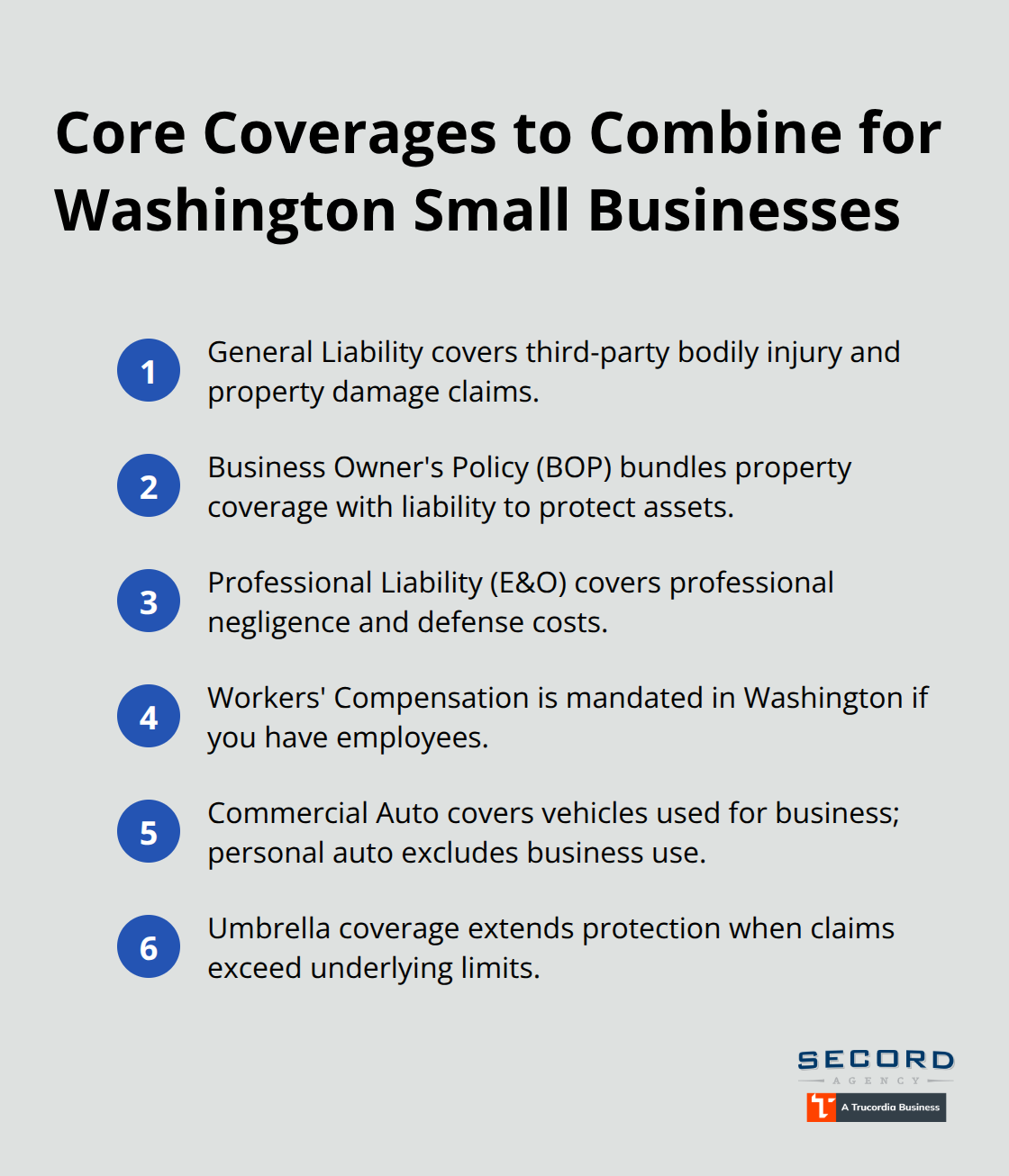
Liability coverage protects your business when someone claims you caused them bodily injury, property damage, or financial loss through your operations. General Liability, the baseline policy most Washington businesses need, covers third-party claims-meaning injuries or damage to someone else, not your own assets. If a client trips in your office and sues, or your equipment damages their property, General Liability handles defense costs and damages up to your policy limit. This coverage does not protect your own property, equipment, or inventory; that’s where property coverage enters the picture.
Workers’ Compensation and Employment Obligations
Washington law mandates Workers’ Compensation for businesses with employees, covering medical expenses and lost wages when an employee is injured or becomes ill on the job. The Washington State Department of Labor & Industries administers this requirement, and it operates separately from General Liability. This distinction matters because Workers’ Comp covers your own employees, while General Liability protects you against claims from outside parties.
Professional Liability for Service Providers
Professional Liability, also called Errors & Omissions insurance, protects service-based businesses from claims that your advice, design, or work caused financial harm to a client. Unlike General Liability, Professional Liability covers professional negligence and defense costs even if the claim is unfounded-a critical distinction because defending against a meritless claim still costs money. Client contracts often specify coverage requirements for General Liability, Professional Liability, or both, so having these policies in place directly impacts your ability to win Washington work.
Commercial Auto and Vehicle Coverage Gaps
Commercial Auto insurance covers vehicles used for business purposes; your personal auto policy explicitly excludes business use, so mixing personal and business driving without Commercial Auto creates a coverage gap that could leave you personally liable. This protection matters whether you operate a fleet or occasionally use a vehicle for client visits.
Understanding Washington’s Unique Risk Environment
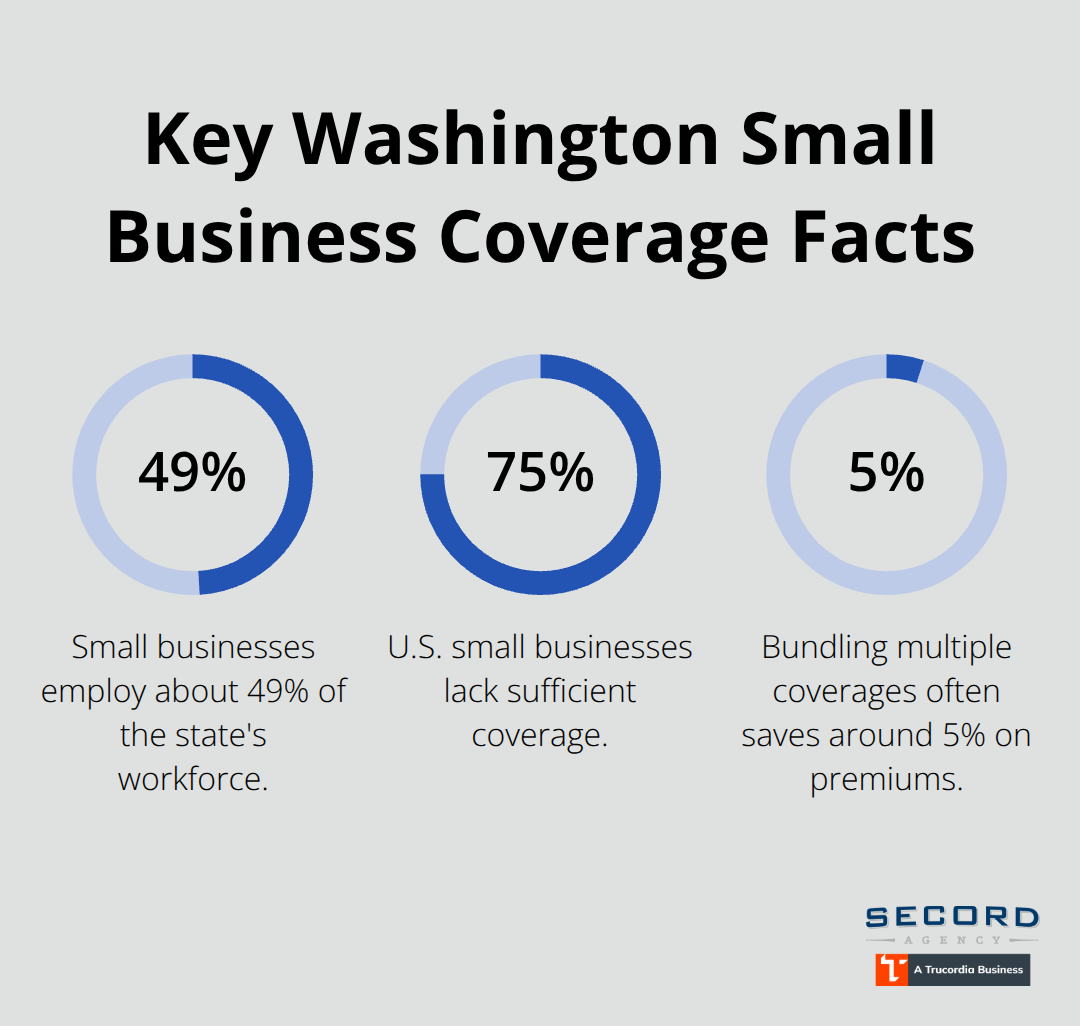
Washington small businesses face distinct risks that shape coverage needs. The state has over 644,000 small businesses employing about 49% of the state’s workforce according to the U.S. Small Business Administration, and location significantly influences rates-Seattle-area coastal regions and Spokane inland regions have different workers’ compensation rates and weather-related property risks. The 2023 Hiscox Underinsurance in Small Business Report found that 75% of U.S. small businesses lack sufficient coverage, meaning most Washington owners operate exposed to unnecessary risk.
Many business owners hold false beliefs about liability protection. Some wrongly assume that liability caps at your business size or that cybersecurity alone protects them; in reality, a single lawsuit can exceed your annual revenue regardless of company size, and cyber threats remain separate from traditional liability. Your actual exposures determine which coverages move from optional to essential. Do you work on-site at client locations? Do you handle sensitive data? Do employees drive vehicles for work? Do you give professional advice or recommendations? Your answers to these questions prevent costly gaps later and shape the protection strategy you need.
Building the Right Coverage Mix for Washington Businesses
General Liability as Your Foundation
General Liability forms the foundation, but most Washington businesses need additional layers to avoid exposure. This coverage protects you when someone outside your company sues over injuries or damage your operations caused. For a personal trainer in Texas, General Liability costs around $29.16 per month according to industry pricing data, though Washington rates vary by location and industry risk. If you operate a cleaning service, contractor business, or restaurant in Seattle versus Spokane, your rate differs because workers’ compensation costs and regional exposure vary significantly. General Liability alone leaves critical gaps-a client trip-and-fall claim receives coverage, but your own damaged equipment does not.
Property and Business Owner’s Policies
Your business property, tools, inventory, and building improvements need separate protection through a Business Owner’s Policy that bundles property coverage with liability. A BOP typically costs $40 to $141 per month for small businesses and covers both your liability exposure and your physical assets, making it far more practical than buying coverages separately. This combination approach addresses what General Liability misses and protects the tangible assets that keep your operation running.
Professional Liability for Service Providers
Professional Liability becomes non-negotiable if you provide advice, design work, consulting, or any service where your recommendation or execution directly affects a client’s financial outcome. Service-based businesses often face claims that your work caused them financial harm, and General Liability explicitly excludes professional negligence. Professional Liability insurance runs $45 to $76 monthly for many small service providers and covers defense costs even when a claim has no merit, meaning you receive protection from the moment an attorney sends a letter.
Workers’ Compensation, Auto, and Umbrella Coverage
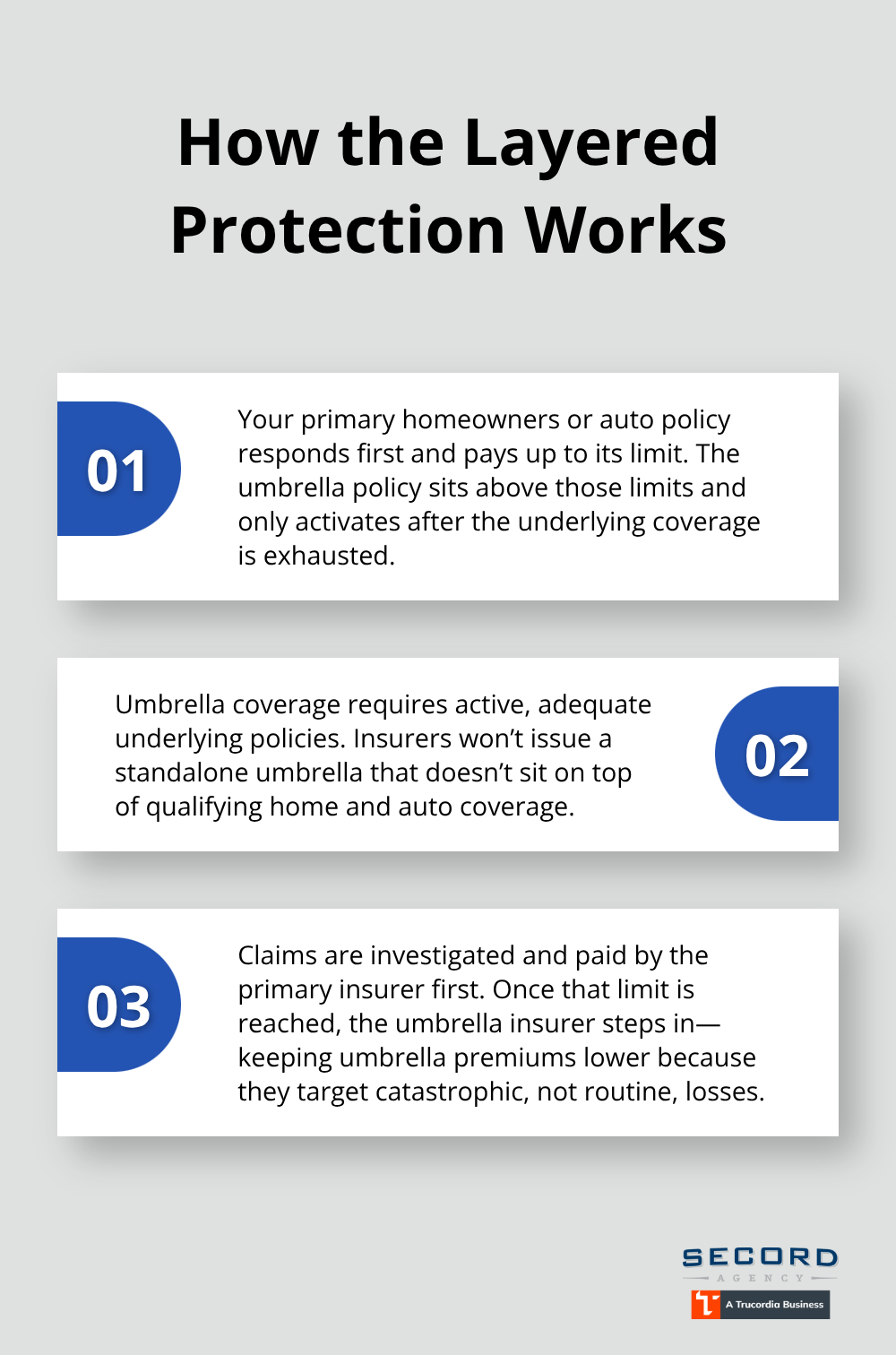
Washington mandates Workers’ Compensation if you have employees, and you must purchase coverage from L&I or be a certified self-insured employer. High-risk roles like general contracting carry much higher rates than office work. Commercial Auto insurance protects vehicles used for business purposes and becomes essential if employees drive for work or you visit client sites; personal auto policies explicitly exclude business use, leaving you personally liable if an accident occurs during work activities. Umbrella coverage sits above these policies and activates when a single claim exceeds your underlying limits. If a serious injury claim reaches $2 million but your General Liability limit is $1 million, umbrella coverage kicks in for the remaining $1 million, typically costing $150 to $300 annually for $1 million in extra protection.
Determining Your Limits and Comparing Costs
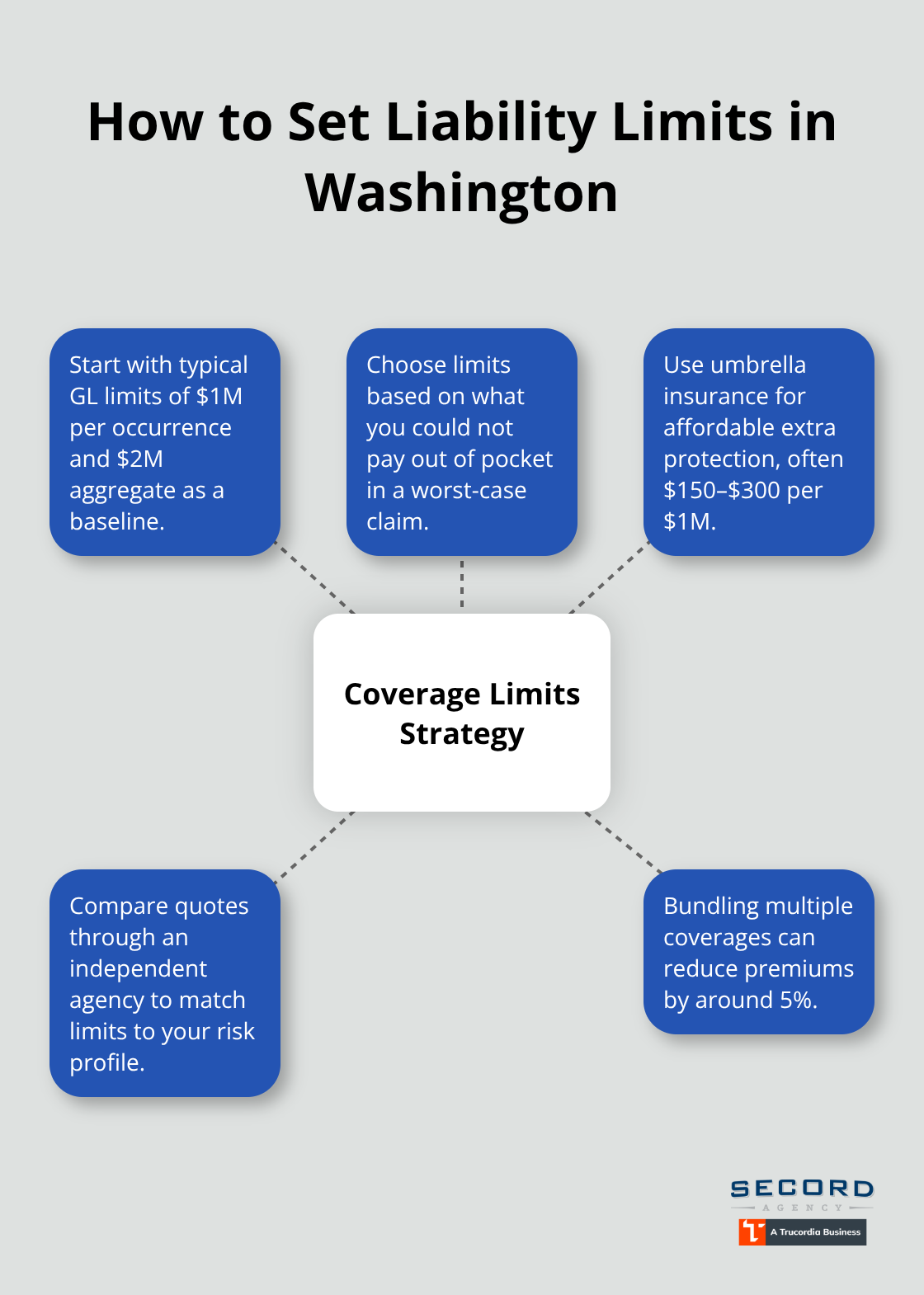
Most Washington small businesses operate with General Liability limits of $1 million per occurrence and $2 million aggregate, but your specific limits should reflect what you couldn’t pay out of pocket. Bundling multiple coverages with a single insurer often saves around 5% on premiums, and obtaining quotes from multiple carriers through an independent agency versus direct insurers helps you compare actual costs for your risk profile rather than relying on industry averages that may not reflect your specific operations. The next step involves assessing which of these coverages applies directly to your industry and operations-a process that reveals where your actual exposure lies and which policies move from optional to essential.
How to Assess Your Business Liability Needs
Inventory Your Actual Risk Sources
Start by mapping where your business creates risk. Walk through your operations and ask specific questions: Do clients enter your physical location? Do your employees drive vehicles for work? Do you handle customer data or financial information? Do you provide professional advice or recommendations? Do you manufacture or sell products? Do you work on client premises? Each yes answer points to a coverage gap that generic policies won’t address. A contractor working on residential sites faces completely different exposure than a consulting firm operating from a home office, yet both need liability protection tailored to their actual activities.
The 2023 Hiscox Underinsurance in Small Business Report showed that 75% of U.S. small businesses lack sufficient coverage, and most of those gaps stem from owners guessing at needs rather than systematically evaluating them. Your industry matters enormously-general contractors, cleaning services, landscapers, and caterers all carry different risk profiles, which means assessing insurance needs thoroughly before growth happens prevents costly gaps later.
Account for Washington’s Location-Specific Costs
Washington’s location variations shift your costs significantly. Workers’ compensation rates differ substantially between Seattle’s coastal region and Spokane’s inland area, so a quote reflecting your exact location matters far more than regional averages. Start by documenting your annual payroll, number of employees, annual revenue, property values, and the specific services or products you offer. This inventory becomes your baseline for determining which coverages move from optional to essential and what limits actually protect you.
Set Coverage Limits Based on Your Exposure
Determining appropriate coverage limits requires honest assessment of what you couldn’t personally pay. Most Washington small businesses operate with $1 million per occurrence and $2 million aggregate General Liability limits, but that’s a starting point, not a finish line. If a serious injury claim reaches $500,000 and your limit is $1 million, you’re covered. If it reaches $1.5 million, you’re exposed for $500,000 out of pocket.
The SBA advises insuring against what you couldn’t pay without destroying your business, which means evaluating your worst-case scenario rather than hoping it won’t happen. Professional Liability limits for service providers typically range from $250,000 to $2 million depending on engagement size and client risk, so a consultant working with Fortune 500 companies needs far higher limits than one serving small local businesses. Umbrella coverage activates when a claim exceeds your underlying limits and typically costs $150 to $300 annually for $1 million in extra protection-remarkably affordable insurance against catastrophic exposure.
Audit Your Existing Policies for Gaps
Review your existing policies immediately if you have them, not because you trust them to be adequate but because most Washington business owners carry gaps they don’t recognize. Many policies exclude specific activities, include outdated coverage limits that haven’t been adjusted in years, or fail to cover new service lines you’ve added. Your policy from three years ago almost certainly doesn’t reflect your current operations.
If a client contract specifies coverage requirements for General Liability, Professional Liability, or other policies, your existing coverage may fall short of contractual minimums, which means you’re technically in breach even though you carry insurance. Getting quotes from multiple carriers through an independent agency versus shopping direct reveals actual pricing for your risk profile rather than relying on industry averages that obscure your specific exposure.
Final Thoughts
Small business liability in Washington requires more than checking a box on an insurance form-the coverage gaps that plague 75% of small businesses nationwide hit Washington owners particularly hard because state-specific requirements, location-based rate variations, and industry-specific exposures demand precision rather than guesswork. Your General Liability foundation matters, but it remains incomplete without Professional Liability if you advise clients, property coverage if you own assets, Workers’ Compensation if you have employees, and Commercial Auto if vehicles factor into your work. The cost of getting this wrong far exceeds the monthly premiums you’ll pay for comprehensive protection.
Start by documenting your actual operations and the specific risks they create-walk through your business location, review your client contracts for coverage requirements, and list every activity that could generate a claim. This inventory prevents the costly mistake of assuming your existing policy still fits your current operations, and most Washington small businesses operate with $1 million per occurrence and $2 million aggregate limits, though your specific exposure may demand higher protection or specialized coverages like umbrella policies that activate when claims exceed underlying limits. Shopping for small business liability WA coverage through multiple carriers reveals actual pricing for your risk profile rather than relying on industry averages that obscure your specific situation.
An independent agency gathers quotes from multiple insurers, explains policy differences transparently, and helps you identify gaps that generic policies miss. We at Secord Agency – A Trucordia Business shop multiple carriers to deliver tailored commercial coverage paired with competitive rates and local, advocate-led service. Contact us today, provide details about your operations and current policies, and request quotes that reflect your exact location and industry.