Washington Landlord Insurance Quotes: Quick Local Comparisons

Landlords in Washington face unique insurance challenges that standard homeowners policies simply don’t address. Getting the right coverage protects your rental investment from liability claims, property damage, and income loss.

We at Secord Agency – A Trucordia Business help property owners find Washington landlord insurance quotes that match their specific needs. This guide walks you through what coverage matters, how to compare options, and which gaps could cost you thousands.

What Washington Landlords Actually Need to Know About Insurance Requirements

Washington doesn’t legally mandate landlord insurance, but this freedom comes with real consequences. If your property has a mortgage, your lender almost certainly requires it-and they won’t accept excuses when a claim gets denied because you skipped proper coverage. According to the Washington State Office of the Insurance Commissioner, average landlord property damage claims in the state exceeded $9,800 in 2022, with liability claims topping $22,300. Those numbers show why lenders protect themselves by requiring proof of coverage before they’ll fund your loan.

Why Lenders Demand Coverage You Might Think Is Optional

The Residential Landlord-Tenant Act shapes what you’re legally responsible for as a landlord, and your insurance needs to back up those obligations. If you rent out a property and something goes wrong-a tenant gets hurt on your premises, a pipe bursts and damages the unit, or a fire forces the tenant out for months-your homeowners policy won’t cover any of it. Homeowners insurance explicitly excludes losses on properties where the owner doesn’t live. That gap between what homeowners policies cover and what actually happens on rental properties is exactly why landlord insurance exists.

The Coverage Gap Homeowners Policies Leave Behind

Standard homeowners insurance protects your primary residence against fire, theft, liability, and weather damage. The moment you rent out that property, the policy becomes void for rental-related claims. Your carrier will either cancel the policy outright or deny claims, leaving you personally liable for everything. Landlord insurance fills this gap with three core components: dwelling coverage for the building itself, liability protection if someone gets injured on your property, and loss-of-rent coverage that replaces your income while the unit sits empty during repairs.

What Landlord Insurance Actually Costs in Washington

In 2023, Washington landlord insurance averaged about $1,190 to $1,860 per year for a $300,000 dwelling, depending on property age, location, and local hazards. That cost varies significantly based on whether your property sits in a high-earthquake zone like the Puget Sound region or faces wildfire exposure in Eastern Washington. Loss-of-rent coverage is the piece most landlords underestimate-it covers your mortgage, taxes, and operating costs when a covered loss makes the unit uninhabitable. Without it, you pay those expenses from your own pocket while the property produces zero income.

Earthquake Coverage: Not Optional for Western Washington

Western Washington properties need earthquake coverage as a separate endorsement or policy, since standard landlord policies exclude earth movement. Homes near the Cascadia Subduction Zone may face higher premiums due to the potential for significant earthquake events. This regional risk shapes what coverage you actually need when you compare quotes from different carriers-and it’s exactly the kind of local detail that separates adequate protection from dangerous gaps.

Getting Accurate Quotes From Washington Carriers

Provide the Right Property Information

To get a real quote, you need to provide specific information that directly affects your premium. Start with the property address-carriers use location data to assess earthquake risk, wildfire exposure, flood zones, and local crime rates, which can swing your quote by hundreds of dollars depending on whether you’re in Seattle’s Puget Sound zone or Eastern Washington. Next, provide the property type (single-family home, duplex, triplex, or four-plus units), year built, roof age, and roof material. Roof age matters significantly because most carriers limit or exclude roof damage if the roof exceeds 10 years old, and DP-3 policies handle this better than DP-1 or DP-2 forms.

You’ll also need to specify the dwelling replacement cost (not market value), the number of rental units, expected monthly rent, and whether the property will be occupied or vacant. If you plan to rent short-term through Airbnb or VRBO, disclose that upfront-standard policies exclude short-term rentals, and you’ll need a specialized endorsement that typically costs 20 to 40 percent more than long-term rental coverage.

Request Identical Coverage Limits Across Carriers

When comparing quotes across carriers like Safeco, Stillwater Insurance Group, or Progressive, request identical coverage limits and deductibles from each. Don’t compare a $500,000 liability limit from one carrier against a $1,000,000 limit from another-you won’t know which price difference comes from better rates versus different coverage. Deductibles directly impact your monthly cost: increasing from $1,000 to $2,500 typically cuts premiums by 8 to 15 percent, but only if you maintain a cash reserve equal to that deductible amount.

The average cost of landlord insurance across the nation is approximately $1,478 annually, but earthquake-prone areas in the Puget Sound region and wildfire corridors in Eastern Washington see surcharges up to 35 percent higher. Request specific information about what each quote includes: does it cover loss of rent during repairs, vandalism at vacant properties, or building code upgrades after a loss?

Understand How Policy Forms Affect Your Cost and Coverage

DP-1 policies are the cheapest but cover only basic perils like fire and wind, leaving you exposed to theft and vandalism unless you add endorsements. DP-3 provides open-perils coverage and costs 15 to 25 percent more than DP-2, but it’s worth the premium if your property has an older roof or sits in a high-risk zone. Regional hazards-Cascadia earthquake risk, atmospheric river flooding, wildfire smoke-affect your specific property’s coverage needs and cost in ways that standard quotes often miss.

An independent agent can shop multiple carriers at once and explain how these local factors shape your protection and premium. This expertise becomes especially valuable when you’re weighing the trade-offs between lower upfront costs and the coverage gaps that could expose you to significant losses. As you move forward with comparing quotes, the next step involves identifying which coverage gaps most landlords overlook-and how those oversights can turn into expensive mistakes.

What Most Washington Landlords Get Wrong About Coverage

Loss-of-Rent Coverage Protects Your Cash Flow, Not Just Your Income

Most landlords grab the cheapest quote they find and never ask what happens when the property sits empty for three months or when a flood forces tenants out. Loss-of-rent coverage is where the real financial damage occurs when landlords skip it. This coverage replaces your mortgage payment, property taxes, insurance premiums, and utilities while the unit is uninhabitable after a covered loss-not just the rental income you would have collected. If you own a $400,000 property with a $250,000 mortgage, your monthly costs easily exceed $3,500 even when zero rent comes in. Without loss-of-rent coverage, you absorb those expenses entirely from your own cash reserves.

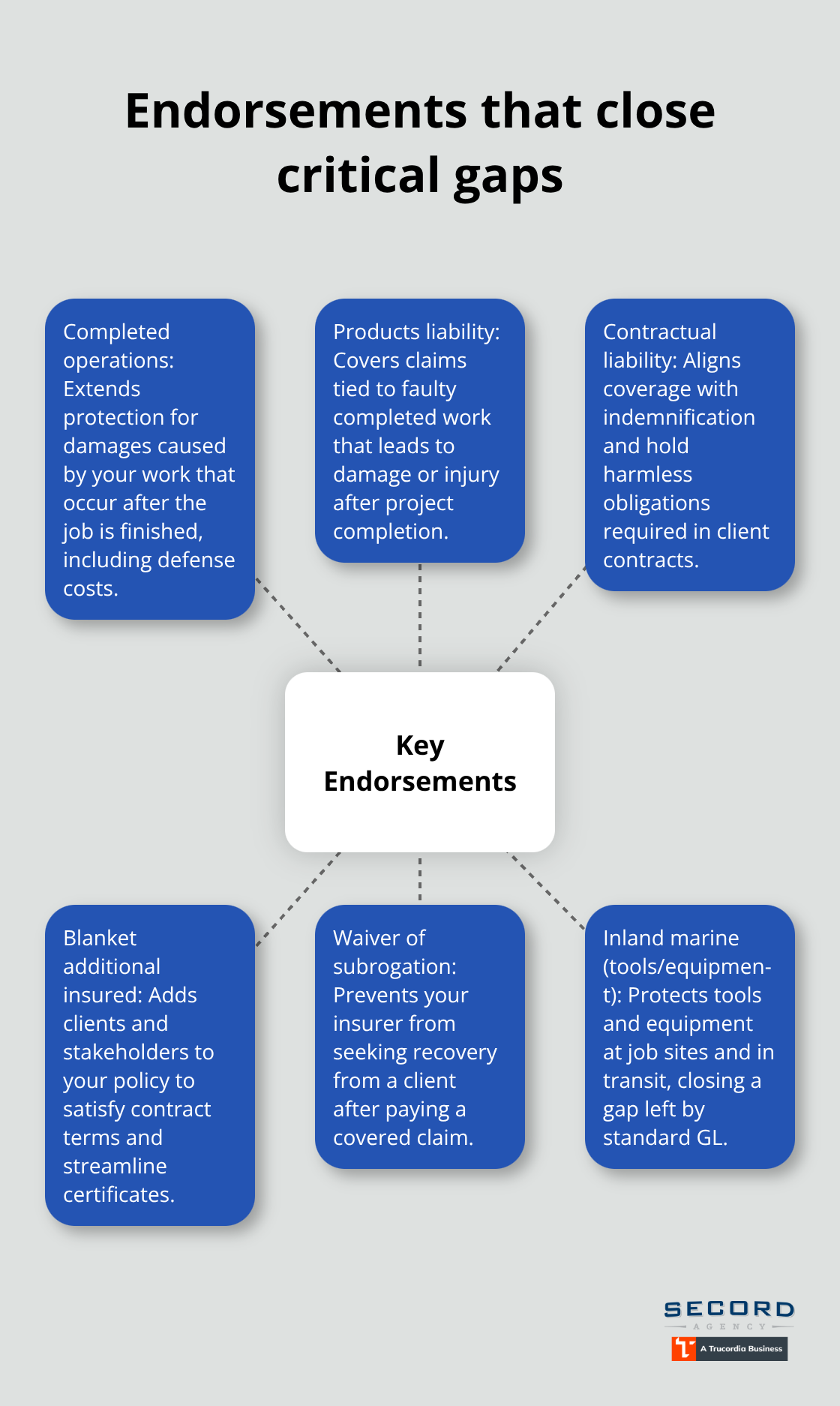
Checkmarked list highlighting critical landlord insurance add-ons for Washington properties. - Washington landlord insurance quotes

In Washington, where median rent-to-income ratios run 15 to 20 percent higher than the national average, losing three months of rent while paying full operating costs can deplete your reserves faster than most landlords anticipate. The Washington State Office of the Insurance Commissioner reported that average property damage claims exceeded $9,800 in 2022, and many of those claims involved weeks or months of repair time. Standard DP-1 policies don’t include loss-of-rent coverage at all, so you must specifically request it-and most carriers offer it as an endorsement rather than automatic coverage. Request a specific dollar amount for loss-of-rent based on your actual monthly rent, not a generic percentage.

Earthquake Coverage Addresses a Real Regional Threat

Earthquake coverage represents one of two gaps that turn into catastrophic losses in Washington. Standard landlord policies exclude earth movement entirely, which means a Cascadia Subduction Zone event leaves you completely unprotected unless you purchased a separate endorsement. The Washington Geological Survey estimates a 10 to 15 percent probability of a major Cascadia earthquake within the next 50 years, with potential statewide replacement costs exceeding $50 billion. Homes near the Puget Sound region face the highest risk, and earthquake endorsements typically cost $150 to $300 annually depending on construction type and proximity to fault lines.

Flood Insurance Fills Another Critical Gap

Flood insurance through the National Flood Insurance Program costs $300 to $800 per year for properties in mapped floodplains, and more than 175,000 structures in Washington sit in those zones according to the Department of Ecology. If your property is in a Zone A or V flood zone, standard policies won’t cover water damage, and your lender will require proof of flood coverage before funding or refinancing. Sewer backups during heavy spring rain also fall outside standard coverage, so water backup endorsements protect you when atmospheric rivers overwhelm drainage systems.

Umbrella Liability Protects Your Personal Assets

High-value properties need umbrella liability coverage beyond the standard $500,000 to $1,000,000 limits that come with basic landlord policies. If you own multiple properties or a single property worth over $750,000, a $1 million to $2 million umbrella policy costs roughly $200 to $400 annually and protects you when liability claims exceed your underlying landlord policy limits. Courts in Washington have awarded liability judgments well above standard policy limits in cases involving serious injuries on rental properties, making umbrella coverage essential for protecting your personal assets.

Final Thoughts

Finding the right Washington landlord insurance quotes requires you to balance cost against the specific hazards your property faces. The cheapest quote won’t protect you if it skips loss-of-rent coverage, earthquake endorsements, or flood protection-gaps that turn into five-figure losses when claims happen. Your property’s location, age, and construction type determine which coverage forms make sense: DP-1 works for newer properties in low-risk areas, while DP-3 becomes essential for older roofs or Puget Sound properties near earthquake zones.

Request identical coverage limits across carriers so you’re comparing actual protection, not just price tags. Increase your deductible to $2,500 if you maintain a cash reserve, since that move typically cuts premiums by 8 to 15 percent without exposing you to unmanageable out-of-pocket costs. An independent insurance agent eliminates the guesswork by shopping multiple carriers at once and explaining how local hazards affect your specific property.

Start by gathering your property details: address, year built, roof age, dwelling replacement cost, and expected monthly rent. Contact Secord Agency to request quotes with identical liability limits and deductibles. Compare what each quote includes for loss-of-rent, earthquake, and flood coverage, then secure your rental investment by purchasing a policy that protects your cash flow, not just your building.

Auto Insurance Discounts Seattle: Smart Ways to Cut Premiums

Seattle drivers are paying more for auto insurance than they need to. Most people leave hundreds of dollars in savings on the table every year simply because they don’t know what discounts exist.

At Secord Agency – A Trucordia Business, we help local drivers find auto insurance discounts in Seattle that actually stick. The right combination of discounts can cut your premiums significantly, and we’ll show you exactly how.

What Discounts Can Actually Lower Your Seattle Auto Insurance Bill

Safe Driver Discounts Reward Your Clean Record

A clean driving record is worth real money in Seattle. Safe driver discounts typically range from 5% to 15% depending on your insurer, and they reward three to five years without accidents or violations. This matters because driving history carries the most weight in how insurers price your policy. If you’ve maintained a clean record, you’re sitting on savings you may not be using yet.

Some carriers sweeten this further with telematics programs that monitor your actual driving behavior-speed, braking patterns, and time of day you drive. These programs can yield discounts up to 30% if you consistently drive safely, though Consumer Reports data shows a more typical median savings around $120 per year. Ask your carrier explicitly whether they offer monitoring programs and what data they collect before you enroll.

Infographic showing top discount percentages Seattle drivers can earn - Auto insurance discounts Seattle

Not all safe drivers benefit equally from telematics; if you drive erratically even occasionally, the discount might shrink or disappear entirely.

Multi-Policy Bundling Delivers Immediate Savings

Multi-policy bundling delivers the most immediate savings for most Seattle drivers. Combining auto insurance with homeowners or renters coverage through the same carrier typically cuts 10% to 25% off your auto premium, and some carriers offer bundled discounts as high as 30%. The math is straightforward: a driver paying $2,877 annually for full coverage in Seattle could save roughly $288 to $719 through bundling with a home policy.

However, bundling isn’t automatically the best choice for every household. You need to compare the bundled rate against standalone quotes from other carriers; sometimes a cheaper auto insurer plus a separate home policy costs less overall than bundling with an expensive carrier. This is why shopping multiple carriers matters before you commit to any bundle.

Safety Features Unlock Additional Discounts

Safety features and vehicle technology represent another layer of savings that many drivers overlook. Anti-lock brakes, automatic emergency braking, blind-spot monitoring, and stability control typically unlock discounts of 3% to 10% depending on the insurer. Modern vehicles with these systems installed factory-standard often qualify automatically, but older cars may not.

Ask your carrier specifically which safety features on your vehicle qualify for discounts and whether upgrading to a vehicle with advanced safety systems would lower your rate enough to offset the purchase price over several years. The combination of these three discount categories-safe driving, bundling, and safety features-creates a foundation for meaningful savings that compounds when you apply them together.

How to Actually Compare Rates and Find Hidden Savings

Shop Multiple Carriers to Expose Price Gaps

Shopping multiple carriers is non-negotiable if you want the lowest rate. NerdWallet’s January 2026 analysis shows that for an identical driver profile in Seattle, Direct General quoted around $46.02 per month while State Farm quoted $101.80 per month for the same coverage-a difference of over $660 annually. This isn’t an outlier. Insurers weight driving history, location, age, and credit differently, which means your cheapest option depends on your specific profile, not on brand reputation.

When you get quotes, standardize your coverage limits and deductibles across all carriers so you’re comparing apples to apples. Request written explanations for any quote that seems unusually high or low; sometimes a carrier has flagged something in your record that you can address, or they’ve simply underestimated your risk category.

Compact checklist of steps to compare Seattle auto insurance quotes accurately - Auto insurance discounts Seattle

Consumer Reports data shows that about 30% of policyholders switched insurers in the past five years and saved a median of $461 annually, which tells you that most people are overpaying simply because they haven’t shopped in years. Get quotes from at least three to five carriers every time you review your policy. Most insurers provide estimates within minutes online, and quotes typically remain valid for 30 to 45 days, giving you a window to decide.

Review Your Policy Annually When Life Changes

Your policy isn’t static, and neither should your shopping habits. An annual rate review is essential because your circumstances change-you might move to a safer neighborhood, start working from home, get married, or pay off your car. Each of these events unlocks new discounts or eliminates the need for certain coverages. Washington auto insurance premiums rose about 17.5% year-over-year as of December 2024 according to the Washington Office of the Insurance Commissioner, which means carriers adjust their pricing regularly.

If your premium jumps more than 15% to 20% year-over-year, that’s a signal to shop immediately. Large increases often signal that you’re no longer getting competitive pricing, and a quick comparison with other carriers can reveal substantial savings. Don’t wait for renewal notices to prompt action; set a calendar reminder to shop every 12 months regardless of whether your rate increased.

Evaluate Usage-Based Insurance Programs Carefully

Usage-based insurance programs deserve serious consideration if you drive safely and consistently. These telematics programs track your actual driving through a mobile app or device, and Consumer Reports found that enrolling can yield a median savings around $120 per year. Some programs offer substantially higher savings-up to about $931 in certain cases-if your driving patterns are genuinely safe.

Before enrolling, understand exactly what data the carrier collects, how long they store it, and whether they share it with third parties. Ask your current insurer if they offer a usage-based option and how it compares financially to your clean-record discount alone. The privacy trade-off matters; some drivers accept data monitoring for savings, while others prefer traditional discounts that don’t require tracking.

Work with an Independent Agent to Uncover Hidden Discounts

An independent agent shops carriers on your behalf, compares multiple quotes simultaneously, and identifies which discounts you actually qualify for without you spending hours on the phone. This approach often uncovers rate improvements that online quote tools miss because agents have access to carrier-specific programs and can negotiate based on your complete profile. Agents at Secord Agency, based in Seattle’s Wallingford neighborhood, pair competitive rates with fast, local service and provide personalized advice to help you navigate coverage options and ongoing policy reviews.

The combination of multiple quotes, annual reviews, and usage-based programs creates a comprehensive strategy for finding and maintaining the lowest possible rate. Your next step involves taking action on these strategies-starting with gathering quotes and identifying which discounts apply to your specific situation.

Why Local Agents Beat Online Quotes

Independent Agents Shop Multiple Carriers at Once

An independent agent eliminates the friction that costs you money. When you shop online, you enter your information into one carrier’s system at a time, wait for a quote, then repeat the process with another insurer. This approach takes hours and leaves gaps because you’re unlikely to identify every discount you qualify for. A local agent uses a comparative rater to shop multiple carriers simultaneously on your behalf, compares their exact pricing for your profile, and identifies discounts you’d miss on your own. This matters because insurers don’t volunteer all their discounts, and reps handling online quotes have no incentive to surface savings that reduce what you pay.

A Consumer Reports analysis found that about 30% of policyholders switched insurers in the past five years and saved a median of $461 annually, yet most people never switch because the comparison process feels overwhelming. An agent removes that friction entirely. They know which carriers weight your specific factors-your age, driving history, location within Seattle, vehicle type, and credit score-most favorably and can predict which company will offer the best rate before you fill out a form.

Hub-and-spoke visual of key benefits of using a Seattle independent insurance agent

Local Knowledge Reveals Hidden Rate Variations

Seattle’s insurance market varies dramatically by ZIP code. NerdWallet’s data shows that ZIP 98110 averages roughly $65.42 per month for identical driver profiles while ZIP 98101 averages $143.81 per month, a gap of over $900 annually. An agent familiar with Seattle’s neighborhoods understands these variations and can advise whether your current ZIP code’s higher costs warrant more aggressive shopping or whether moving to a safer area would lower your rate enough to justify the move.

Washington auto insurance premiums rose about 17.5% year-over-year as of December 2024 according to the Washington Office of the Insurance Commissioner, partly because weather-related claims and modern vehicle repair costs keep climbing. An agent tracks these trends and alerts you when they affect your specific rate, then repositions your coverage before your renewal hits.

Agents Advocate for Coverage That Protects Your Assets

An agent understands Washington state’s minimum liability requirements of 25/50/10 and can advise whether higher limits like 50/100/250 make sense for your asset protection, something online quote tools rarely address. When a carrier denies a discount or flags something in your record, an agent advocates on your behalf to clarify the issue or find alternative coverage that costs less. This advocacy prevents costly mistakes that online shoppers often make when they accept the first quote without understanding the full picture.

Ongoing Reviews Keep Your Policy Competitive

An agent handles the administrative work of annual reviews without requiring you to remember to shop every 12 months. When life changes occur-you marry, move, pay off your car, or start working from home-an agent proactively identifies which new discounts apply and adjusts your policy accordingly. This ongoing advocacy prevents you from overpaying during transitions when your coverage needs shift but your policy doesn’t.

Final Thoughts

Seattle drivers waste hundreds of dollars annually by ignoring auto insurance discounts or failing to shop competitively. The strategies outlined here work because they address the core problem: most people accept their current rate without understanding what they’re actually paying for or whether better options exist. Start by gathering quotes from at least three to five carriers using your exact address and standardized coverage limits, then identify every discount you qualify for-safe driver, bundling, safety features, low mileage, good student status, or usage-based programs.

Commit to an annual review and set a calendar reminder for your policy renewal date to shop again, even if your current rate seems reasonable. Washington premiums rose 17.5% year-over-year as of December 2024, and carriers adjust pricing constantly. Life changes matter too-marriage, moving within Seattle, starting remote work, or paying off your vehicle all unlock new discounts or eliminate unnecessary coverages.

The real advantage comes from working with someone who handles this complexity on your behalf. An independent agent shops multiple carriers simultaneously, identifies discounts you’d miss alone, and advocates when carriers deny coverage or flag issues in your record. Contact us for a comprehensive policy review, and we’ll compare your current coverage against multiple carriers to show you exactly how much you could save on auto insurance discounts in Seattle.

Seattle Car Insurance Rates: Finding the Best Value

Seattle car insurance rates vary significantly based on where you live, how you drive, and what coverage you choose. We at Secord Agency – A Trucordia Business know that finding affordable coverage in this market requires understanding what actually affects your premiums.

This guide walks you through the factors that shape your rates, how to compare quotes effectively, and concrete ways to cut your costs without sacrificing protection.

What Actually Drives Your Seattle Car Insurance Costs

Seattle’s car insurance premiums reflect three hard realities that most drivers overlook. Your location, the weather patterns that shape claim costs, and your coverage choices all stack together to determine what you pay each month.

Location Creates Massive Price Gaps

Your ZIP code determines far more of your premium than you might expect. Seattle neighborhoods have vastly different accident frequencies and risk profiles. A driver in ZIP code 98118 pays an average of $3,165 annually, while someone in 98115 pays $2,776 for the same coverage according to data analyzed by NerdWallet. That $389 difference stems entirely from where you park your car.

Hub-and-spoke showing location, weather/climate, and coverage choices influencing Seattle premiums - Seattle car insurance rates

Accident rates spike in congested urban corridors. Theft varies by neighborhood. Road conditions deteriorate faster in some areas than others. Insurers plug your specific ZIP code into every rate calculation and use years of claims data to price risk block by block. This is why quotes for your exact address matter-a quote from a neighboring ZIP code won’t reflect what you’ll actually pay.

Weather and Climate Push Repair Costs Higher

Washington state’s weather patterns have driven car insurance costs up sharply. Auto insurance rates across Washington increased 17.5% year over year as of December 2024, according to the Washington Office of the Insurance Commissioner. That acceleration stems directly from rising repair bills.

Modern vehicles require expensive repairs for minor damage because they pack safety sensors and electronic systems throughout their frames. Rain, hail, and winter conditions don’t just increase accident frequency-they drive up the cost per claim. Wildfires have also shifted how insurers view risk in parts of Washington, affecting underwriting decisions and availability. Expect your rates to reflect these climate realities.

Coverage Requirements Shape Your Financial Exposure

Washington mandates minimum liability coverage of 25/50/10 (meaning $25,000 per person and $50,000 per accident for bodily injury, plus $10,000 for property damage). That bare minimum satisfies the law but leaves you financially exposed. A serious accident with multiple injuries can easily exceed those limits, putting your personal assets at risk.

Full-coverage policies that include collision and comprehensive protection average around $2,154 annually in Seattle, roughly 12% higher than the state average of $1,919. The gap between meeting state minimums and carrying adequate protection is substantial. Your deductible choice also matters enormously-raising it from $500 to $1,000 can lower your premium meaningfully, but you need cash reserves to cover that deductible if you file a claim.

Understanding these requirements helps you make conscious choices rather than defaulting to either bare-bones coverage or over-insuring. Once you grasp how location, weather, and coverage interact, you’re ready to compare quotes across multiple carriers and identify which insurers offer the best value for your specific situation.

Comparing Quotes Across Seattle Carriers

Request quotes from at least three to five carriers using your exact address, vehicle details, and driving history. Your ZIP code affects pricing significantly, so generic quotes won’t work-insurers need your specific address to calculate your actual rate. Most drivers accept the first quote they receive, which costs them real money. That price variation represents thousands of dollars over a few years if you don’t shop around.

Many carriers offer online quote tools that take ten minutes to complete. Write down the coverage limits each quote includes, since comparing $1,500 premiums with different deductibles or liability limits is meaningless. A quote with a $1,000 deductible and $100,000 bodily injury coverage isn’t comparable to one with a $500 deductible and $25,000 limits, even if they come from the same company. Standardize your coverage across all quotes so you actually compare apples to apples.

What Each Coverage Type Actually Protects

Liability coverage pays for damage you cause to other people and their property-it’s mandatory in Washington and non-negotiable. Collision coverage pays to repair your own vehicle after an accident with another car or object, regardless of fault. Comprehensive coverage handles theft, weather, vandalism, and animal strikes. Uninsured motorist protection covers you if you’re hit by someone without insurance.

Most Seattle drivers need all four, but the coverage limits matter enormously. Washington’s minimum 25/50/10 liability leaves you exposed; serious accidents regularly exceed those limits and put your personal assets at risk. Raising limits to $100,000 per person and $300,000 per accident costs far less than you’d expect and protects your financial future.

Deductibles work backwards from how people think: a $1,000 deductible means you pay $1,000 out of pocket when you file a claim, while the insurer pays the rest. Raising your deductible from $500 to $1,000 typically lowers your premium by 15–25%, but only choose this if you have cash reserves to cover it.

Spotting Discounts That Lower Your Rate

Insurers hide discounts throughout their pricing structures, and most Seattle drivers never ask about them. Multi-policy bundling-combining auto with homeowners or renters insurance-typically saves 10–25% on your auto rate. Low-mileage discounts apply if you drive under 7,500 miles annually; many Seattle residents qualify if they use public transit or work from home. Safe-driver discounts reward clean records, while good-student discounts help younger drivers. Some insurers offer telematics programs that track your driving habits and reward safe behavior with rate reductions.

Ask each carrier specifically what discounts you qualify for before accepting a quote, since representatives don’t always volunteer this information. Price variation between carriers shows how dramatically insurers price risk differently based on their underwriting models and loss history.

Checklist of common car insurance discounts available in Seattle

Understanding Rate Differences Between Carriers

Request written explanations for rate differences between quotes, especially if one carrier is significantly higher. Each insurer weights factors like your age, location, and driving history differently, which explains why one company charges substantially more than another for your exact profile.

Don’t automatically choose the cheapest quote if the insurer has poor customer service ratings-claims handling matters when you actually need your insurance. An independent agency can shop multiple carriers on your behalf and explain the differences between quotes, saving you time and helping you avoid costly mistakes.

Once you’ve identified which carriers offer competitive rates for your specific situation, the next step involves taking concrete action to lower your costs even further through strategic coverage adjustments and policy reviews.

Cut Your Seattle Car Insurance Costs Without Losing Protection

Raise Your Deductible to Lower Monthly Premiums

Increasing your deductible from $500 to $1,000 typically cuts your premium by 15–25%. The math works in your favor if you have $1,000 in cash reserves set aside specifically for this purpose. If your premium drops $30 per month by raising your deductible, you break even on that extra $500 out-of-pocket exposure after 17 months. This strategy only makes sense if you can actually afford to pay that deductible without financial strain when you file a claim.

Most drivers accept their initial quote without questioning whether a higher deductible fits their financial situation. Calculate your break-even point before you commit to this change, and verify that your emergency fund can absorb the larger deductible without creating hardship.

Stack Discounts to Multiply Your Savings

Multi-policy bundling delivers substantial savings at most carriers. Combining auto with homeowners or renters insurance cuts your auto rate by 10–25%. Low-mileage discounts apply if you drive under 7,500 miles annually, which qualifies many Seattle residents who rely on public transit or work remotely. Telematics programs that track your actual driving habits can lower your rate by 10–30% if you consistently drive safely.

Safe-driver discounts reward clean records, and good-student discounts help younger drivers. The critical step is calling your current insurer and asking them to list every discount you qualify for before you accept any quote. Most representatives don’t volunteer this information unless you ask directly. These discounts compound, so qualifying for three or four of them can produce meaningful monthly savings.

Shop Your Rate Annually to Catch Price Increases

Reviewing your policy annually matters far more than most drivers realize because rate changes compound quickly. If you haven’t shopped your rate in the past 12 months, you’re likely overpaying.

A rate hike of 15–20% often signals you should request quotes from competing carriers immediately. Three to five years after a violation like a speeding ticket or at-fault accident, your rate impact drops substantially as that incident ages off your record.

Compact list of actions to reduce car insurance costs in Seattle - Seattle car insurance rates

Get Professional Help Comparing Multiple Carriers

An independent agency can shop multiple carriers on your behalf and identify rate improvements you’d miss shopping alone. They handle the comparison work and explain coverage differences clearly, which saves time and prevents costly mistakes when selecting between carriers with significantly different pricing models. This approach works especially well if your driving history includes violations or accidents that complicate rate shopping.

Final Thoughts

Seattle car insurance rates reflect real costs driven by location, weather, and coverage choices. The gap between the cheapest and most expensive quotes for identical coverage often exceeds $1,000 annually, which means your shopping decisions directly impact your wallet. Understanding how ZIP codes, repair costs, and claim frequency shape your premium puts you in control rather than leaving you at the mercy of whatever rate a single insurer quotes.

The strategies that actually work require three concrete actions. Request quotes from multiple carriers using your exact address and driving history, then standardize the coverage across all quotes so you compare identical protection levels. Identify every discount you qualify for-bundling, low-mileage, safe-driver, and telematics programs compound to produce meaningful savings that most drivers never claim, and review your policy annually to shop competing rates whenever you see a significant increase.

We at Secord Agency – A Trucordia Business work with Seattle drivers daily to navigate this exact process. Our team shops multiple carriers to find competitive rates tailored to your specific situation, then pairs those rates with fast, local service and ongoing policy reviews to keep your coverage aligned with your actual needs. Getting a personalized quote takes minutes and costs nothing-reach out to Secord Agency today to see what your Seattle car insurance rates actually cost across multiple insurers.