Cheap Auto Insurance Washington: How to Save Without Sacrificing Coverage

Finding cheap auto insurance in Washington doesn’t mean settling for inadequate protection. Most drivers overpay simply because they don’t know what factors insurers consider or which discounts apply to their situation.

We at Secord Agency – A Trucordia Business help Washington residents cut their premiums while maintaining solid coverage. This guide walks you through the rate factors you can’t control, the strategies that actually work, and the costly mistakes to avoid.

What Drives Your Washington Auto Insurance Rate

Your insurance rate isn’t random. Washington insurers measure specific factors to predict risk, and understanding which ones matters most helps you make smarter decisions about coverage and cost.

Driving History Sets the Foundation

A clean driving record cuts your premium significantly. Drivers with no accidents average around $1,919 annually according to Bankrate data, while a single at-fault accident pushes rates up 48% higher. One speeding ticket adds roughly 21% to your costs, and a DUI increases premiums by 89%.

Percent increases for accident, speeding ticket, and DUI in Washington - Cheap auto insurance Washington

This means your past behavior on the road directly controls whether you pay $1,919 or substantially more. The good news: every year without an incident lowers your rate, so safe driving pays off immediately and compounds over time.

Vehicle Type Affects Your Premium as Much as Your Driving History

The car you drive shapes your premium significantly. A BMW 330i costs about $2,398 annually to insure in Washington, while a Honda Odyssey runs around $1,749 per year, according to Bankrate. Sports cars and luxury vehicles carry higher repair costs and theft risk, making insurers charge more. Before you buy any car, ask your insurer for estimated premiums on each model you’re considering-this step alone can save hundreds annually. Consumer Reports publishes accident and theft rates for every model, helping you spot cheaper-to-insure options before purchase. Safety features like anti-lock brakes, airbags, and anti-theft devices lower your premium, so prioritize these when comparing vehicles. Older vehicles with lower values might not need collision or comprehensive coverage, which can cut your bill significantly if you’re willing to accept higher out-of-pocket costs after a total loss.

Age, Location, and Credit History Shape Your Final Rate

Washington’s insurance costs vary dramatically by location and personal circumstances. Seattle drivers pay around $2,154 annually for full coverage, while Port Townsend averages $1,562-a difference of nearly $600 for identical coverage. Teen drivers face the steepest rates: a 16-year-old on a parent’s policy costs about $4,046 per year, while an 18-year-old on their own policy reaches $6,968 annually. Rates drop steadily as drivers age; a 55-year-old averages $124 monthly across carriers, and seniors aged 65–70 pay roughly $134 monthly. Credit history also affects your rate in Washington-poor credit raises costs by approximately 48%, while excellent credit reduces them by 13%, according to Bankrate. Male drivers under 30 historically pay more than females because accident data shows higher incident rates in that group. These factors combine to create your individual rate, which is why shopping multiple carriers is essential-USAA, Travelers, PEMCO, and Encompass often offer competitive pricing in Washington, but savings vary by profile.

Now that you understand what insurers charge for, the next section reveals which strategies actually lower your premiums without leaving you underprotected.

How to Cut Your Premium Without Dropping Coverage

Bundle Your Home and Auto Policies Strategically

Bundling your home and auto policies with the same insurer typically saves money, though the actual discount varies widely by carrier and your location. Some insurers offer substantial savings-sometimes 15–25% off your auto premium-while others deliver modest reductions. Request a bundling quote from multiple carriers before committing, because one insurer’s bundle discount might undercut another’s single-policy rate. This comparison takes minutes but often reveals hundreds in annual savings.

Raise Your Deductible If You Can Afford It

Increasing your deductible from $500 to $1,000 meaningfully lowers your monthly costs, but only raise it if you can afford to pay that amount out-of-pocket if you file a claim. According to Bankrate data, this single adjustment reduces your premium noticeably without sacrificing the protection you need most. The trade-off is straightforward: lower monthly payments in exchange for higher out-of-pocket costs when accidents happen.

Activate Safe Driving and Telematics Discounts

Safe driving discounts reward accident-free records and sometimes require you to complete a defensive driving course, which typically costs $30–$50 and can reduce your rate by 5–10%. Telematics programs, where an app or device monitors your driving habits, can lower premiums especially for younger drivers, though you should review sample rates before enrolling because a poor driving score might actually increase your costs. These programs work best for drivers confident in their habits.

Quick checklist of money-saving auto insurance tactics - Cheap auto insurance Washington

Improve Your Credit and Shop Multiple Carriers

Credit history still influences your Washington premium despite regulatory changes-drivers with poor credit pay 105 percent more for full coverage car insurance than those with excellent credit according to Bankrate-so paying bills on time and addressing errors on your credit report directly improves your insurance rate. Shopping around is non-negotiable: rates differ substantially across carriers for identical coverage, and gathering quotes from at least three to five insurers takes roughly 15 minutes online. USAA consistently offers the lowest rates in Washington, averaging around $93 monthly for full coverage, but eligibility is restricted to military members and their families. If you don’t qualify for USAA, compare Travelers, PEMCO, Encompass, and State Farm, since these carriers frequently offer competitive pricing across different driver profiles. Request quotes for the exact same coverage levels and deductibles across all carriers so you’re comparing apples to apples, and don’t skip smaller or regional insurers because they sometimes undercut national players in specific areas. Washington’s Insurance Commissioner provides complaint data for each carrier, helping you balance low rates with reliable claims service-paying slightly more for a carrier with fewer complaints often proves worthwhile if you ever need to file a claim.

These strategies lower your costs, but common mistakes can erase those savings just as quickly.

Mistakes That Tank Your Insurance Savings

Cutting your premium requires discipline beyond just choosing the right coverage level. Most Washington drivers accidentally reverse their savings through preventable errors that either spike rates dramatically or leave them legally exposed.

Policy Lapses Create Legal and Financial Disasters

A lapsed policy ranks among the costliest mistakes because Washington law requires continuous coverage, and any gap creates serious consequences. Driving without insurance exposes you to fines starting at $550, potential license suspension, and if you cause an accident, you become personally liable for all damages and injuries. Insurers also penalize lapses heavily: when you restart coverage after a gap, your rate climbs significantly because the gap itself signals risk to underwriters. Set automatic payments through your bank or insurer so renewal happens without thinking about it.

Underinsuring Your Vehicle Backfires in Claims

You save money monthly but face catastrophic costs when accidents happen. Washington’s minimum liability of 25/50/10 covers others but leaves your own vehicle unprotected unless you add collision and comprehensive coverage. Bankrate data shows that drivers with at-fault accidents pay roughly $222 monthly on average, meaning one mistake wipes out years of premium savings if you skipped collision coverage.

Four common insurance mistakes and why they cost you

The real risk emerges in high-theft areas: Washington experienced nearly 50,000 vehicle thefts in 2022 according to the Insurance Information Institute and FBI data, making comprehensive coverage essential in Seattle, Tacoma, and other urban centers where theft rates run highest.

Delayed Accident Reports Complicate Claims

Reporting accidents promptly matters more than most drivers realize because delays complicate claims and sometimes invalidate coverage entirely. Contact your insurer within 24 hours of any accident, even minor ones, because waiting weeks or months gives insurers grounds to deny claims or cancel policies for misrepresentation. Photograph damage, collect witness information, and file a police report for any collision involving another vehicle or property damage exceeding minor amounts.

Annual Coverage Reviews Prevent Overpaying and Underprotecting

Life changes like paying off a car loan, relocating within Washington, or reaching retirement age should trigger a policy review because your coverage needs shift accordingly. A vehicle worth $5,000 might not justify collision coverage with a $500 deductible, but the same vehicle in a high-theft zip code absolutely should carry comprehensive protection. Secord Agency, a Trucordia business based in Seattle’s Wallingford neighborhood, provides personalized policy reviews to help Washington drivers maintain appropriate coverage without overpaying. These annual check-ins typically reveal opportunities to adjust deductibles, drop unnecessary coverage, or add protections you’ve overlooked-changes that often reduce premiums while improving your actual protection.

Final Thoughts

Finding cheap auto insurance in Washington requires three core actions: understanding what insurers measure, applying proven strategies to lower your costs, and avoiding the mistakes that erase your savings. Your driving record, vehicle type, location, and credit history determine your baseline rate, but you control the outcome through bundling, deductible adjustments, safe driving discounts, and shopping multiple carriers. A clean record saves you thousands over time, while a single lapse or underinsured vehicle costs far more than years of premium reductions.

Start by gathering quotes from at least three carriers using identical coverage levels and deductibles so you compare actual apples-to-apples pricing. USAA offers the lowest rates in Washington if you qualify, but Travelers, PEMCO, Encompass, and State Farm frequently deliver competitive pricing for other driver profiles. Request bundling quotes, ask about safe driving and telematics discounts, and review the Washington Insurance Commissioner’s complaint data to balance low rates with reliable claims service (raising your deductible from $500 to $1,000 cuts your monthly payment meaningfully if you can afford the higher out-of-pocket cost when accidents happen).

An independent agent who shops multiple carriers saves you time and often uncovers discounts you’d miss alone. We at Secord Agency, a Trucordia business based in Seattle’s Wallingford neighborhood, specialize in pairing competitive rates with personalized policy reviews that match your actual coverage needs. Contact Secord Agency to compare quotes and build a policy that protects your budget without sacrificing the coverage you need.

Seattle Homeowners Insurance Policy: A Comprehensive Overview

Seattle’s weather and geography create distinct insurance challenges that differ from most other regions. Windstorms, flooding, and earthquake risk mean your Seattle homeowners insurance policy needs careful consideration.

We at Secord Agency – A Trucordia Business help homeowners navigate these complexities. This guide covers the coverage types you need, how to find affordable rates, and why working with a local agent matters.

Why Seattle Homeowners Need Specialized Insurance Coverage

Wind and Hail: The Leading Cause of Claims

Pacific Northwest weather patterns create insurance demands that standard policies often fail to address. Wind and hail damage accounts for approximately 39.4% of Washington home insurance claims according to the Insurance Information Institute, making windstorms the leading cause of losses in the region. During strong storms, hail cracks roofing and siding while high winds tear off roof sections and scatter debris across properties.

Percentage breakdown of leading Washington home insurance claim causes: wind and hail, lightning and fires, freezing and water damage.

These concentrated losses demand targeted coverage beyond what a basic policy provides.

Fire and Electrical Hazards

Lightning strikes and fires represent another 24.8% of claims in Washington. The National Fire Protection Association notes that 30% of home fires stem from faulty electrical wiring or malfunctions, while 44% start from unattended cooking. These statistics reveal that electrical safety and fire prevention matter significantly for Seattle homeowners. Installing and maintaining smoke detectors, along with regular electrical inspections, reduces your risk profile and may lower your premiums with some carriers.

Freezing and Water Damage Risks

Freezing and water damage rounds out the top three at roughly 23.5% of claims, primarily from burst pipes when temperatures drop below freezing. Frozen water expands inside pipes and causes ruptures when it thaws, leading to expensive water intrusion and potential mold growth. Insulating exterior pipes, installing frost-free hose bibs, and using heat tape on pipes in crawlspaces or basements prevents most freeze-related losses. These practical steps protect your home and demonstrate risk awareness to insurers.

Flood and Earthquake Coverage Gaps

Flood risk presents a separate challenge for Seattle properties. Standard homeowners policies exclude water damage from groundwater, heavy rainfall, or nearby bodies of water, yet atmospheric rivers and potential tsunamis threaten the region regularly. FEMA flood maps and First Street Foundation climate models pinpoint your actual flood risk at your specific address rather than relying on general neighborhood assumptions. Flood insurance through the National Flood Insurance Program is available, but it takes up to 30 days to activate, so securing coverage ahead of spring flooding season matters significantly.

Earthquake coverage is equally absent from standard policies and requires a separate endorsement or standalone policy. The U.S. Geological Survey confirms substantial seismic risk in the Pacific Northwest, making this protection essential rather than optional. Obtaining quotes for both flood and earthquake coverage during your initial policy shopping process prevents gaps in your protection timeline and often costs less than adding these protections later.

What Coverage Amounts Actually Protect Your Seattle Home

Dwelling Coverage Must Match Rebuilding Costs

Your dwelling coverage must reflect the actual cost to rebuild your home, not its market value. Many Seattle homeowners significantly underestimate rebuilding costs and purchase inadequate coverage. A 2,500-square-foot home built in 1955, like the South Seattle example quoted at $1,600 annually, requires careful assessment of current construction costs in your specific area. If your home suffers total loss and your dwelling coverage falls short, you absorb the difference-there is no safety net.

Compact checklist of essential Seattle homeowner coverage decisions and add-ons. - Seattle homeowners insurance policy

Replacement cost coverage pays to rebuild without depreciation, while actual cash value policies deduct wear and tear, potentially reducing payouts by 30% to 50%. Request a detailed replacement cost estimate from your carrier or a local contractor before finalizing coverage limits. This step prevents the painful discovery that your policy cannot cover full reconstruction expenses.

Personal Property and Scheduled Items

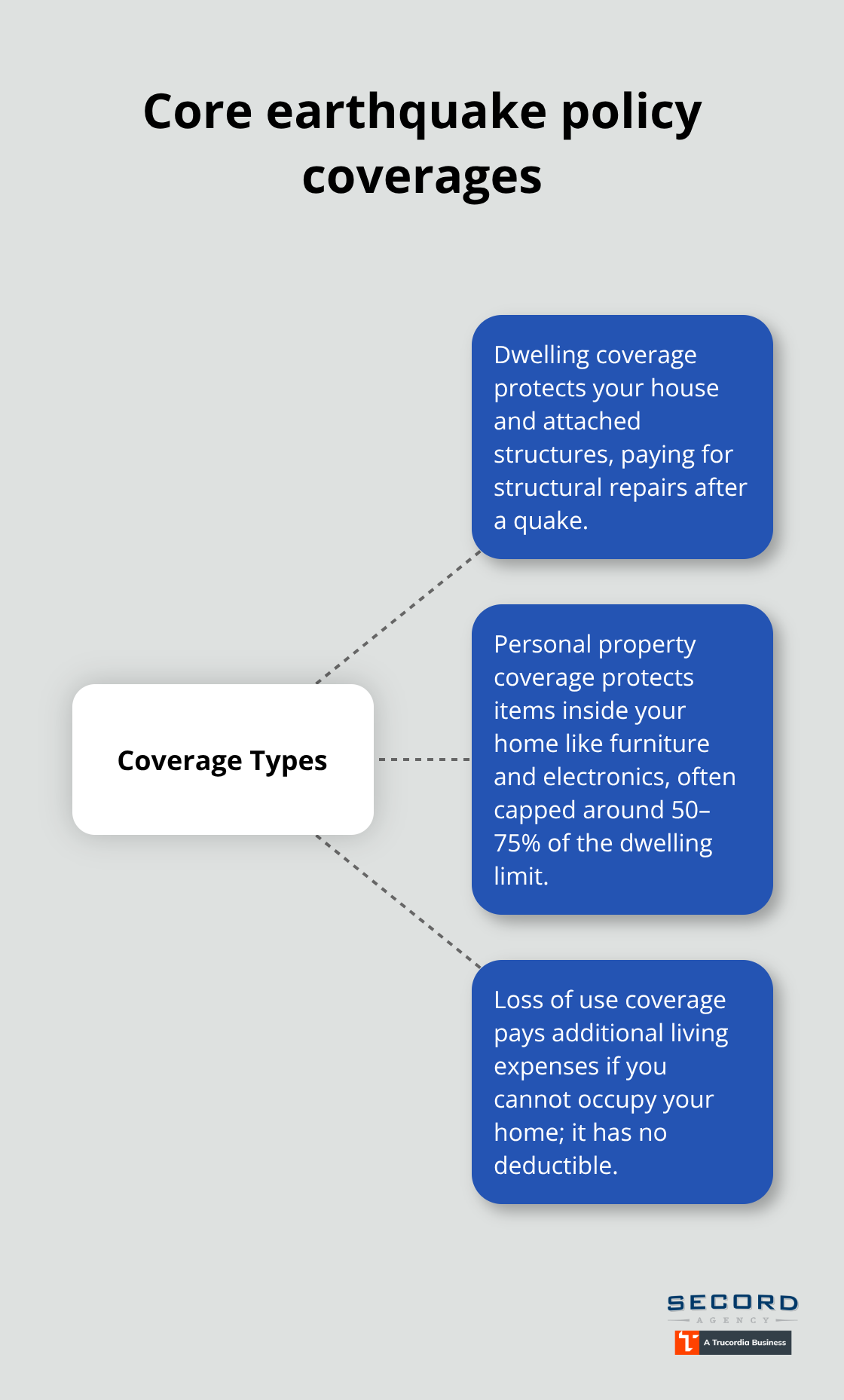
Personal property coverage typically equals 50% to 70% of your dwelling coverage amount, but this standard formula rarely matches your actual belongings. High-value items like jewelry, art, or electronics require scheduled riders listing them separately with agreed-upon values, protecting you against the depreciation penalty that standard coverage applies. A homeowner with $600,000 in dwelling coverage and standard 50% personal property coverage receives only $300,000 for belongings-insufficient if you own significant valuables.

Review your possessions room by room and document everything with photos and receipts; this inventory accelerates claims settlement when losses occur. Taking time now to photograph and list your belongings prevents disputes later about what you owned and what it was worth.

Liability Protection and Umbrella Policies

Liability coverage starting at $100,000 leaves your assets exposed to judgment claims that easily exceed this amount. Increasing to $300,000 costs relatively little, and an umbrella policy adding $1 million of liability protection typically runs $150 to $300 annually, making it an inexpensive safeguard against catastrophic claims. This additional layer protects your home equity and future earnings from major liability judgments.

Water Damage and Specialized Endorsements

Water damage beyond standard coverage requires specific attention in Seattle; water backup and sewer backup are commonly excluded or capped at modest amounts like $5,000 or $10,000, leaving households vulnerable during heavy storms. Adding water backup coverage and sewer backup as separate endorsements protects against costly intrusion from municipal systems backing up into your home. These endorsements matter significantly in a region where atmospheric rivers and aging infrastructure create frequent water-related losses.

Shopping Multiple Carriers for Complete Coverage

Earthquake and flood coverage require separate policies or endorsements costing roughly $300 to $800 yearly for earthquake and $400 to $1,200 for flood, depending on your specific risk zone and home characteristics. Shopping three to five carriers simultaneously lets you compare whether they include water backup, offer earthquake and flood options, and what their sub-limits are for specialized coverages. An independent agent representing multiple carriers can tailor coverage to regional hazards and bundle policies to reduce overall costs without requiring you to contact separate agencies. This approach ensures you understand exactly what protection each carrier provides and at what price, rather than accepting the first quote you receive.

Finding the Right Seattle Homeowner Policy Without Overpaying

Compare Quotes Across Multiple Carriers

Comparing quotes across multiple carriers is non-negotiable if you want affordable coverage that actually protects your Seattle home. The average homeowners insurance cost in Washington runs around $2,593 per year according to U.S. News, but premiums vary dramatically-from roughly $1,550 with PEMCO to over $4,600 with other carriers for identical $600,000 dwelling coverage. This $3,000 annual spread means shopping three to five insurers simultaneously reveals genuine price differences and coverage variations that matter.

When you request quotes, ask specifically whether flood coverage is included, if earthquake is available as an endorsement, what the water backup sub-limit is, and whether sewer backup coverage costs extra. Most carriers structure these protections differently, so direct comparison prevents missing critical gaps or overpaying for redundant coverage.

Hub-and-spoke showing key questions for insurer quotes: flood, earthquake endorsement, water backup sub-limit, sewer backup cost. - Seattle homeowners insurance policy

Evaluate Financial Strength and Claims Handling

PEMCO currently offers the lowest average premium at $1,550 annually in Washington, followed by USAA at approximately $149 monthly or $2,068 yearly, according to U.S. News data. However, cheapest does not always mean best-financial strength and claims handling reputation matter enormously when you file a claim after a major loss.

Check the Washington Department of Insurance website for complaint data and financial strength ratings before selecting a carrier, since a low premium means little if the insurer delays payment or disputes your claim for months.

Bundle Policies and Unlock Volume Discounts

Bundling your homeowners policy with auto, RV, or boat coverage generates substantial savings that single-policy shopping misses entirely. An independent agent representing multiple carriers can compare earthquake and flood options, layer on water backup endorsements, bundle policies across your entire insurance portfolio, and negotiate volume discounts without requiring you to contact separate agencies.

Beyond bundling discounts, many carriers offer reductions for protective devices like alarms and indoor sprinklers, claim-free history, and specialized discounts-PEMCO, for example, provides educator discounts that many homeowners never discover.

Review Your Policy Annually and After Home Changes

Requesting quotes annually matters more than most homeowners realize; your current carrier’s rates may have risen while competitors have lowered theirs, meaning you could reduce your premium significantly with a single phone call. After home improvements like a new roof or updated electrical wiring, notify your insurer immediately, as safety upgrades often qualify for discounts that offset the cost of renovation within a year or two.

An annual policy review (particularly after any home changes or life transitions) keeps your dwelling coverage aligned with current rebuilding costs and ensures your personal property limits match your actual belongings rather than an outdated estimate. Secord Agency, a Trucordia business based in Seattle’s Wallingford neighborhood, shops multiple carriers to deliver competitive rates paired with local, advocate-led service that simplifies quotes and claims while providing personalized advice and ongoing policy reviews.

Final Thoughts

Seattle’s unique weather patterns, seismic activity, and flood risk demand more than a standard homeowners insurance policy. Wind and hail damage, freezing pipes, earthquakes, and flooding represent genuine threats that require targeted coverage tailored to Pacific Northwest conditions. Your Seattle homeowners insurance policy should reflect actual rebuilding costs, include adequate liability protection, and address regional hazards that standard policies exclude.

Obtain quotes from three to five carriers simultaneously and ask directly about flood, earthquake, water backup, and sewer backup coverage to understand exactly what each insurer provides and at what cost. Review your dwelling coverage amount against current rebuilding expenses in your area rather than relying on outdated estimates or market value assumptions. Schedule an annual policy review to confirm your coverage aligns with home improvements, personal property changes, and evolving risk factors in your neighborhood.

Working with a local insurance agent eliminates the burden of contacting multiple carriers separately and comparing complex policy documents on your own. An independent agent representing multiple insurers bundles your homeowners policy with auto and other coverage to generate substantial savings, identifies specialized discounts you might otherwise miss, and provides ongoing guidance as your circumstances change. Contact Secord Agency today to review your current coverage and ensure your Seattle homeowners insurance policy matches your needs and regional risks.

Comprehensive Auto Insurance Washington: The Full Coverage Guide

Washington drivers need to understand their auto insurance options to stay protected and compliant with state law. Comprehensive auto insurance in Washington covers more than just the basics, and knowing what you actually need can save you money.

At Secord Agency – A Trucordia Business, we help drivers navigate coverage types, rate factors, and policy selection. This guide walks you through everything required to make an informed decision about your coverage.

What Coverage Do Washington Drivers Actually Need?

Liability Coverage: Why Minimums Fall Short

Washington’s minimum liability requirement is 25/50/10-$25,000 per person, $50,000 per accident for bodily injury, and $10,000 for property damage. These minimums are dangerously low. A single emergency room visit runs $3,000 to $5,000 upfront, and six-figure medical bills occur regularly in serious crashes. Newer vehicles cost $8,000 to $12,000 to repair after a collision. If you cause an accident and your liability limits are exhausted, you face a personal lawsuit. Washington uses an at-fault system, meaning the driver responsible for the crash pays damages. You should carry at least $100,000 in bodily injury coverage and $50,000 in property damage if you have any assets to protect.

Collision and Comprehensive: Protecting Your Vehicle

Collision coverage pays for damage to your car from crashes and typically carries deductibles between $250 and $1,500. If you finance or lease your vehicle, your lender requires collision coverage. Comprehensive coverage protects against theft, weather, vandalism, and wildlife-non-collision damage that liability and collision don’t cover. This protection matters most for newer or valuable vehicles where replacement costs run high.

Uninsured and Underinsured Motorist Coverage

About 13% of Washington drivers are uninsured, making uninsured and underinsured motorist coverage essential. UM/UIM coverage protects you when an uninsured driver hits you or a driver carries insufficient limits. Insurers must offer UM/UIM, though you can decline it in writing. Don’t decline it.

Share of Washington drivers without insurance and why UM/UIM coverage matters - Comprehensive auto insurance Washington

This coverage fills the gap when the at-fault driver cannot pay your damages.

Gap Insurance and Personal Injury Protection

Gap insurance covers the difference between your vehicle’s actual cash value and what you owe on a loan or lease if the car is totaled. This matters most for financed vehicles where you’re underwater on the loan. Personal Injury Protection covers medical expenses, lost wages, and essential services after an accident regardless of fault. Washington law requires insurers to offer PIP, and you can decline, but declining leaves you exposed to uncovered costs.

The gap between minimum requirements and real-world crash costs is substantial. Understanding these coverage types helps you identify where your protection actually breaks down-and that’s where your next policy decision should focus.

Factors That Affect Your Auto Insurance Rates

Driving Record: Your Most Expensive Mistake

Your driving record is the single most predictive factor in how much you’ll pay for auto insurance, and insurers weight it heavily in their rate calculations. Insurance companies typically review the past three to five years of your driving history when determining your premiums. Multiple violations compound the problem exponentially-two accidents within three years signal to insurers that you represent elevated risk, and your rates reflect that judgment. The Washington Office of the Insurance Commissioner reviews rate filings to ensure they’re reasonable and not unfairly discriminatory, but that doesn’t mean rates stay affordable for drivers with poor records.

If you have a clean driving history, protect it. One mistake costs thousands in premium increases over time. Conversely, if you’ve had incidents, some insurers offer accident forgiveness programs or safe driver discounts after a set period without violations, so shopping around matters more after an accident than before one.

Vehicle Type and Age: What You Drive Matters

Your vehicle’s year, make, model, and repair costs determine how much an insurer will pay in claims if you file a comprehensive or collision claim. Newer vehicles with advanced safety features and expensive replacement parts cost more to insure than older, simpler cars, but they also qualify for safety feature discounts that can offset some costs. A 2024 Honda Accord costs significantly more to repair than a 2010 model, and insurers price premiums accordingly.

Safety features lower your rates because they reduce accident severity and injury risk. Vehicles equipped with automatic emergency braking, lane-keeping assist, and adaptive headlights attract lower premiums from most carriers. Check your vehicle’s safety ratings and features when shopping for quotes-they often yield measurable savings.

Location and Mileage: Where and How Much You Drive

Location amplifies costs further. Urban drivers in Seattle pay higher premiums than rural Washington drivers due to higher theft rates, more frequent accidents, and increased vandalism risk. Annual mileage also matters-drivers who commute 50 miles daily expose themselves to more accidents than those who drive 5,000 miles yearly, and insurers adjust rates upward for high-mileage drivers.

If you work from home or recently shifted to remote work, contact your insurer to lower your mileage estimate; many carriers offer mileage-based discounts or usage-based programs that track your actual driving patterns and reward low-risk behavior with premium reductions. These rate factors aren’t arbitrary-they’re based on actuarial data showing which drivers and vehicles generate the most claims.

Key factors that influence Washington auto insurance premiums

Understanding how each factor affects your premium helps you identify where you can make changes to lower costs without sacrificing protection. Once you know what drives your rates, the next step involves comparing actual quotes from multiple carriers to see which one offers the best value for your specific situation.

How to Choose the Right Auto Insurance Policy

Match Coverage to What You Own

Start by writing down what you actually own and what you’d struggle to replace. If you have a mortgage, your lender requires collision and comprehensive coverage anyway, so that decision is already made. If you own your car outright, the calculation shifts entirely-carrying comprehensive on a 2008 Honda Civic with 180,000 miles makes no financial sense, but comprehensive on a 2023 vehicle worth $35,000 absolutely does.

The deductible you choose matters as much as the coverage itself. A $500 deductible costs more in premiums than a $1,500 deductible, but if you can’t afford to pay $1,500 out of pocket after a claim, the lower deductible protects you from financial strain. Many Washington drivers choose $250 deductibles for comprehensive and $500 for collision, balancing reasonable out-of-pocket costs against premium increases.

Align Coverage with Your Driving Situation

Your driving habits determine what coverage protects you best. If you park on the street in Seattle where theft and vandalism run high, comprehensive becomes genuinely valuable. If you commute on I-5 daily where collision risk spikes, collision coverage with a lower deductible makes sense.

If you have significant assets-a home, savings, retirement accounts-you need higher liability limits because a lawsuit can target those assets. The minimum 25/50/10 won’t defend someone with $200,000 in home equity.

Actionable steps to match coverage and save on premiums in Washington - Comprehensive auto insurance Washington

Compare Quotes Across Multiple Carriers

Request identical scenarios across at least three insurers-same vehicle, same coverage limits, same deductibles-so you compare apples to apples rather than guessing. Many Washington drivers skip this step and overpay by hundreds annually. Usage-based insurance programs track your actual driving through a mobile app and reward safe driving with premium reductions of up to 30 percent. These programs work best for drivers under 25 or those returning to driving after incidents because insurers see your behavior directly rather than relying on historical risk factors.

Maximize Discounts and Bundle Savings

Bundling auto insurance with home or renters coverage typically saves 10 to 25 percent, so if you need multiple policies, request bundled quotes. Ask about specific discounts: good student discounts for drivers with 3.0 GPAs or higher, safety feature discounts for vehicles with automatic emergency braking or lane-keeping assist, and low-mileage discounts if you work remotely.

Some carriers offer accident forgiveness after your first incident, which prevents a single claim from permanently raising your rates-this matters far more than you might think. Local insurance agents shop multiple carriers to find coverage that fits your specific situation rather than pushing you toward generic policies that leave gaps or cost more than necessary.

Final Thoughts

Comprehensive auto insurance in Washington requires you to balance state minimums against real-world crash costs, vehicle value, and your personal financial situation. The coverage types we’ve covered-liability, collision, comprehensive, uninsured motorist protection, and gap insurance-form the foundation of adequate protection. Your driving record, vehicle type, location, and mileage determine what you’ll pay, but those factors don’t lock you into any single rate.

Shopping multiple carriers reveals dramatic price differences for identical coverage, often saving hundreds annually. Match your limits to what you actually own and what you’d struggle to replace, then adjust your deductible based on what you can afford out of pocket after a claim. Bundling auto with home or renters coverage typically cuts 10 to 25 percent from your total bill, and discounts for good driving records, safety features, low mileage, and good student grades add up quickly when you ask for them.

We at Secord Agency – A Trucordia Business shop multiple carriers to find coverage that fits your specific situation rather than pushing generic policies that leave gaps or cost more than necessary. Contact us for a personalized quote and let us show you where you’re overpaying and where your protection actually breaks down.