
Earthquake flood coverage WA: Strengthening Your Home’s Defenses
Washington homeowners face real threats from earthquakes and floods, yet most standard policies leave you exposed. Your home could suffer devastating damage without earthquake and flood coverage in WA, and the financial consequences can be catastrophic.
At Secord Agency – A Trucordia Business, we help homeowners understand what protection actually works. This guide walks you through your coverage options and the steps to secure your home against Washington’s natural disasters.
Why Washington Homeowners Face Real Earthquake and Flood Risk
Washington sits on one of the most seismically active regions in the United States. The Washington Geological Survey and USGS confirm that Washington has one of the highest risks of large and damaging earthquakes because of its geologic setting and population distribution. The Cascadia Subduction Zone poses the most significant threat, capable of producing catastrophic earthquakes that would affect the entire state. Beyond seismic activity, Washington homeowners also contend with substantial flood risk. Areas near rivers, streams, and coastal zones experience regular flooding, particularly during heavy rainfall and spring snowmelt. If you live in a flood-prone area, standard homeowners insurance provides zero protection-the National Flood Insurance Program explicitly states that typical homeowners policies do not cover flood damage, which means you must purchase separate flood insurance to have any financial protection at all.
What Your Standard Policy Actually Leaves Out
Standard homeowners insurance covers fire, theft, and wind damage, but it completely excludes earthquake and flood damage. Your policy will not pay a single dollar if an earthquake damages your foundation, cracks your walls, or collapses your roof. Similarly, if floodwater enters your home and destroys your belongings, furniture, and structural elements, your standard policy denies the claim. The Washington Office of the Insurance Commissioner confirms that earthquake insurance requires a separate policy with its own deductible, typically 10% or higher of your home’s insured value. In high-seismic regions like Washington, these deductibles can be substantial-meaning you pay a larger amount out of pocket before coverage kicks in. Flood insurance through the National Flood Insurance Program operates independently, with its own premiums and deductibles based on your property’s flood zone designation and elevation. The financial gap between what you think you’re covered for and what you actually are covered for can reach hundreds of thousands of dollars in earthquake or flood damage.
The Real Cost of Being Uninsured
A moderate earthquake causes structural damage to a typical Washington home that easily exceeds $100,000 in repairs. Flood damage averages even higher in affected areas, with water damage, mold remediation, and structural repairs often totaling $50,000 to $250,000 or more (depending on severity and duration of standing water). Without earthquake or flood insurance, you absorb these costs entirely from savings, loans, or delayed repairs that compound damage over time. Properties in flood zones without flood insurance become difficult to refinance or sell, as lenders require proof of coverage. The longer you wait to secure coverage, the higher your premiums may become, and you cannot file a claim for damage that occurred before your policy took effect.
Why Waiting Creates More Problems
Delaying your decision to purchase earthquake and flood coverage leaves your home vulnerable during the months or years you remain unprotected. Each season brings new weather patterns and seismic activity that could trigger a claim you cannot file. Homeowners who postpone this protection often face higher premiums when they finally apply, as insurers adjust rates based on current risk assessments and market conditions. Additionally, if you experience any water damage or seismic events before your policy activates, you have no recourse-insurance companies will not cover pre-existing damage or events that occurred before your coverage began.
Understanding what your current policy excludes is the first step toward protecting your home. The next section walks you through the specific coverage options available to Washington homeowners and how each type of insurance works to fill these dangerous gaps.
Your Coverage Options in Washington
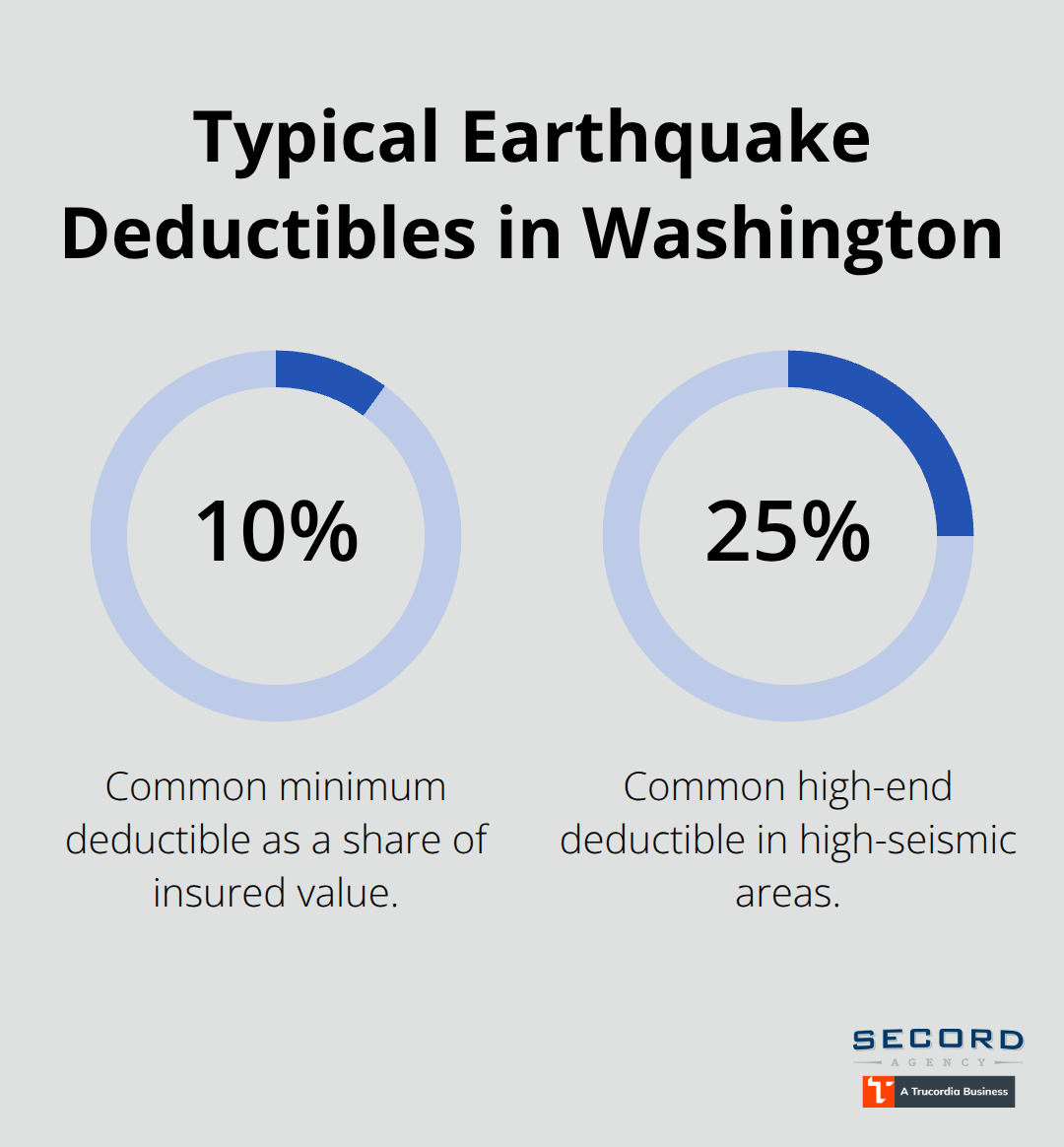
Earthquake insurance and flood insurance operate as completely separate products from your standard homeowners policy, and understanding how each one works is essential before you purchase. Earthquake insurance covers structural damage to your home caused by seismic activity, including foundation cracks, wall damage, roof collapse, and damage to attached structures like garages. The Washington Office of the Insurance Commissioner reports that earthquake deductibles in Washington typically range from 10% to 25% of your home’s insured value, meaning if your home is insured for $500,000, you could pay $50,000 to $125,000 out of pocket before coverage begins. Wood-framed homes generally qualify for lower premiums than brick or masonry construction because they flex better during earthquakes and sustain less damage. When you receive a quote, insurers will assess your home’s construction type, year built, foundation condition, and proximity to active faults.
The National Flood Insurance Program handles flood coverage separately, and this insurance pays for water damage from heavy rain, river overflow, storm surge, or rapid snowmelt-but not from backed-up sewers or groundwater unless you purchase additional endorsements. Flood insurance premiums depend on your property’s flood zone designation and elevation relative to the base flood elevation; homes in high-risk flood zones pay substantially more than those in moderate or low-risk areas. If you have a mortgage in a flood-prone area, your lender will require you to purchase flood insurance as a condition of the loan. Private insurers in Washington now offer alternatives to the National Flood Insurance Program through what’s called the private flood insurance market, and these policies sometimes provide broader coverage or lower deductibles than government programs.
What Earthquake Insurance Actually Covers
Earthquake insurance reimburses you for repairs to your home’s structure, built-in appliances, and permanently attached systems that earthquakes damage directly. This includes foundation repairs, wall reconstruction, roof damage, chimney collapse, and damage to electrical, plumbing, and HVAC systems. However, earthquake policies exclude certain items: they do not cover contents like furniture, electronics, or clothing unless you purchase an optional contents endorsement, and they do not cover damage from fires that start after the earthquake (though your standard homeowners policy may cover that fire). Most earthquake policies also exclude damage from tsunamis or landslides that seismic activity triggers, so if you live near the coast or on steep terrain, you need to ask about these specific hazards separately.
Flood Insurance Details That Matter
Flood insurance covers water damage to your home’s structure and contents (if you purchase the contents option), but it excludes damage from sump pump failure, sewer backup, or water that seeps through basement walls over time. The National Flood Insurance Program caps coverage at $250,000 for the structure and $100,000 for contents, which may not be enough for high-value homes in Washington. Private flood insurers sometimes offer higher limits, and comparing these options with an independent agent who understands Washington’s specific flood zones will save you money and ensure adequate protection.
How Construction Type Affects Your Rates
Your home’s construction materials significantly influence what insurers charge for earthquake coverage. Wood-framed homes typically cost less to insure because wood absorbs seismic energy better than rigid materials like brick or concrete block. Homes built before modern building codes took effect (especially those constructed before the 1970s) often face higher premiums because they lack the structural reinforcements that newer homes include. Insurers will examine your foundation type, roof attachment method, and whether your home sits on soft soil or bedrock-all factors that determine how much shaking your structure can withstand.
Comparing Private and Government Flood Programs
The National Flood Insurance Program provides the baseline flood coverage most homeowners purchase, but private flood insurers have expanded their presence in Washington over the past several years. Private policies sometimes offer higher coverage limits, lower deductibles, or faster claims processing than the government program. An independent insurance agent can compare quotes from multiple carriers (both government and private) to show you which option fits your property and budget best. This comparison takes the guesswork out of choosing between programs and helps you avoid overpaying for coverage you don’t need or underpaying for protection that leaves gaps.
Now that you understand what earthquake and flood insurance actually covers, the next step involves assessing your specific property’s risk level and comparing quotes from multiple carriers to find the right protection for your situation.
Securing Your Home Through Smart Assessment and Comparison
Identify Your Property’s Specific Risk Level
Start by determining exactly what risks your property faces. The Washington Geological Survey maintains detailed earthquake hazard maps showing proximity to active faults, and flood maps identify your property’s specific flood zone designation. Visit the Washington Geologic Hazard Planning Map to see whether your home sits in a high-risk earthquake zone, moderate-risk area, or low-risk zone-this directly affects your premiums and deductible options. For flood risk, check FEMA’s Flood Map Service Center to learn your property’s base flood elevation and zone designation; homes in high-risk zones (marked as A or AE) face mandatory flood insurance requirements if you have a mortgage, while moderate-risk properties (zone X with shading) may still benefit from coverage depending on your risk tolerance.
Compare Quotes From Multiple Carriers
Once you know your risk level, contact multiple carriers for quotes rather than accepting the first offer. We recommend getting quotes from at least three different insurers because earthquake and flood premiums vary dramatically based on each carrier’s underwriting criteria. Some insurers price wood-frame homes significantly lower than others, and private flood carriers sometimes undercut the National Flood Insurance Program by 20-40% for the same coverage. When comparing quotes, ensure you’re looking at identical deductibles and coverage limits across all options-a $50,000 deductible changes the math entirely compared to a $10,000 deductible, even if the premium appears lower.
Document your home’s construction details (year built, foundation type, square footage, roof material) before requesting quotes so you receive accurate pricing rather than estimates that change after inspection. This preparation saves time and produces reliable comparisons across carriers.
Choose the Right Deductible for Your Situation
Review your existing homeowners policy immediately to confirm what it excludes, then decide whether a high deductible (which lowers your premium but requires more out-of-pocket spending after a disaster) or a lower deductible makes sense for your financial situation. High deductibles work best if you have substantial savings to cover repairs; low deductibles cost more monthly but protect you if damage is moderate rather than catastrophic. Your financial capacity determines which option serves you better.
Schedule Annual Policy Reviews and Home Assessments
After purchasing earthquake and flood coverage, schedule a policy review annually and especially after major home improvements, property value increases, or life changes like retirement. Insurance companies adjust rates regularly, and your coverage limits may no longer match your home’s current replacement cost-homes in Washington appreciate faster than many owners realize, meaning your policy from three years ago could leave you significantly underinsured today. Combine your policy review with a home hardening assessment to strengthen your property’s resilience against seismic activity and water damage.
Final Thoughts
Waiting to purchase earthquake and flood coverage WA leaves your home exposed to financial ruin that standard homeowners insurance will not cover. Washington’s seismic activity and flood risk strike homes every year, and homeowners without proper protection face devastating losses that can reach $100,000 to $250,000 or more in repairs. The cost of remaining uninsured far exceeds the monthly premiums you’ll pay for earthquake and flood insurance.
Your next step is straightforward: assess your property’s risk level using the Washington Geological Survey maps and FEMA flood zone tools, then request quotes from multiple carriers to compare your options. We at Secord Agency – A Trucordia Business work with multiple carriers to find coverage that matches your property’s specific needs and your budget. Our team provides personalized guidance to help you choose the right deductibles, coverage limits, and policy options without confusion.
Contact us today to get started with a quote and protect your home against Washington’s natural disasters.