Vacation rental insurance Washington: What Landlords Need to Know
Your standard homeowners insurance policy has a major blind spot: it doesn’t protect vacation rentals. Most insurers explicitly exclude short-term rental income and guest-related claims from their coverage.
At Secord Agency – A Trucordia Business, we’ve seen landlords lose thousands because they assumed their existing policy would cover vacation rental liability and property damage. Washington property owners need specialized vacation rental insurance Washington to fill these gaps and protect their investment.
Why Your Homeowners Policy Leaves Vacation Rentals Unprotected
Standard Policies Explicitly Exclude Short-Term Rentals
Standard homeowners insurance explicitly excludes short-term rental activity. When you rent your property to guests for fewer than 30 consecutive nights, your insurer considers this a commercial operation that falls outside residential coverage. The National Association of Insurance Commissioners data shows that most homeowners policies contain clear language prohibiting any rental income or guest-related claims. This isn’t a loophole or an oversight-it’s intentional. Insurers structure homeowners policies around owner-occupied residences with predictable risk profiles.
How Guest Turnover Changes Your Risk Profile
The moment you convert your property into a vacation rental, the risk profile changes dramatically. Guest turnover means different people access your home weekly or daily. Short-term occupants have no long-term stake in maintaining the property. They remain unfamiliar with the building’s systems and safety features. Standard policies won’t cover liability claims from guest injuries, theft by visitors, or damage caused during short stays.
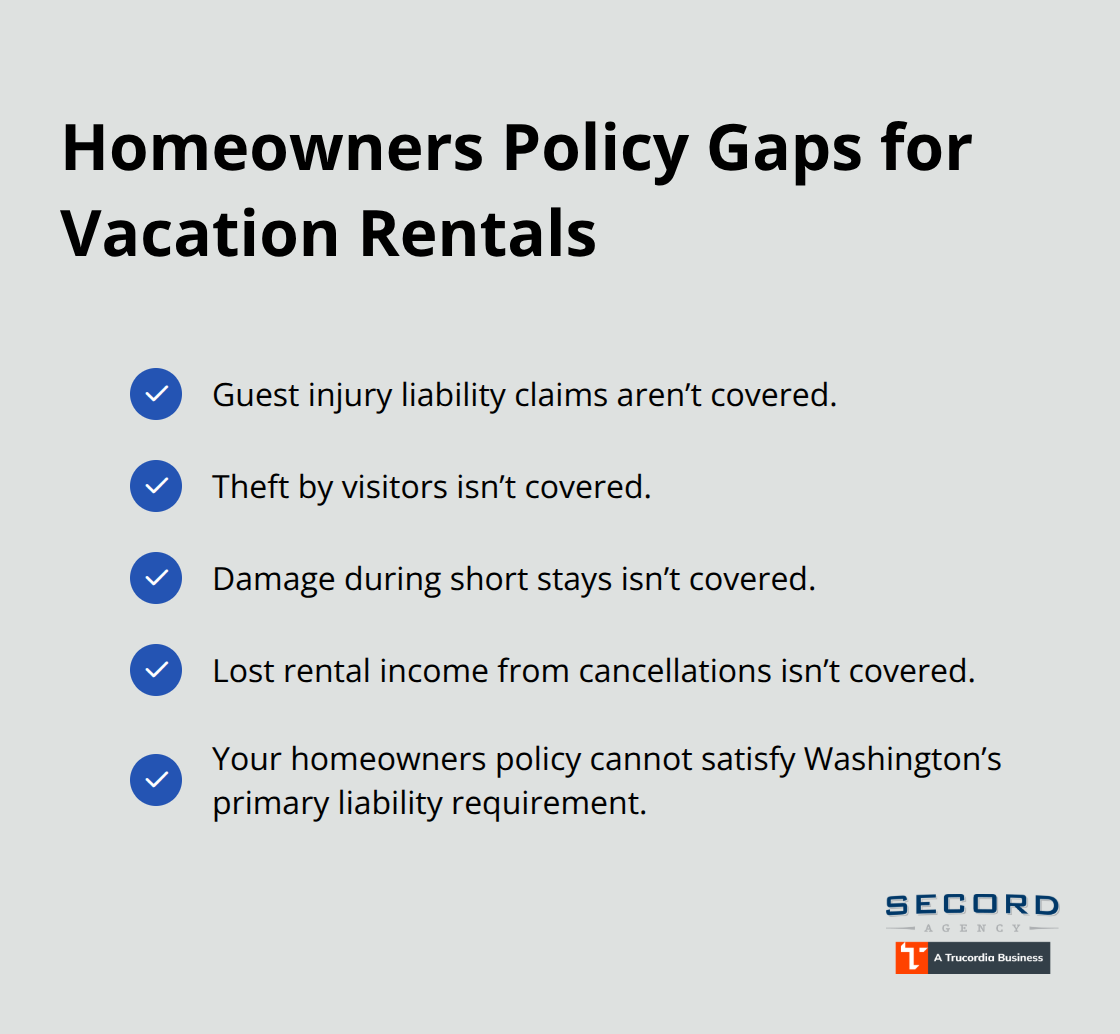
If a guest slips on your deck and sues for $250,000 in medical costs, your homeowners policy will deny the claim outright.
Property Damage and Liability Gaps
Property damage compounds the problem significantly. A guest’s cooking accident damages your kitchen, a visitor’s pet destroys flooring, or intentional vandalism occurs during a weekend stay-none of these fall under homeowners coverage. Washington short-term rental operators must maintain primary liability insurance according to state law, but your homeowners policy cannot satisfy this requirement. Your standard coverage simply doesn’t extend to commercial guest operations.
Lost Income During Property Damage
Loss of rental income represents another critical gap that homeowners policies ignore. If a fire or storm damages your property and forces cancellations for three months, your homeowners policy won’t compensate for the lost guest revenue. For vacation rental owners, this income loss can total tens of thousands of dollars. Your business interruption needs fall entirely outside residential insurance frameworks.
Specialized Coverage Addresses These Exact Gaps
Vacation rental insurance fills these exact gaps with coverage designed for transient occupancy, guest liability, and business interruption protection. Understanding what your current policy excludes helps you recognize why specialized vacation rental coverage matters. The next section explores the specific types of coverage available to Washington property owners.
What Coverage Do You Actually Need for Your Vacation Rental
Platform Protection Programs Fall Short
Vacation rental insurance in Washington comes in three distinct flavors, and selecting the wrong one costs you money or leaves you exposed when a claim hits. Platform-provided host protection programs like Airbnb’s AirCover sound appealing, but they contain serious gaps that landlords routinely discover too late. These programs typically cap liability at $1 million and exclude business property, revenue loss, and guest-caused damage to your belongings. Airbnb’s coverage also fails to protect you if a guest runs a small business from your property, which means your liability exposure expands beyond standard residential incidents.
Washington Law Requires Independent Coverage
Washington state law requires primary liability insurance of at least $1 million for short-term rentals, so you need coverage that actually meets this requirement independently, not coverage that depends on a platform’s discretionary protection. Platform programs cannot satisfy this legal obligation on their own. You must carry your own policy to comply with state regulations and protect yourself from enforcement action or liability gaps.
Specialized Vacation Rental Policies Deliver Comprehensive Protection
Specialized vacation rental policies from carriers like Proper Insurance deliver the comprehensive approach that platform coverage simply cannot match. These policies include $1 million in commercial general liability as a baseline, building and contents coverage on a replacement-cost basis with no occupancy restrictions, and business revenue protection that compensates you for lost rental income when a covered claim forces cancellations.
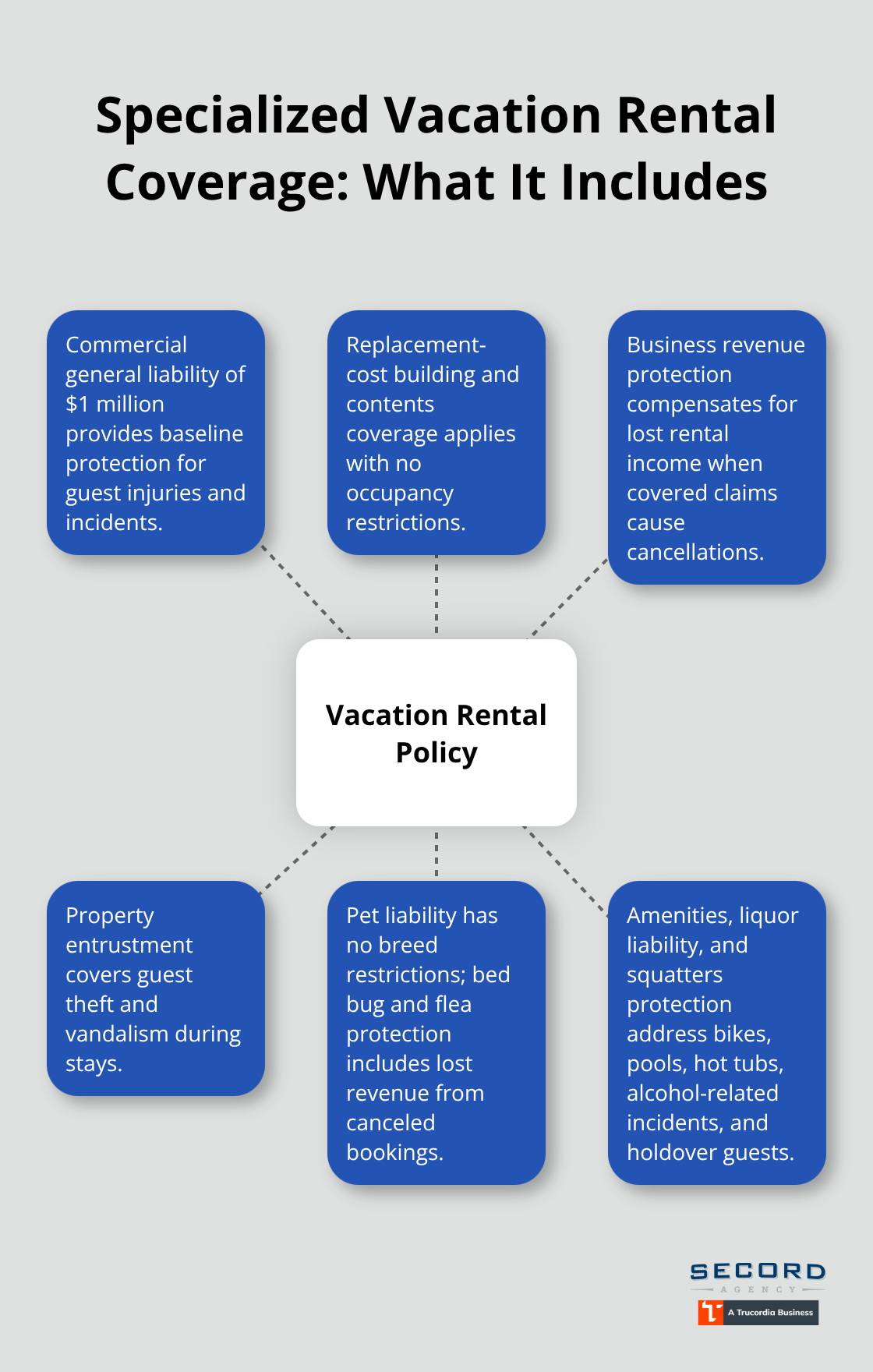
Proper’s coverage extends to property entrustment protection against guest theft and vandalism, pet liability with no breed restrictions, bed bug and flea protection (including lost revenue from canceled bookings), and amenities liability for bikes, kayaks, pools, and hot tubs that guests might damage or use. The policy also includes liquor liability coverage and squatters protection with legal support if a guest refuses to leave, addressing real risks that standard policies completely ignore.
Cost Versus Risk Exposure
A dedicated vacation rental policy costs roughly $1,200 to $2,500 annually depending on property value and coverage limits, significantly less than the financial exposure from a single liability claim or extended revenue loss. Washington vacation rental operators should reject the false choice between platform protection and homeowners insurance. The right specialized policy protects your actual business needs while meeting state legal requirements.
Finding the Right Coverage for Your Property
Secord Agency, an independent insurance agency based in Seattle’s Wallingford neighborhood, shops multiple carriers to match your specific rental setup, guest volume, and property characteristics to the right coverage at competitive rates. This approach ensures you meet Washington’s legal requirements while protecting your investment. The next section walks you through how to evaluate your specific rental situation and select appropriate coverage limits.
Matching Coverage to Your Rental’s Actual Risk Profile
Calculate Your Property’s Specific Risk Factors
Your vacation rental property in Washington faces distinct risks that depend entirely on how you operate it. A beachfront cabin in Ocean Shores that hosts 40 guests per year faces different exposure than a Seattle townhouse renting to 100+ guests annually. The first critical step is quantifying your actual rental activity and property characteristics, then mapping those specifics to appropriate coverage limits.
Calculate your average guest count per month, average length of stay, and peak season occupancy rates. Total your property value including furnishings and amenities. A $400,000 home with $80,000 in furniture, kitchen equipment, and guest amenities requires substantially higher building and contents coverage than a $250,000 property with minimal furnishings.
Document whether guests cook regularly (higher kitchen fire risk), whether you allow pets (liability exposure increases), and whether you offer high-value amenities like hot tubs or pools. These operational details directly determine your coverage needs and premium costs.
Set Liability Limits Based on Guest Volume and Amenities
Properties with higher guest turnover and amenities demand $1 million to $2 million in liability limits, while those with lower occupancy might operate safely at the $1 million minimum Washington law requires. Your guest volume and amenity offerings shape your actual exposure to injury claims and property damage liability.
Select Deductibles That Match Your Claims History
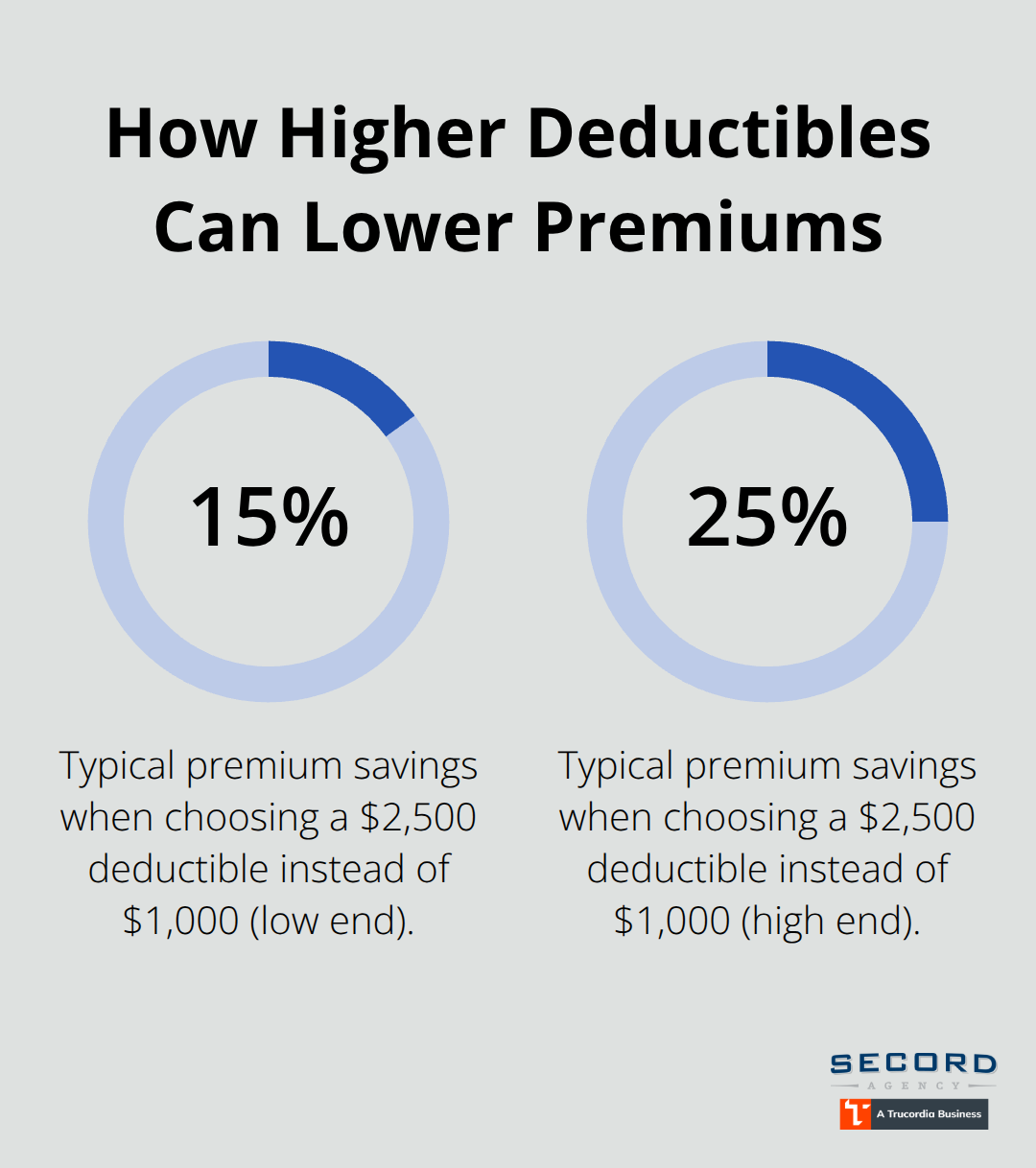
Deductible selection works differently for vacation rentals than homeowners policies because your coverage addresses business revenue loss alongside property damage. Choosing a $2,500 deductible instead of $1,000 typically saves 15–25% on annual premiums, but that math fails if you file one claim every two years.
Calculate your actual claims likelihood based on your property’s condition, guest screening practices, and historical incidents. Properties with guest damage history should maintain lower deductibles despite higher premiums, while well-maintained properties with careful guest selection can justify higher deductibles.
Identify Critical Coverage Gaps and Exclusions
Read every exclusion section of any policy you’re considering because standard vacation rental policies exclude earthquake, flood, and landslide damage unless you purchase separate endorsements. Washington flood risk exists outside officially designated high-risk zones, so discuss flood coverage specifically with your agent rather than assuming your location is safe.
Business property coverage gaps matter significantly. If you own electronics, artwork, or high-value items inside the rental, request scheduled personal property endorsements that guarantee full replacement cost rather than actual cash value. Proper Insurance includes bed bug and flea protection with revenue recovery for canceled bookings, which standard policies completely ignore-verify whether your chosen carrier offers this protection.
Compare complaint data from the National Association of Insurance Commissioners when evaluating carriers because claims handling speed and customer service quality vary dramatically between insurers. An independent insurance agency can shop multiple carriers to match your specific rental setup to appropriate coverage limits and exclusions at competitive rates, ensuring you meet Washington’s legal requirements while protecting your actual business needs.
Final Thoughts
Your vacation rental in Washington faces real financial exposure that homeowners insurance simply won’t address. Standard policies exclude guest liability, property damage from short-term occupants, theft, vandalism, and lost rental income when damage forces cancellations. These gaps aren’t theoretical-they represent thousands of dollars in potential out-of-pocket costs when claims happen.
Vacation rental insurance Washington fills these exact gaps with coverage designed for how you actually operate your property. Specialized policies deliver $1 million in commercial general liability to meet state law requirements, building and contents coverage on a replacement-cost basis, business revenue protection for lost guest income, and guest-caused damage coverage that homeowners policies completely ignore. Additional protections like bed bug and flea liability with revenue recovery, squatters protection with legal support, and amenities liability for pools, hot tubs, and guest equipment address risks that standard carriers won’t touch.
Protecting your rental investment starts with calculating your specific exposure and reviewing policy exclusions carefully-particularly flood coverage, which exists outside officially designated high-risk zones in Washington. We at Secord Agency – A Trucordia Business shop multiple carriers to match your specific rental setup to appropriate coverage at competitive rates, ensuring you meet Washington’s legal requirements while protecting your actual business needs.