Commercial Landlord Insurance WA: Packages That Protect Your Properties
Owning commercial property in Washington means protecting your investment from unexpected losses. Property damage, liability claims, and income disruptions can happen to any landlord, regardless of how well-maintained your buildings are.
Commercial landlord insurance WA is designed to handle these risks. We at Secord Agency – A Trucordia Business help property owners understand their coverage options and find packages that match their specific needs.
What Your Commercial Landlord Insurance Actually Covers
Commercial landlord insurance in Washington protects three critical areas that directly impact your bottom line. Property damage coverage pays for repairs or rebuilding when fire, weather, vandalism, or other covered events damage your building’s structure, roof, walls, or systems. This includes permanent fixtures like HVAC units and electrical systems, but typically excludes tenant-owned improvements. Liability coverage defends you when a tenant or visitor gets injured on your property and sues. Loss of rental income protection-also called business interruption coverage-replaces your lost rent if a covered event makes the property temporarily uninhabitable.
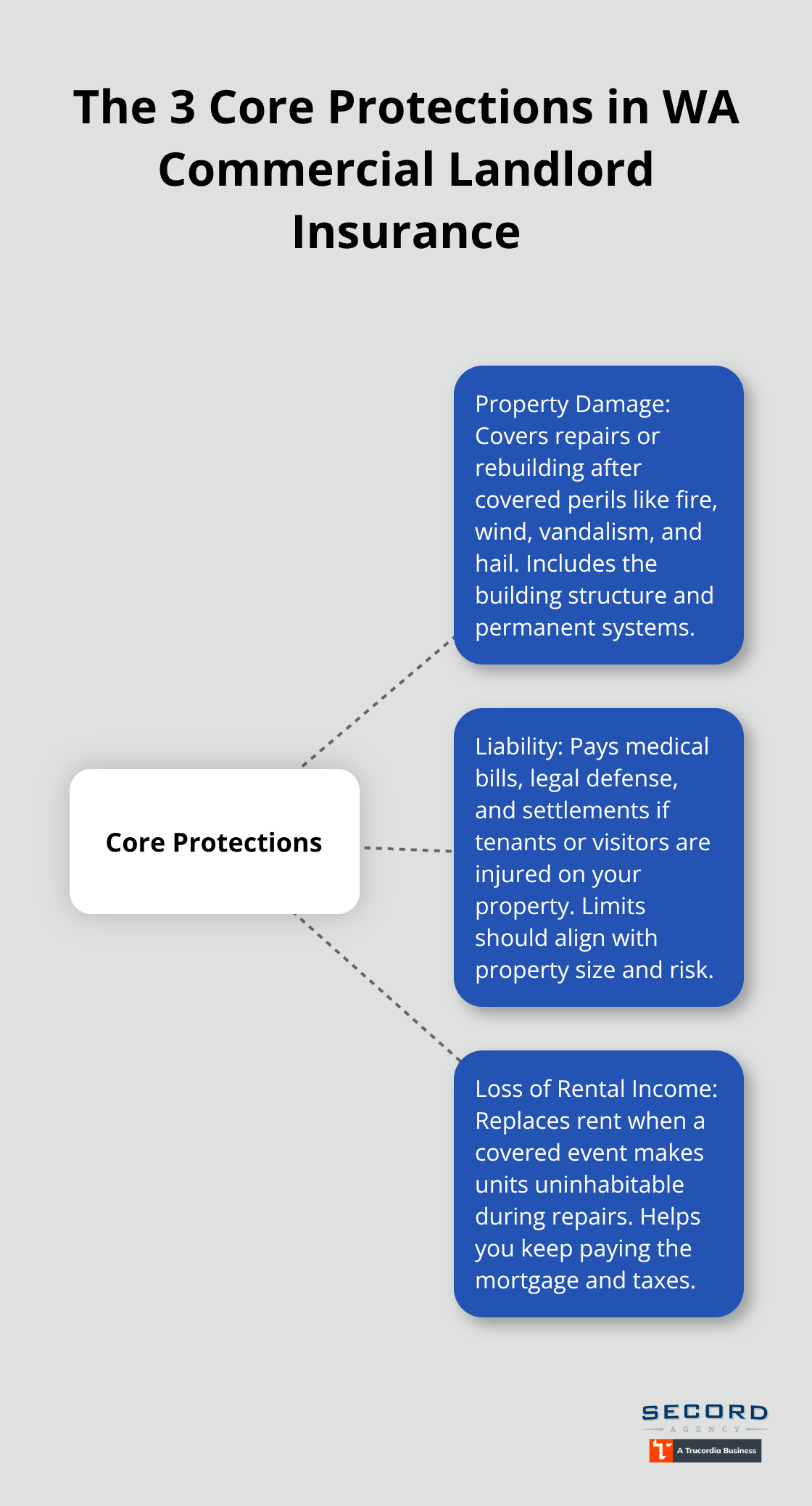
Without this, you still owe your mortgage while collecting zero income.
Property Damage Coverage Addresses Washington’s Weather Risks
Washington’s weather patterns create specific risks that standard policies address. Heavy rain and windstorms cause the majority of property damage claims in the state, so your coverage should explicitly include wind and water damage. Hail damage to roofs occurs frequently in spring months, and policies vary on whether they cover full replacement or depreciated value. Older buildings with wood-frame construction face higher fire risk, which affects your premium and coverage options. A professional property inspection before purchasing coverage prevents surprises when claims arise (these inspections typically cost $300-$500). Insurers adjust rates based on building age, materials, and maintenance condition. Deductibles for property damage usually range from $500 to $5,000, with higher deductibles reducing your monthly premium by 15-25%.
Liability Claims Occur Frequently on Commercial Properties
Slip-and-fall injuries represent about 30% of all premises liability claims, according to the National Safety Council. A tenant slips on wet stairs, a visitor falls in the parking lot, or someone gets injured by a structural defect-these situations create legal exposure. Your liability coverage pays medical bills, legal defense costs, and settlement amounts up to your policy limit. Most Washington commercial properties carry $300,000 to $1,000,000 in liability protection, depending on property size and tenant count. Higher-risk properties like apartment buildings or those with common areas need coverage at the top of that range. Coverage excludes injuries from intentional acts and typically doesn’t cover discrimination claims, which require separate employment practices liability insurance if you have employees managing the property.
Rental Income Protection Covers Lost Revenue During Repairs
If a covered event-like a fire or storm-forces tenants to vacate temporarily, loss of rental income coverage pays your lost rent while repairs happen. This coverage matters most for multi-unit properties where one damaged unit can disrupt the entire building’s operations. The waiting period before coverage kicks in ranges from 24 hours to 30 days (depending on your policy), with shorter waits costing more. Coverage typically extends for 12 months, which matters in Washington given the lengthy permit and construction seasons. Without this protection, you face months of zero income while carrying full mortgage payments and property taxes.
Understanding what your policy covers sets the foundation for selecting the right package. The next step involves comparing the different landlord insurance packages available in Washington to match your property’s specific needs and risk profile.
Types of Commercial Landlord Insurance Packages Available
Basic Policies Cover Single Properties Efficiently
Single-property landlords need straightforward coverage that addresses their specific building’s risks. A basic landlord policy covers one building with standard protections for property damage, liability, and loss of rental income. These policies work well for owners with one to three properties and cost between $800 and $2,000 annually depending on property age, location, and construction type. Insurance companies price these individually because each property presents unique risk factors. A newer concrete-frame apartment building in Seattle’s Ballard neighborhood carries different premiums than an older wood-frame house in Spokane. Basic policies typically include $300,000 to $500,000 in liability coverage, which suffices for smaller residential properties but falls short for commercial buildings with higher foot traffic.
Portfolio Policies Deliver Savings for Multiple Properties
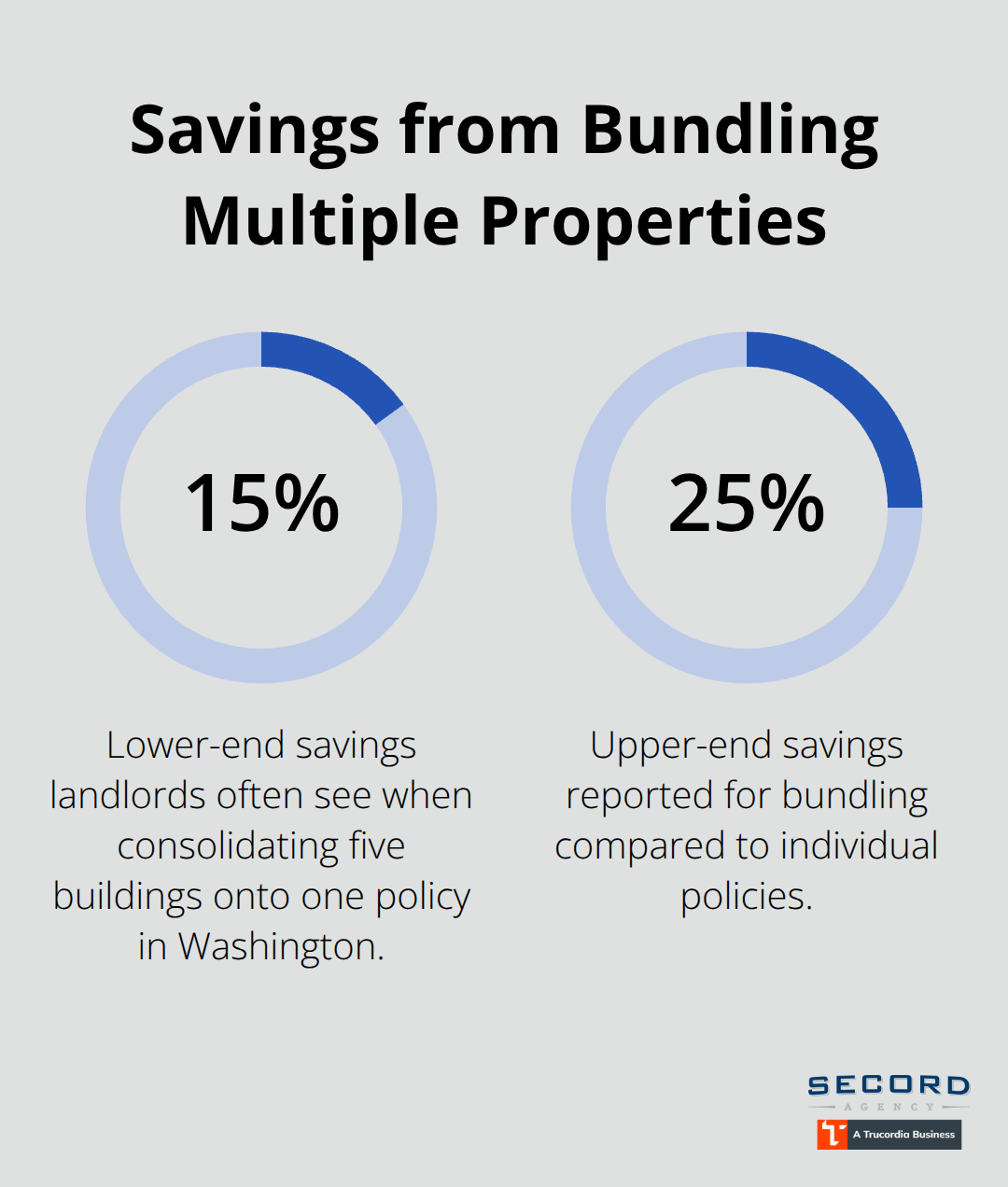
Portfolio policies serve landlords with four or more properties and deliver significant savings through bundling. Property owners who consolidate five buildings onto one policy often save 15 to 25 percent compared to individual policies, according to data from the Insurance Information Institute.
Portfolio policies simplify administration by consolidating billing, claims reporting, and policy renewals into one annual review. Landlords with mixed portfolios that include both residential apartments and commercial retail spaces benefit from policies that account for variations across properties. Specialized properties like those with swimming pools, commercial kitchens, or storage facilities require endorsements that add coverage beyond standard policies. These endorsements typically cost $200 to $600 annually per property and address exposures that basic coverage excludes.
Aggregate Coverage Protects Your Entire Portfolio
Multi-property owners should insist on aggregate coverage limits that protect total assets, not just individual buildings, since catastrophic events can damage multiple properties simultaneously. Aggregate limits ensure that a single major claim doesn’t exhaust your coverage for subsequent losses. This protection matters most in regions prone to weather events where multiple properties face simultaneous damage risk.
The right package structure prevents costly gaps in your coverage. Your next step involves assessing your specific property risks to determine which package type actually fits your situation.
How to Choose the Right Commercial Landlord Insurance Package
Identify Your Property’s Specific Risk Factors
Start by identifying what makes your specific property vulnerable rather than adopting generic coverage limits. A four-story apartment building in Seattle’s Capitol Hill neighborhood faces different exposure than a single-family rental in Tacoma or a commercial retail space with foot traffic exceeding 500 people daily.
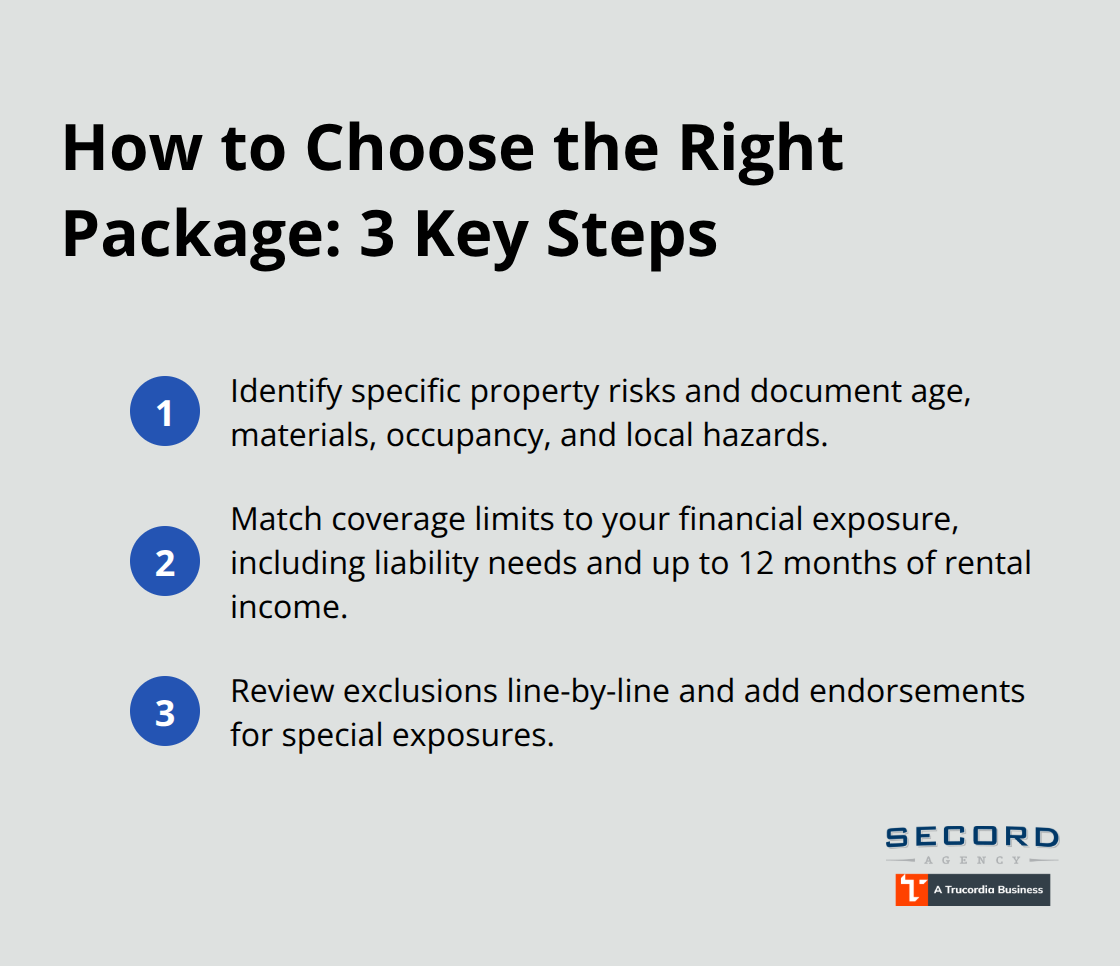
Document your property’s age, construction materials, occupancy type, and local hazards-flooding risk near rivers, wind exposure on hilltops, or theft patterns in your neighborhood. Request a property inspection from your insurance agent, which typically costs $300 to $500 but prevents underinsurance. Insurance companies adjust premiums based on this inspection data, so investing in one upfront saves money long-term by ensuring accurate risk assessment.
Your building’s condition directly impacts which coverage options you actually qualify for. A roof that’s 15 years old might receive full replacement coverage, while one that’s 20 years old could be limited to actual cash value, meaning depreciation reduces your payout significantly.
Compare Coverage Limits Against Your Financial Exposure
Once you understand your property’s risk profile, compare coverage limits against your actual financial exposure. Liability coverage limits should reflect your property’s tenant count and visitor volume-a ten-unit apartment building needs higher protection than a duplex. The American Insurance Association reports that average premises liability settlements in Washington range from $50,000 to $250,000, so carrying only $300,000 in coverage leaves minimal cushion.
For rental income protection, calculate your monthly rent across all units and multiply by 12 months to determine appropriate coverage; a policy covering only six months of lost rent leaves you exposed during extended repairs. Deductibles require honest assessment of your cash reserves-choosing a $5,000 deductible saves 20 to 30 percent on premiums but demands liquid funds to cover that amount when claims occur.
Review Policy Exclusions and Endorsements Carefully
Policy exclusions matter more than coverage descriptions because they define what you’re actually not protected against. Standard exclusions typically exclude flood, earthquake, wear and tear, and intentional damage, so verify that your specific property risks aren’t buried in the exclusions section. Most coverage gaps emerge from overlooked exclusion language rather than missing coverage types.
Endorsements add coverage for specialized exposures like swimming pools, commercial kitchens, or adjacent business operations. These additions (typically costing $200 to $600 annually per property) address exposures that basic coverage excludes. Review exclusions line-by-line rather than skimming summaries to catch what your policy actually won’t cover.
Final Thoughts
Protecting your Washington commercial property requires matching your coverage to actual risks rather than settling for generic policies. The three core protections-property damage, liability, and rental income coverage-address the financial exposures that damage landlord profitability most directly. Your specific building’s age, location, construction type, and tenant profile determine which coverage limits and endorsements you actually need, not industry averages or competitor policies.
A local insurance agent who understands Washington’s weather patterns, building codes, and regional liability trends provides value that online quote tools cannot match. We at Secord Agency – A Trucordia Business work with multiple carriers to find commercial landlord insurance WA packages that fit your portfolio’s unique needs while keeping premiums competitive. Our team handles the detailed policy review work-comparing exclusions, identifying coverage gaps, and recommending endorsements-so you don’t waste time deciphering insurance language.
Contact us to get a personalized quote that reflects your actual property risks and portfolio structure. We’ll review your current coverage, identify gaps, and recommend adjustments that protect your investment without unnecessary costs. Your commercial property represents significant financial exposure, and securing the right insurance package today prevents financial disaster tomorrow.