Restaurant insurance WA: Tailored Coverage for Your Establishment
Running a restaurant in Washington means juggling countless operational challenges. From slip-and-fall incidents to equipment failures, the risks are real and expensive.
Restaurant insurance WA isn’t optional-it’s the foundation that protects your business from financial devastation. We at Secord Agency – A Trucordia Business help restaurant owners understand exactly what coverage they need and why.
Why Your Restaurant Faces Real Financial Risk in Washington
Liability Claims That Drain Your Bottom Line
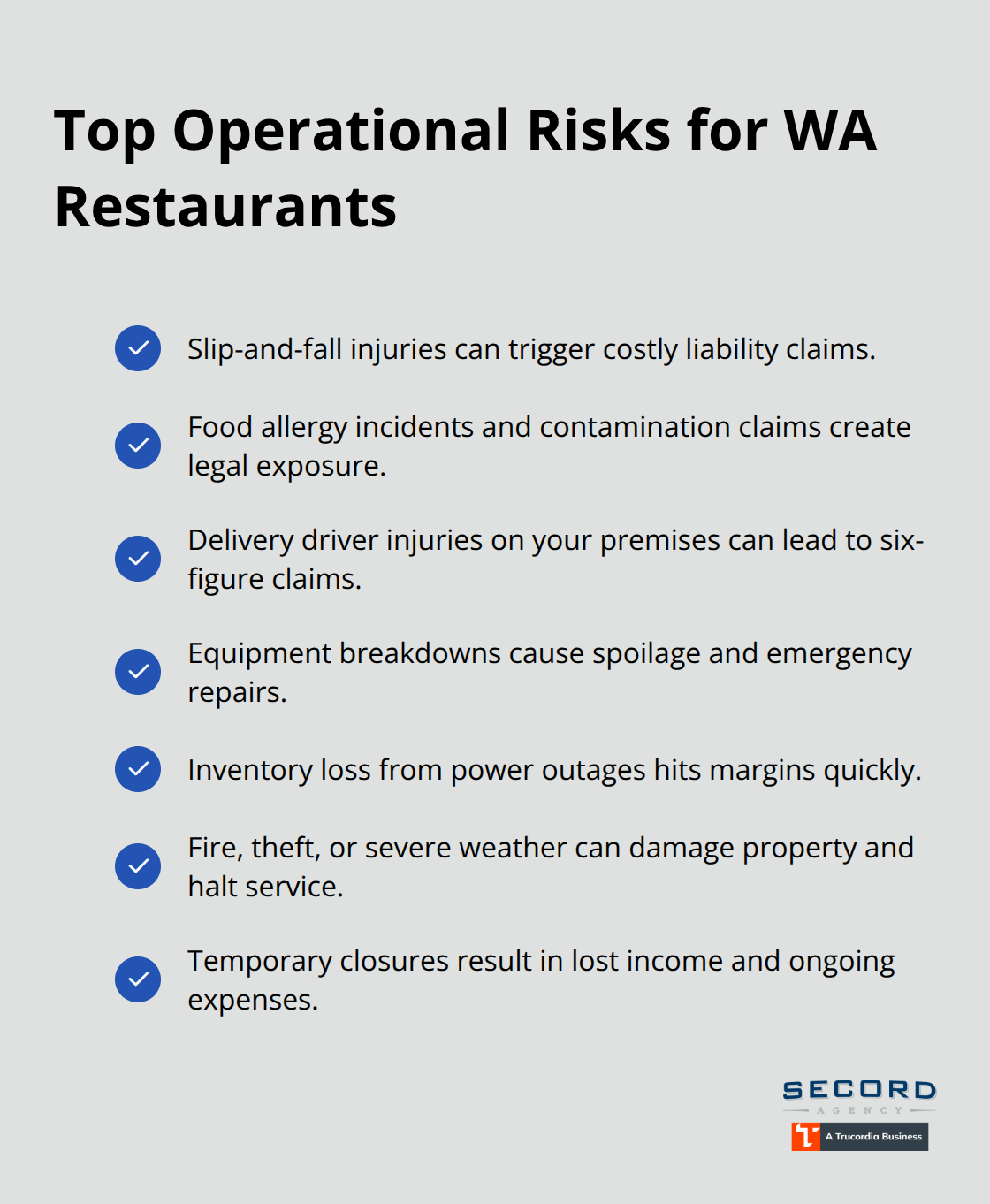
Slip-and-fall incidents alone cost restaurants nationally an average of $30,000 to $60,000 per claim when legal fees and medical expenses combine. Your restaurant faces exposure from customer injuries, food contamination claims, and property damage that can exceed your annual profit margin in a single incident. Washington’s courts have consistently awarded substantial damages in premises liability cases, making general liability insurance non-negotiable rather than optional.
Food service operations carry inherent risks that standard business policies simply don’t cover. A customer’s allergic reaction, a guest who trips on a wet floor, or a delivery driver injured on your premises can all result in six-figure claims. The U.S. Small Business Administration reports that Washington has over 644,000 small businesses, with restaurants representing a significant portion of that base, yet many operate without adequate protection.
Equipment Failures and Inventory Loss
Equipment failures represent another critical exposure that restaurant owners routinely underestimate. A commercial refrigerator breakdown spoils thousands of dollars in inventory within hours, forcing you to close temporarily or purchase replacement stock at inflated prices. Property damage from fire, theft, or weather events doesn’t wait for your business to stabilize-your landlord’s mortgage still comes due, your employees still expect paychecks, and your competitors stand ready to capture your customers.
Washington’s natural disaster risks (including earthquakes and winter storms) make business interruption coverage essential rather than optional. This coverage protects your income and covers ongoing expenses during temporary closures caused by disasters or property damage.
Workers’ Compensation and Employee Protection
Any restaurant with employees must carry workers’ compensation insurance through the Washington State Department of Labor & Industries; noncompliance results in substantial fines that dwarf the cost of coverage itself. Medical expenses and lost wages for an injured employee accumulate rapidly, and without proper coverage, your business absorbs these costs directly.
Understanding these specific exposures allows you to build protection strategies that match your actual operational risks rather than forcing you into generic coverage packages. The next section examines the types of coverage that address each of these threats head-on.
Types of Coverage Every Washington Restaurant Needs
General Liability: Your First Line of Defense
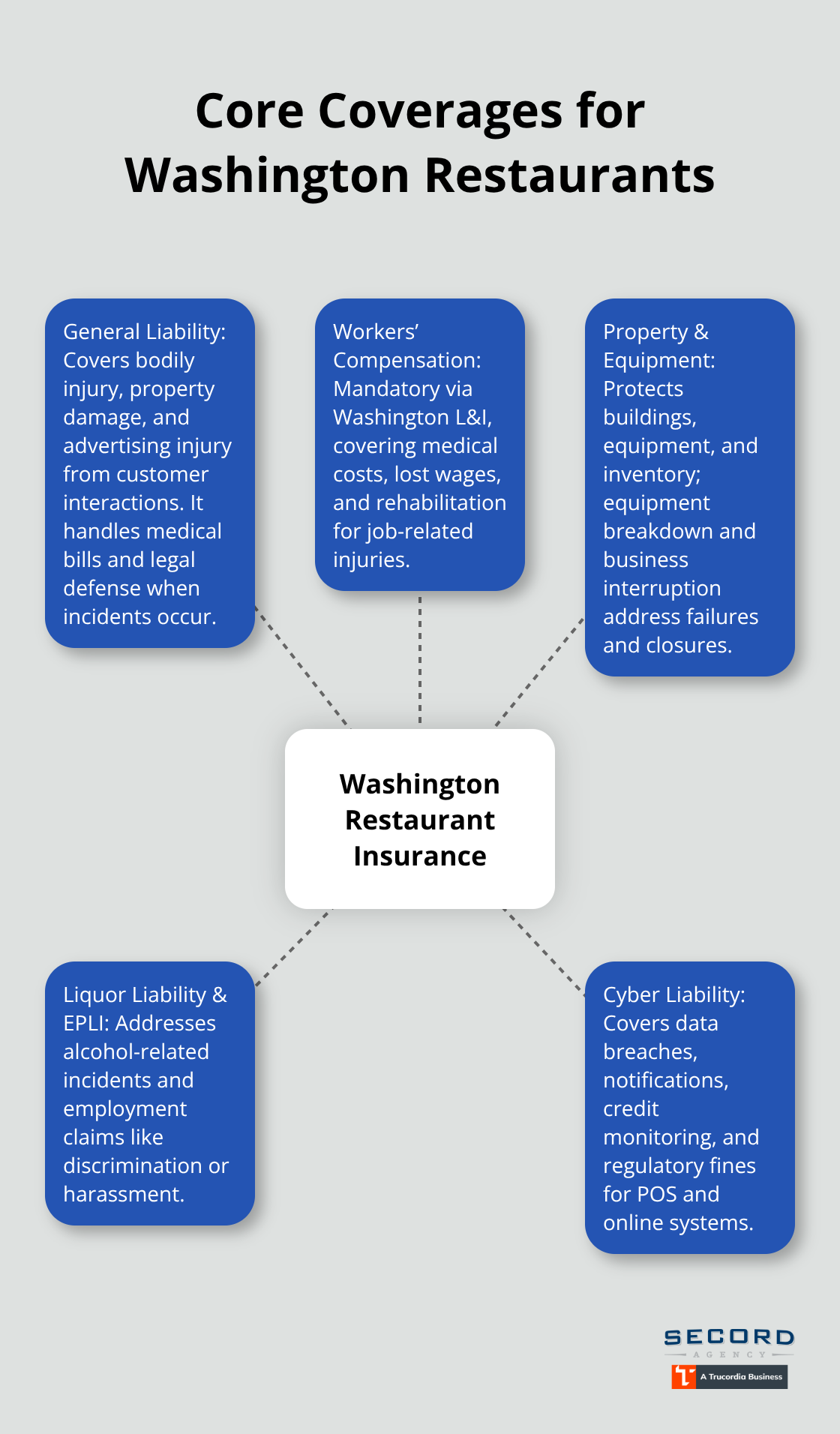
General liability insurance forms the baseline defense for any Washington restaurant, covering bodily injuries, property damage, and advertising injury claims that emerge from customer interactions. This coverage handles medical expenses and legal defense costs when a patron sues after a slip-and-fall or food contamination incident-situations that happen regularly in food service. Washington courts award substantial damages in premises liability cases, making this coverage non-negotiable. Most landlords and venue partners require proof of general liability insurance before signing contracts, so this isn’t optional if you want to operate or cater at established locations. Set your liability limits based on your annual revenue and asset value; restaurants typically need between $1 million and $2 million in general liability protection.
Workers’ Compensation: Mandatory Protection for Your Team
Workers’ compensation insurance is mandatory in Washington for any business with employees, and the Washington State Department of Labor & Industries administers the state fund exclusively-private insurers cannot offer this coverage in Washington. This distinction matters because you have no choice in carrier selection; compliance is non-negotiable. Coverage includes medical costs, lost wages, disability benefits, and rehabilitation for job-related injuries, protecting both your employees and your business from direct liability. Noncompliance results in substantial fines that typically exceed the annual cost of coverage itself, making this the easiest risk to eliminate through proper enrollment.
Property and Equipment Coverage: Protecting Your Physical Assets
Property insurance protects your building, equipment, furniture, and inventory against fire, theft, and natural disasters-exposures that can destroy your entire operation in hours. A commercial refrigerator failure or kitchen fire doesn’t just damage equipment; it forces temporary closure while you repair or replace assets, costing thousands in lost revenue during peak seasons. Equipment breakdown coverage specifically addresses mechanical failures and spoilage losses that standard property policies exclude. Business interruption coverage replaces lost income and covers ongoing expenses during temporary closures, allowing you to maintain payroll and rent payments while you recover from disasters or major equipment failures. Washington’s earthquake and winter storm risks make this coverage especially important for restaurants in vulnerable locations.
Liquor Liability and Employment Practices Coverage
Liquor liability insurance protects against claims from alcohol-related incidents and is frequently required to maintain a Washington liquor license. This coverage addresses situations where intoxicated patrons cause injuries or property damage, or when your staff overserves customers who then injure themselves or others. Claims in this category escalate rapidly because they often involve multiple injured parties and substantial legal exposure. Employment practices liability insurance shields your restaurant from claims related to hiring decisions, terminations, discrimination allegations, and harassment complaints. Washington employment law has expanded protections for workers, making EPLI coverage increasingly relevant for restaurants with multiple staff members. These policies typically cover legal defense costs and settlements, protecting your personal assets and business reputation when employment disputes arise.
Cyber Liability: Safeguarding Customer Data
Cyber liability insurance addresses data breaches affecting your point-of-sale systems and online ordering platforms, covering notification costs, credit monitoring for affected customers, and regulatory fines. Restaurants handling customer payment information face significant exposure if that data is compromised, making cyber coverage essential rather than optional for establishments accepting cards or maintaining customer databases. The combination of these coverages creates a comprehensive shield against the operational realities your restaurant faces daily.
Selecting the right provider to assemble and manage these protections requires understanding your specific risks and comparing how different carriers address them.
How to Choose the Right Restaurant Insurance Provider
Document Your Operational Risks First
Selecting an insurance provider for your Washington restaurant requires moving beyond generic quotes and identifying carriers that understand food service operations specifically. Most insurance agents treat restaurants like any other business, applying standard commercial policies that miss critical exposures unique to food service. Start by documenting your actual operational risks: Do you serve alcohol? Do you operate a catering division? Do you handle delivery? Do you have a commercial kitchen in a shared space? Each operational variation changes which coverages matter most and which carriers offer competitive rates for your specific risk profile.
Washington restaurants typically pay between $1,500 and $6,000 annually depending on size, location, staffing levels, and alcohol service, so accuracy in describing your operation directly impacts your premium. An independent agent who represents multiple carriers can streamline this comparison and identify which combination of coverage and pricing makes sense for your restaurant rather than steering you toward one carrier’s products.
Compare Quotes Across Multiple Carriers
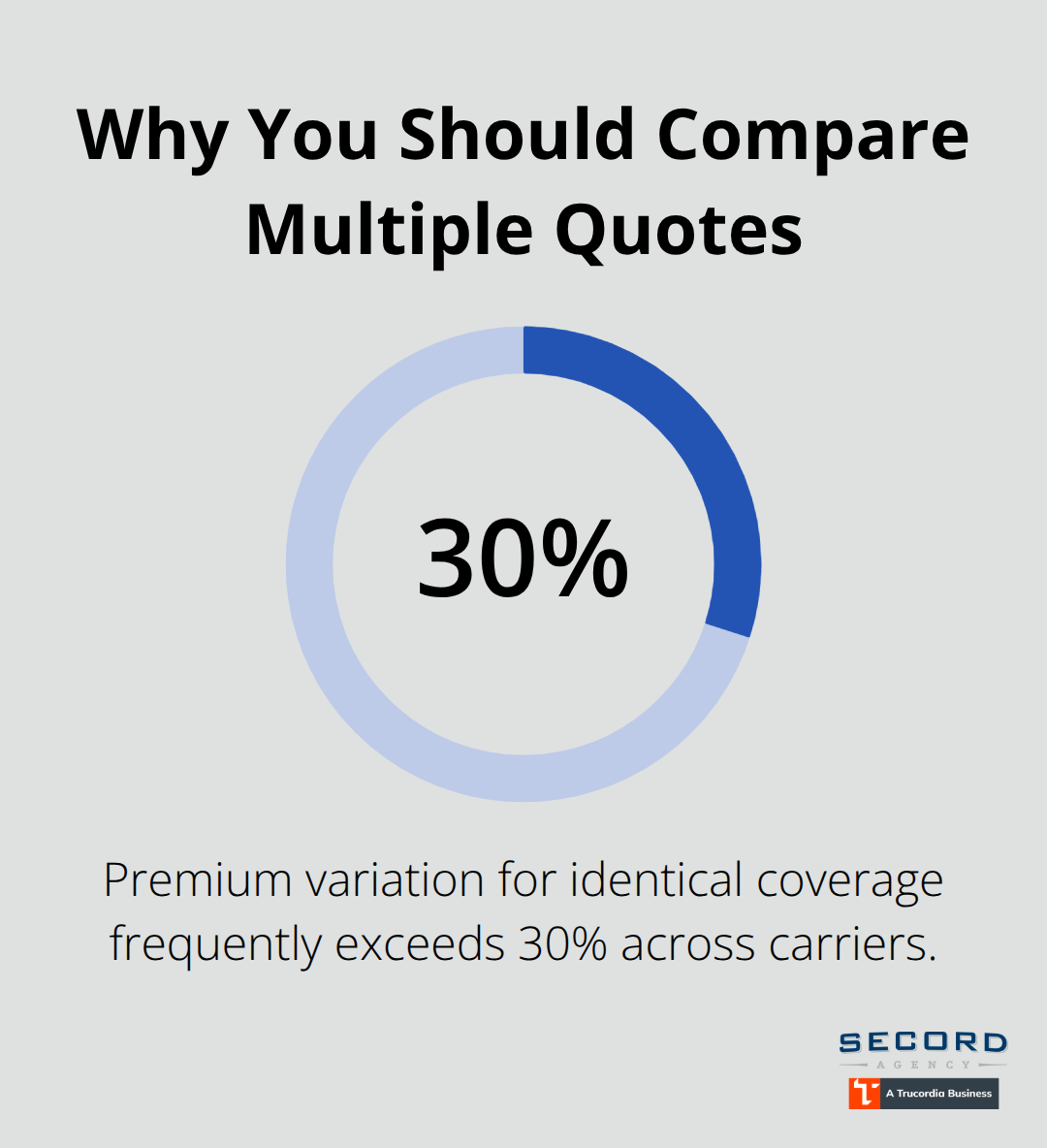
Request quotes from at least three carriers before making a decision, not because you need options but because premium variation for identical coverage frequently exceeds 30 percent across carriers. The Hartford, Nationwide, Progressive, and Travelers all insure Washington restaurants, but each carrier prices differently based on their claims experience and underwriting appetite.
When comparing quotes, ignore the headline price and instead examine what’s actually covered at what limits. A $2,000 annual policy with $500,000 liability limits offers worse protection than a $2,800 policy with $1 million limits, yet many restaurant owners fixate on the lower number.
Verify that your quotes include general liability, workers’ compensation through the Washington State Department of Labor & Industries, property coverage, and any specialized lines your operation requires like liquor liability or cyber insurance. This approach prevents carriers from hiding weak coverage behind attractive pricing.
Prioritize Local Expertise and Claims Support
Local expertise matters substantially when claims actually happen. A carrier with strong Washington experience understands how local courts award damages in premises liability cases, how the state’s workers’ compensation system operates, and what coverage gaps commonly emerge in restaurant operations. Claims processing speed varies dramatically between carriers-some process straightforward claims in two weeks while others stretch timelines to 60 days.
Ask prospective providers specifically about their average claims processing time for property damage and liability claims, then verify those timelines with online reviews from other Washington restaurant owners. An agent familiar with local restaurants can reference their experience with specific carriers’ claims handling rather than relying on national reputation. A local Seattle insurance agent pairs competitive rates with fast, advocate-led service for Washington restaurants, simplifying quotes and claims while providing personalized advice and ongoing policy reviews.
Final Thoughts
Restaurant insurance WA protects your operation from the financial devastation that slip-and-fall claims, equipment failures, and employee injuries create. The coverage types we’ve outlined-general liability, workers’ compensation, property protection, liquor liability, and cyber insurance-form a comprehensive shield against the specific risks your restaurant faces daily. Assembling these protections requires moving beyond generic quotes and selecting a provider who understands food service operations rather than treating your restaurant like any other business.
Document your operational specifics and request quotes from multiple carriers, including your alcohol service status, catering operations, delivery activities, and staffing levels in every quote request. Compare not just pricing but actual coverage limits and what each policy excludes, since premium variation exceeds 30 percent across carriers for identical protection. When claims actually happen, local expertise determines whether your insurer becomes an advocate or an obstacle, with processing timelines varying dramatically between carriers-some handle straightforward property claims in two weeks while others stretch to 60 days.
We at Secord Agency – A Trucordia Business pair competitive rates with fast, local service specifically designed for Washington restaurant owners. An agent familiar with Washington restaurants understands how local courts award damages and what coverage gaps commonly emerge in food service operations. Contact us today to simplify your quotes and claims while receiving personalized advice tailored to your establishment’s actual risks.