
Seattle Homeowners Policy Guidance: Navigating Coverage With Confidence
Seattle homeowners face real coverage gaps that leave properties vulnerable. Flood damage, earthquakes, and underinsurance are common blind spots that standard policies don’t address.
At Secord Agency – A Trucordia Business, we’ve built this Seattle homeowners policy guidance to help you understand what your coverage actually protects and where the risks hide. We’ll walk you through the choices that matter for your home.
What Your Seattle Homeowners Policy Actually Covers
A standard HO-3 policy in Washington includes property coverages and liability protection. Dwelling coverage protects the structure itself-your roof, walls, foundation, and built-in systems-at replacement cost, which is what it would actually cost to rebuild your home today, not what you paid for it years ago. This distinction matters enormously because underinsuring by 20 percent triggers coinsurance penalties that can slash your claim payout significantly.
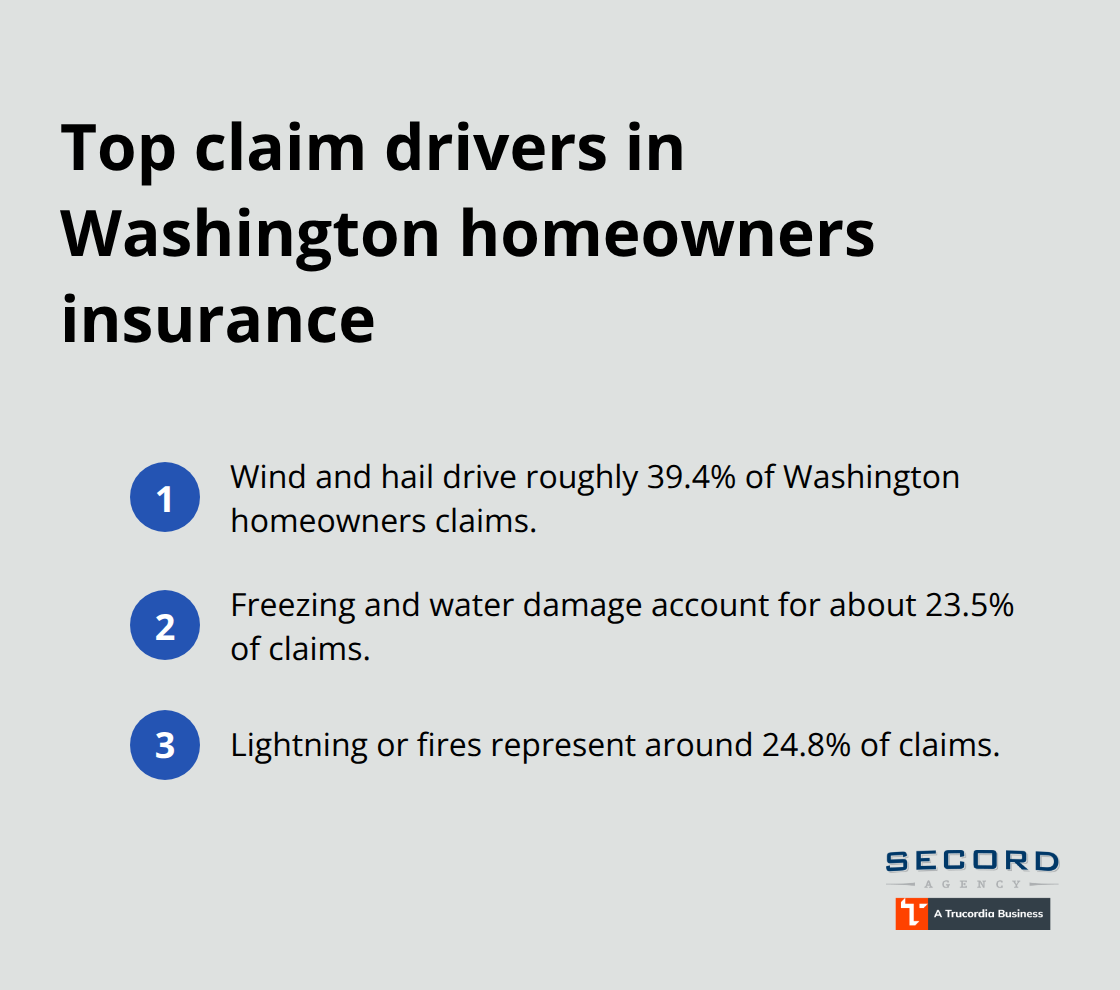
The Insurance Information Institute reports that wind and hail drive roughly 39.4 percent of Washington homeowners claims, with freezing and water damage accounting for about 23.5 percent and lightning or fires around 24.8 percent. Your dwelling limit needs to reflect real reconstruction expenses in Seattle’s current market, not outdated purchase prices.
Personal Property and Liability Protection
Personal property coverage protects your belongings-furniture, clothing, electronics, tools-both inside and outside your home, and typically represents 50 to 70 percent of your dwelling limit. For high-value items like jewelry, art, or specialized equipment, standard coverage caps fall short, which is why scheduling riders for specific items prevents disputes when you file a claim.
Liability coverage is the protection most homeowners underestimate, yet it’s what saves your assets if someone is injured on your property or you accidentally damage someone else’s home. The Washington Department of Insurance recommends liability limits between $100,000 and $300,000 for most homeowners, though higher limits make sense if you have significant assets to protect. You should seriously consider an umbrella policy covering roughly $1 million for an additional $150 to $300 annually.
How Roof Age Affects Your Coverage
Carriers in Washington scrutinize roof age because it directly affects wind and hail claims, which dominate the state’s insurance losses. Roofs over 20 years old face restricted wind coverage or higher premiums, while metal roofs or impact-resistant shingles can reduce your costs by 10 to 15 percent. Wood shake roofs trigger even stricter limitations because they’re more vulnerable to weather damage.
When you shop for quotes, ask carriers specifically about their roof restrictions and whether upgrading materials would lower your premium-sometimes the savings pay for improvements faster than you’d expect.
Loss of Use Coverage and Replacement Cost
Additional living expenses coverage, often called loss of use, reimburses temporary housing and living costs if a covered loss forces you to move out during repairs. This protection is easy to overlook until you’re displaced, and without it, you’d pay rent or hotel costs out of pocket while reconstruction proceeds.
Set your dwelling limit to replacement cost, not market value, to avoid coinsurance penalties and ensure funds are available when you need to rebuild. With these core protections in place, you’re ready to identify the specific gaps that threaten Seattle homes-gaps that standard policies leave wide open.
What Your Standard Policy Actually Leaves Unprotected
Flood Damage and Water Exclusions
Flood damage ranks among the most destructive forces in Washington, yet standard HO-3 policies exclude it entirely. The National Flood Insurance Program administers flood coverage through separate policies, and even if your home sits outside a FEMA high-risk zone, water damage from heavy rain, swollen rivers, or failed stormwater systems can still devastate your property. Flood insurance building policies cover up to $250,000 of flood damage and contents policies cover up to $100,000 of flood damage for belongings kept inside your home, but that expense becomes trivial compared to the cost of uninsured flood damage.
Many Seattle homeowners assume flood won’t happen to them until it does, and by then, their standard policy offers zero protection. Mold remediation presents a related gap-standard policies cap mold coverage at $5,000 to $10,000 and only cover it if a named peril like a burst pipe caused it first. If moisture intrusion or poor ventilation creates mold, you pay out of pocket.
Earthquake Risk From the Cascadia Subduction Zone
Earthquake risk presents a serious gap because the Cascadia Subduction Zone poses a genuine threat to the Pacific Northwest. Scientists estimate roughly a 1 in 10 chance of a magnitude 9.0 event in the next 50 years, making earthquake coverage far more than theoretical protection. Standard policies exclude earthquake damage completely, and adding earthquake coverage requires a separate endorsement costing $300 to $800 annually with deductibles typically set at 15 to 25 percent of your covered losses.
On a $500,000 home, you’d pay $100,000 out of pocket before coverage applies. This high deductible structure reflects the genuine risk that insurers face in the region, but it also means you need to evaluate whether earthquake coverage fits your financial situation and risk tolerance.
Underinsurance and Coinsurance Penalties
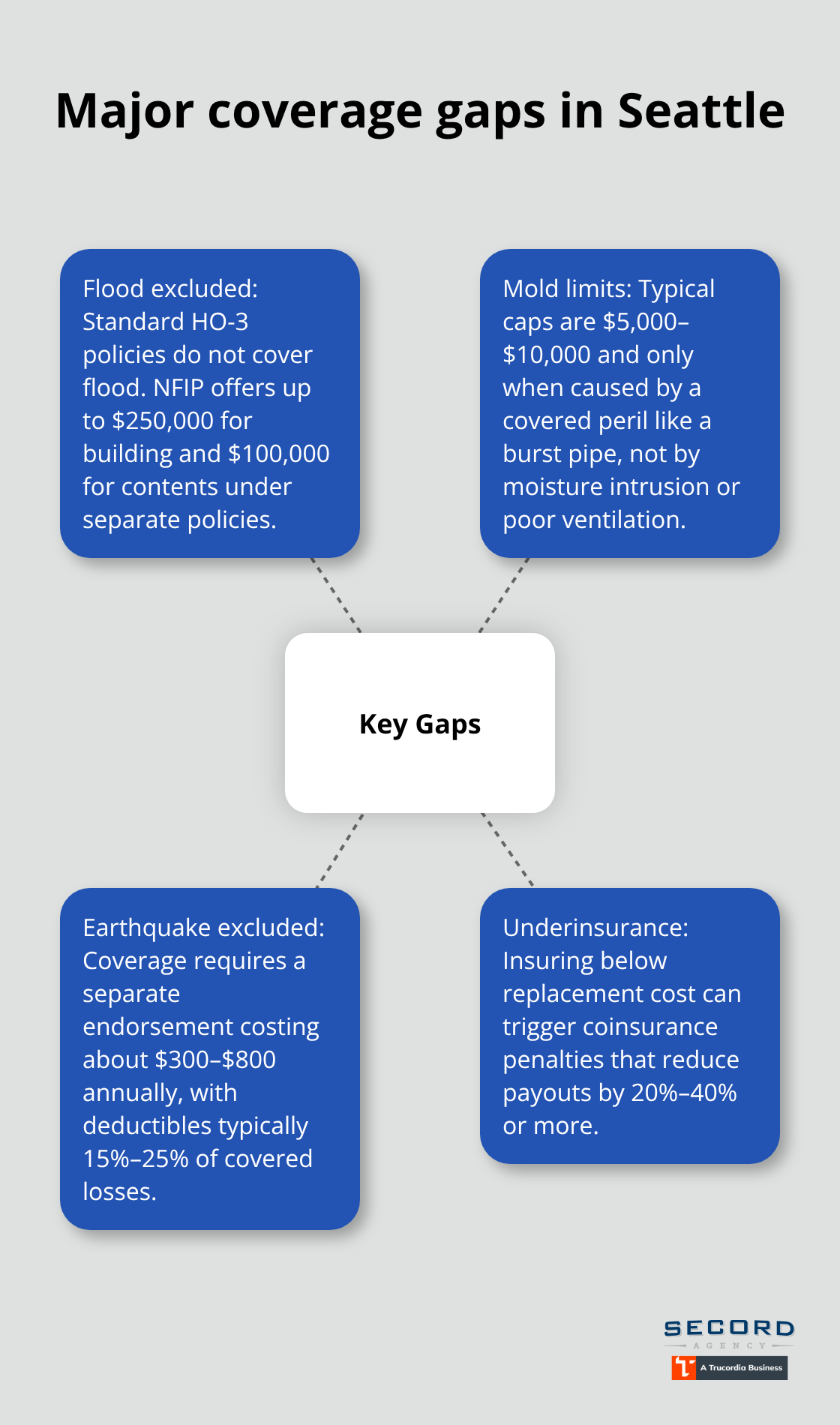
Underinsurance creates a third critical gap that many homeowners create themselves without realizing it. Setting your dwelling limit below actual replacement cost triggers coinsurance penalties that can reduce your claim payout by 20 to 40 percent or more. If your home would cost $600,000 to rebuild but you insured it for only $480,000, carriers can penalize you severely when a major loss occurs.
Construction costs in Seattle shift faster than most homeowners expect, and your policy limits need to keep pace. Obtaining a current replacement cost estimate from a local contractor every three to five years protects you against this drift. These three gaps-flood, earthquake, and underinsurance-account for the majority of coverage disputes we see among Seattle homeowners, which is why identifying your specific vulnerabilities matters far more than simply purchasing the cheapest policy available.
Choosing a Seattle Home Policy That Actually Fits Your Situation
Get Your Replacement Cost Right
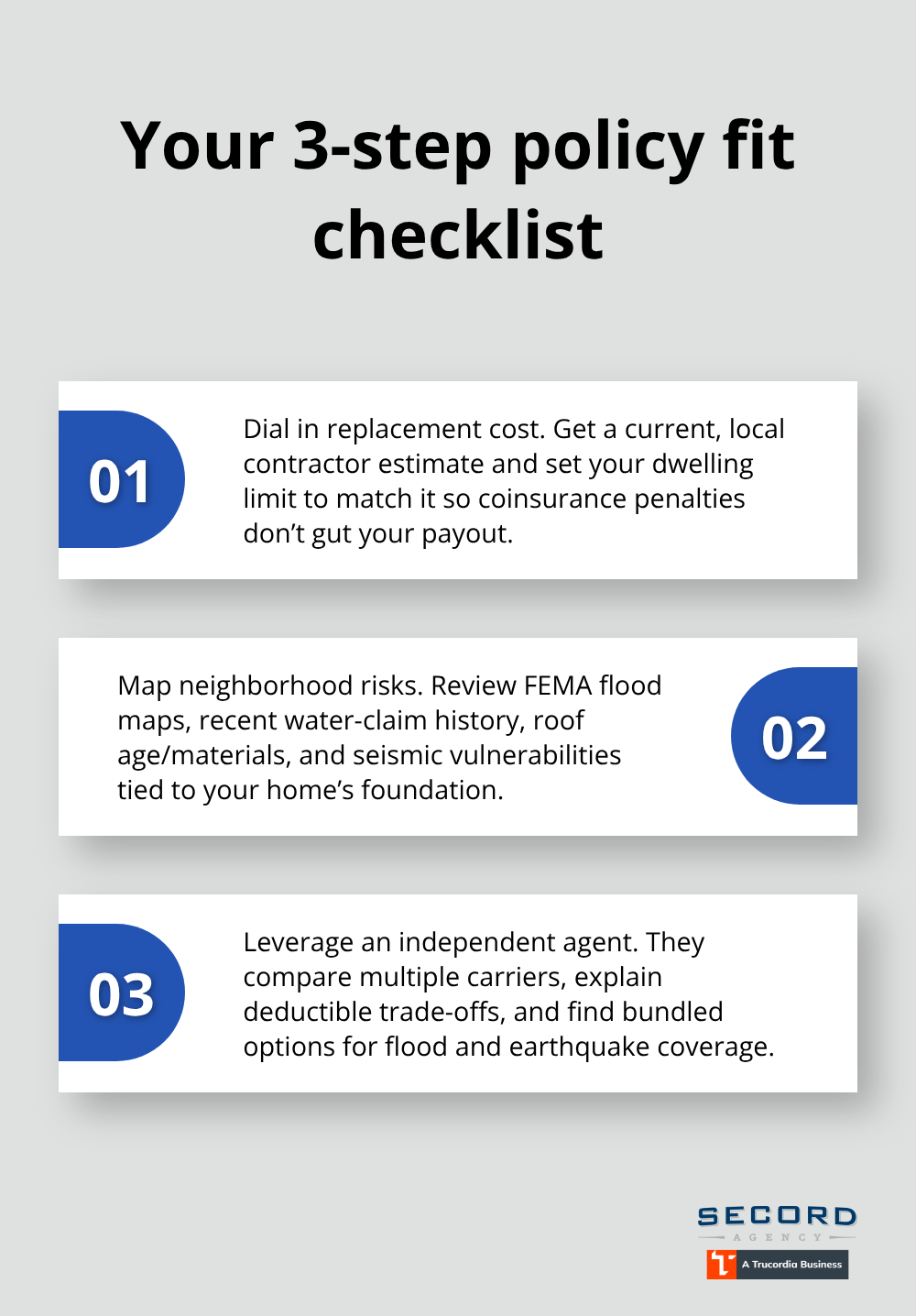
The dwelling limit you set determines whether your policy pays claims or disappoints when disaster strikes. Most Seattle homeowners guess at their replacement cost or rely on outdated estimates, which is why your first step should be obtaining a current replacement cost assessment from a local contractor who understands Seattle’s construction market.
Costs have shifted dramatically-labor and materials in the Pacific Northwest now reflect post-2020 inflation that far outpaced national averages. A contractor walks your home and provides a detailed estimate accounting for square footage, foundation type, roof materials, and finishes specific to your neighborhood.
The Washington Department of Insurance recommends updating this estimate every three to five years because underinsurance by even 20 percent triggers coinsurance penalties that can reduce your payout by thousands of dollars on a major loss. Once you have that number, set your dwelling limit to match it exactly, then request quotes with identical limits and deductibles so you’re genuinely comparing apples to apples across carriers.
Evaluate Your Neighborhood’s Specific Risks
Neighborhood risk factors in Seattle vary sharply and directly affect both your coverage needs and your premium. Wind and hail claims dominate Washington’s insurance losses, with 2.8 percent of insured homes having such a loss, but some Seattle neighborhoods sit in flood-prone areas near Lake Union, the Green River, or major stormwater corridors where flood risk is genuine rather than theoretical. Check FEMA’s flood maps for your specific address and ask your local agent whether your block has experienced water claims in the past decade-that history matters more than generic flood zone designations.
Seismic risk from the Cascadia Subduction Zone affects all of Western Washington equally, but your home’s foundation type and age influence earthquake vulnerability; older homes on unreinforced masonry or post-and-pier foundations face greater damage risk than newer homes on engineered foundations. Roof age and material type also shift your quote considerably-if your roof is over 20 years old, carriers will restrict wind coverage or charge higher premiums, making a roof replacement before shopping quotes sometimes financially worthwhile.
Partner With a Local Independent Agent
An independent agent knows which carriers offer the best rates for homes on older foundations, which ones provide competitive earthquake endorsement pricing, and which ones have the fastest claims processes when you actually need them. They shop multiple carriers simultaneously rather than forcing you to contact each insurer individually. At Secord Agency, a Trucordia business based in Seattle’s Wallingford neighborhood, we pair competitive rates with fast, local, advocate-led service that simplifies quotes and claims while providing personalized advice.
An independent agent identifies opportunities to bundle earthquake and flood coverage at discounts you won’t find shopping alone, and they explain the trade-offs between a $1,000 deductible and a $2,500 deductible in terms of your actual financial capacity to cover a loss. They understand neighborhood-specific factors that affect your coverage and can recommend solutions tailored to your home’s actual vulnerabilities rather than pushing generic policies.
Final Thoughts
Seattle homeowners policy guidance requires three concrete actions that protect your home and finances. First, obtain a current contractor estimate and set your dwelling limit to match it exactly-underinsurance by 20 percent triggers coinsurance penalties that slash your claim payout by thousands. Second, identify your neighborhood’s specific risks by checking FEMA flood maps and reviewing past water claims on your block, since wind, hail, and water damage account for roughly 87 percent of Washington homeowners claims.
Third, add the coverage gaps that standard policies leave open: flood insurance through the National Flood Insurance Program, earthquake endorsement protection given the Cascadia Subduction Zone’s genuine 1 in 10 risk of a magnitude 9.0 event in the next 50 years, and umbrella liability coverage to extend protection beyond your home policy’s limits. Request at least three quotes with identical deductibles, dwelling limits, and liability amounts so you compare actual apples to apples across carriers. Ask each carrier about roof restrictions, claims handling speed, and whether they offer bundled discounts for earthquake and flood coverage.
Policy reviews matter far more than most homeowners realize because construction costs shift faster than you expect and your life circumstances change. Schedule a review every three to five years or whenever you make significant home improvements, add valuable possessions, or experience major life changes like retirement or inheritance. Contact Secord Agency, a Trucordia business, to get started with a quote that actually fits your home and budget.