
Seattle Homeowners Coverage Options: Finding Your Best Fit
Seattle’s weather patterns and earthquake risk make home insurance more complex than in most other regions. Your property deserves coverage that actually matches what you face here.
At Secord Agency – A Trucordia Business, we help homeowners navigate Seattle homeowners coverage options tailored to local conditions. This guide walks you through what’s available and how to pick the right fit for your situation.
What Makes Seattle’s Insurance Needs Different
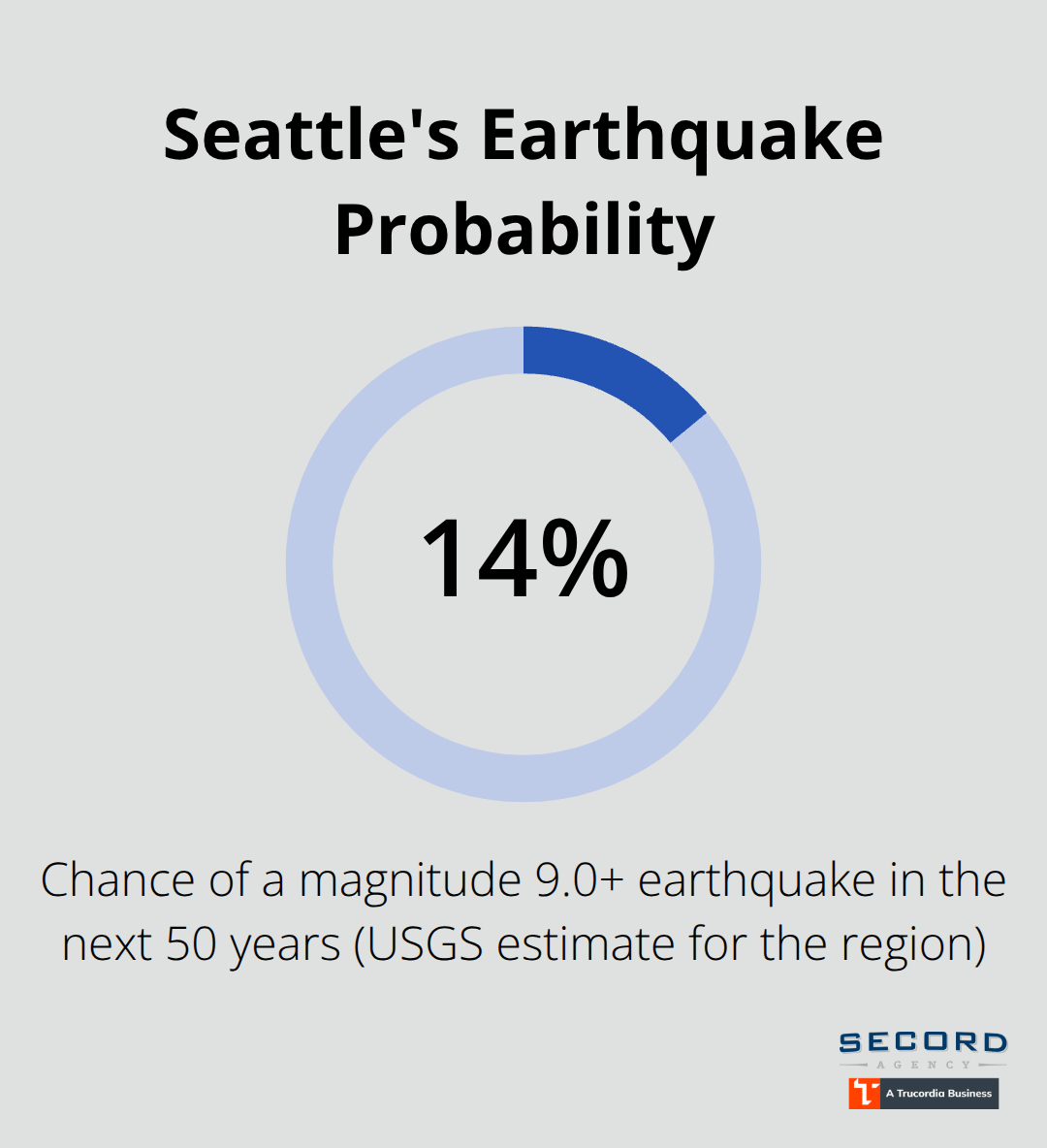
Seattle’s location in the Pacific Northwest creates specific insurance challenges that homeowners in other regions simply don’t face. The Puget Sound region experiences regular rainfall averaging 37.49 inches annually, which is lower than many East Coast and Southern cities, yet still creates persistent moisture issues that damage foundations, roofs, and siding over time. More critically, Seattle sits in a seismic zone where the Cascadia Subduction Zone poses a significant earthquake risk. The U.S. Geological Survey estimates a roughly 14% chance of a magnitude 9.0 or larger earthquake hitting the region in the next 50 years, which would be catastrophic for unprepared homeowners. Standard homeowners policies don’t cover earthquake damage, making this a gap that many Seattle residents overlook until it’s too late.
Flood risk also varies dramatically across the city, with areas near Lake Union, Green Lake, and the Duwamish River facing substantially higher exposure than neighborhoods on higher ground. Property values in Seattle have climbed significantly, with median home prices reaching around $825,000 as of 2024 according to local real estate data, meaning replacement costs become a serious consideration when you select coverage limits.
Earthquake and Flood Coverage Gaps
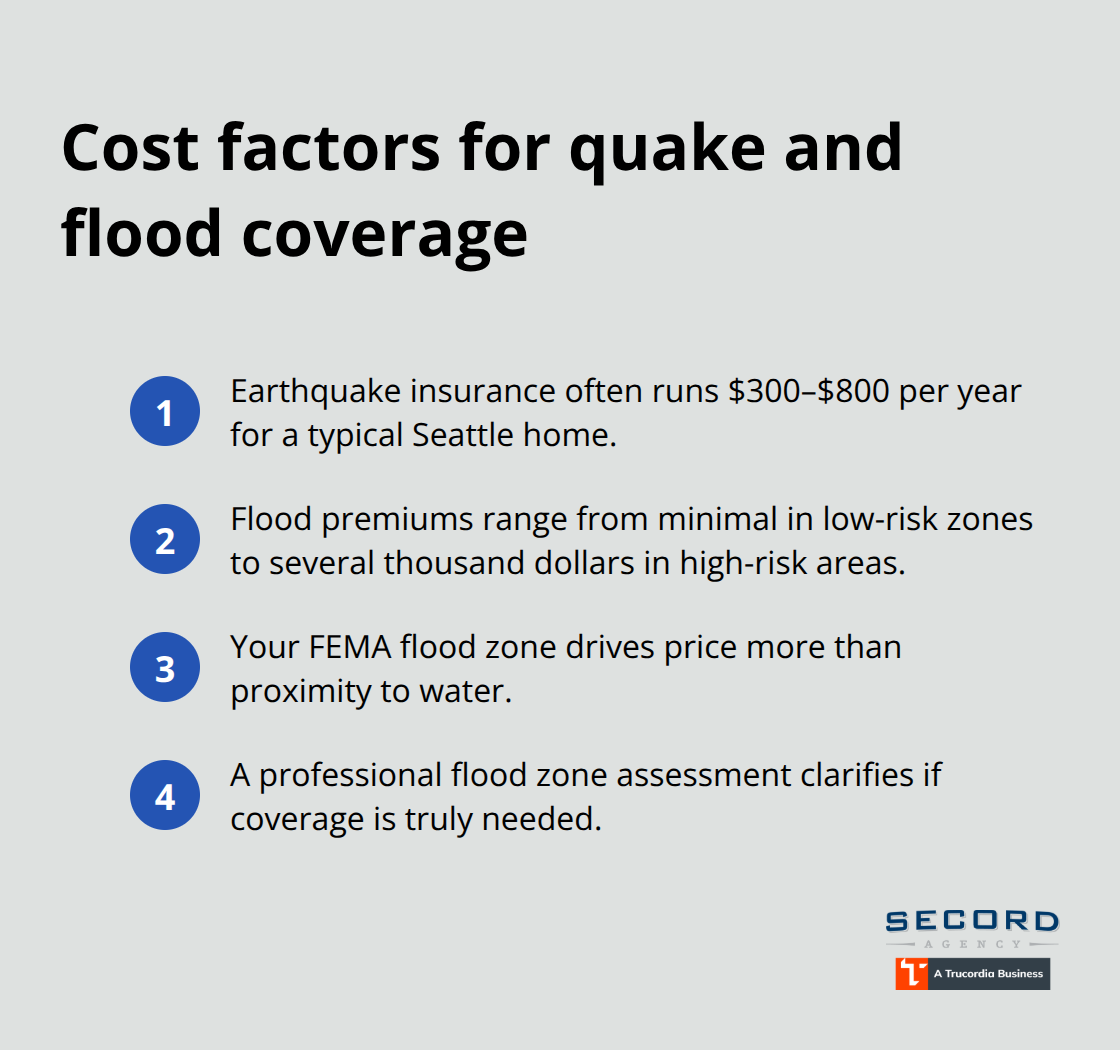
Standard homeowners insurance excludes both earthquake and flood damage, which creates a dangerous combination in Seattle. You need separate earthquake insurance through your homeowners carrier or a specialty provider, and flood insurance through the National Flood Insurance Program or private insurers. The cost varies based on your home’s age, construction type, and location, but earthquake coverage for a typical Seattle home runs between $300 and $800 annually. Flood insurance depends entirely on your flood zone designation, ranging from minimal premiums in low-risk areas to several thousand dollars annually for high-risk properties. A professional flood zone assessment reveals whether your property actually needs coverage, since many homeowners discover they’re in a flood zone only after water damage occurs.
Replacement Cost Reality in Seattle
Seattle’s construction costs and property values mean your coverage limits must reflect current replacement expenses, not what you paid for your home years ago. Reconstruction costs in the Seattle area average $250 to $350 per square foot for quality construction, significantly higher than national averages. A 2,500-square-foot home could cost $625,000 to $875,000 to rebuild, yet many homeowners carry replacement cost coverage of only $400,000 or $500,000. This underinsurance leaves you personally liable for the difference if total loss occurs. An independent appraisal of your home’s replacement value matters far more than what your mortgage lender required years ago.
Finding Coverage That Matches Your Home
Your next step involves comparing what different carriers offer and how their policies address Seattle-specific risks. We at Secord Agency – A Trucordia Business shop multiple carriers to find coverage that actually fits your property and situation, rather than forcing you into a one-size-fits-all policy. The right coverage depends on your specific location, home construction, and risk tolerance-factors that vary dramatically even within Seattle neighborhoods.
Types of Home Insurance Coverage Available
Standard Homeowners Policies and Their Actual Protection
Standard homeowners policies sold nationwide provide a foundation of protection, but they’re designed for generic risk profiles that don’t match Seattle’s reality. A typical HO-3 policy covers your dwelling structure, other structures like detached garages, personal property inside your home, liability if someone gets injured on your property, and additional living expenses if you need to relocate temporarily after damage. Coverage limits for the dwelling typically range from $300,000 to $800,000, though Seattle’s $250 to $350 per square foot reconstruction costs mean many homeowners carry inadequate limits. Personal property coverage usually sits at 50 to 70 percent of your dwelling limit, which sounds reasonable until you inventory your actual possessions and realize that figure won’t replace electronics, furniture, and clothing at current prices. Liability coverage in standard policies maxes out at $300,000 or $500,000, sufficient for most claims but potentially insufficient if someone suffers serious injury on your property and pursues a lawsuit.
The critical gap with standard policies is what they explicitly exclude: earthquake damage, flood damage, and certain water-related incidents like sewer backup or foundation seepage. Washington State requires insurers to offer earthquake coverage as an add-on, typically costing $300 to $800 annually depending on your home’s characteristics, and this separate policy applies a deductible of 10 to 20 percent of your dwelling’s insured value rather than a flat dollar amount.
Additional Endorsements That Address Seattle-Specific Risks
Seattle homeowners should evaluate whether specialty endorsements address your specific vulnerabilities. Sewer backup coverage protects you when municipal systems fail and sewage enters your home, a real problem in older Seattle neighborhoods with aging infrastructure, and costs around $75 to $150 annually for $10,000 to $25,000 in protection. Water damage from foundation seepage or groundwater intrusion requires a separate endorsement since standard policies exclude gradual water infiltration, yet Seattle’s wet climate makes this a legitimate risk, especially for homes built before modern waterproofing standards.
Roof age matters significantly in Seattle’s rainy environment, and many carriers require roof inspections or impose higher deductibles if your roof exceeds 15 to 20 years old. Older homes with wood shake or shingle roofs face steeper premiums or coverage restrictions, making the cost of roof replacement a practical consideration in your overall insurance strategy.
Specialty Policies for Unique Seattle Properties
Historic or custom homes in Seattle neighborhoods like Capitol Hill or Ballard often need specialty policies because their construction methods, materials, or replacement costs fall outside standard underwriting parameters. These properties require carriers with expertise in older construction and period-appropriate rebuilding, which standard insurers typically won’t provide. Your location within Seattle matters too-homes near water or in flood zones face different premium structures and coverage availability than those on higher ground, making a professional risk assessment the foundation of selecting appropriate coverage limits and endorsements.
A detailed property assessment reveals which coverage gaps matter most for your specific situation. Carriers evaluate Seattle homes differently based on construction type, foundation condition, and local loss history, so the endorsements that protect one home may not apply to another just blocks away.
How to Choose the Right Coverage for Your Situation
Assess Your Property’s Actual Risk Profile
Start by identifying which risks genuinely threaten your specific property rather than worrying about generic Seattle vulnerabilities. Pull your property deed and flood zone information from the Federal Emergency Management Agency’s flood map tool to determine whether you actually sit in a mapped flood zone or in an area where flood insurance remains optional. Many Seattle homeowners pay for flood coverage they don’t need because they assume proximity to water automatically triggers high risk, when in reality FEMA’s designations are precise enough that two homes on the same block can have vastly different flood exposure.
Next, document your home’s construction details: the year built, square footage, foundation type, roof material and age, and any recent renovations or structural upgrades. This information directly affects your replacement cost estimate and premium calculations, so accuracy matters far more than approximation.
Get a Professional Replacement Cost Appraisal
Request a professional replacement cost appraisal from a qualified appraiser familiar with Seattle construction standards rather than relying on your home’s market value or your mortgage lender’s outdated estimates. The appraisal costs $300 to $500 but prevents the expensive mistake of carrying insufficient dwelling coverage when rebuilding would actually cost significantly more than your policy limit. Seattle’s reconstruction costs run $250 to $350 per square foot, so a 2,500-square-foot home could require $625,000 to $875,000 to rebuild-far more than many homeowners realize when they select coverage limits.
Compare Quotes on Identical Terms
Compare quotes from at least three different carriers, but focus your comparison on apples-to-apples coverage rather than chasing the lowest premium. Request quotes with identical dwelling limits, deductibles, and earthquake and flood coverage options so you can see how carriers price the same risk differently. Rates vary substantially between insurers, with some specializing in older Seattle homes while others focus on newer construction, meaning the cheapest quote from a carrier unfamiliar with your home type may reflect underwriting that creates problems later.
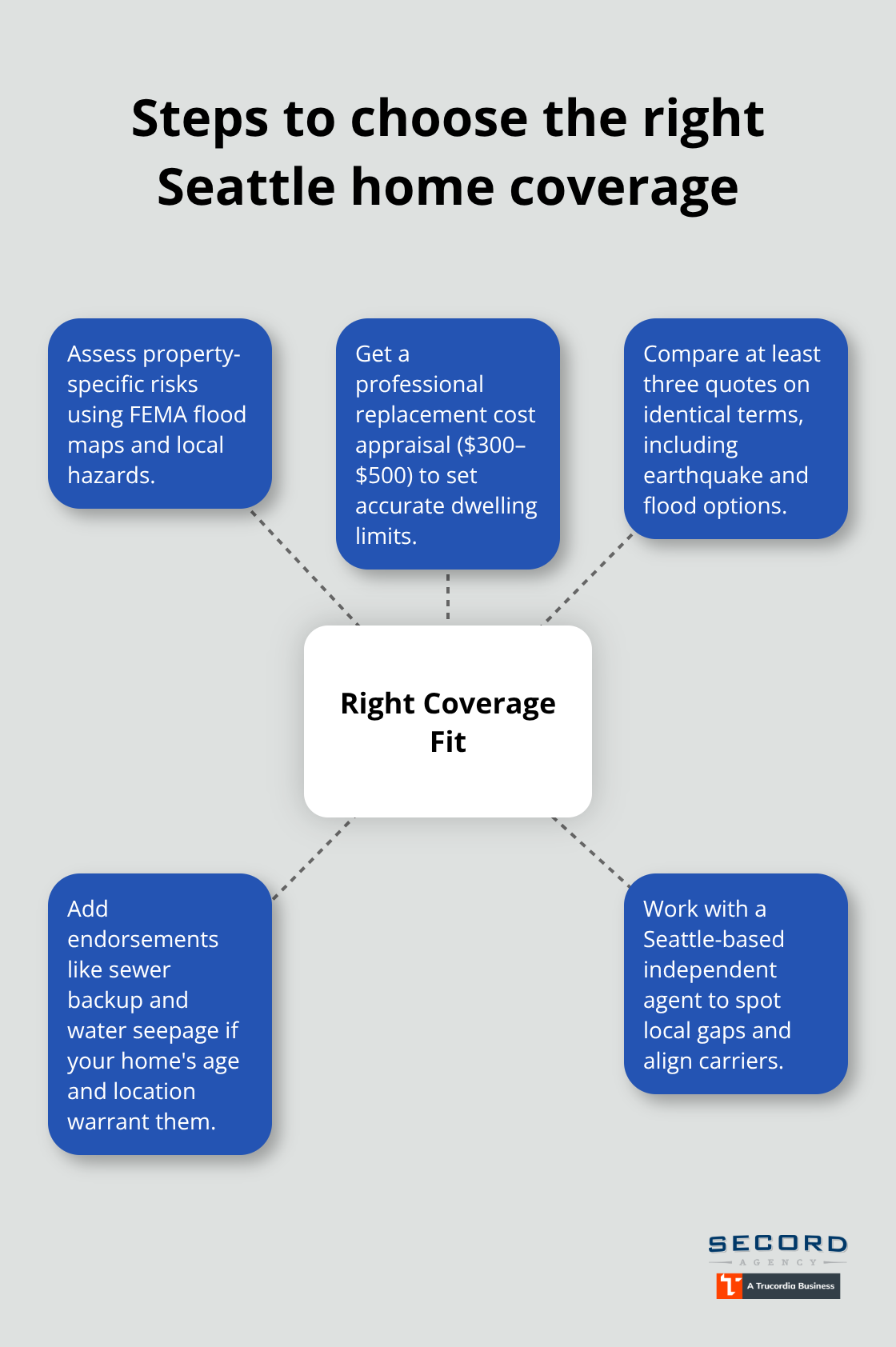
Request quotes that include sewer backup coverage and water seepage protection as separate line items so you can evaluate whether these endorsements make financial sense for your property’s age and location. Once you have quotes in hand, verify that each carrier’s offered limits actually match your documented replacement cost and that any exclusions or limitations don’t create coverage gaps for Seattle-specific risks like earthquake or foundation seepage.
Work with Local Expertise
An independent agent familiar with Seattle properties can shop multiple carriers on your behalf and explain how local conditions affect your coverage options. We at Secord Agency-a Trucordia business based in Seattle’s Wallingford neighborhood-shop multiple carriers specifically because Seattle homeowners deserve coverage options evaluated by someone familiar with local property conditions, not a distant algorithm applying national underwriting guidelines to your specific situation. A local agent identifies which endorsements actually matter for your property and catches coverage gaps that national carriers might miss.
Final Thoughts
Seattle’s home insurance landscape demands more attention than standard policies provide, and the stakes are too high to settle for generic coverage. Your earthquake risk, flood exposure, and replacement costs create a situation where local knowledge beats national templates every time. The right Seattle homeowners coverage options protect your actual property against the actual threats you face, not the threats some distant underwriting algorithm assumes you face.
Start with your FEMA flood map designation and document your home’s construction details. Request a professional replacement cost appraisal to establish accurate dwelling limits, then compare quotes from multiple carriers on identical terms so you can see how different insurers price your specific risk. Evaluate whether sewer backup and water seepage endorsements make sense for your property’s age and location, since these decisions take a few hours but prevent the financial catastrophe of discovering your coverage falls short after damage occurs.
An independent agent familiar with Seattle properties catches coverage gaps that national carriers miss and identifies which endorsements actually matter for your situation. Contact Secord Agency to get quotes on Seattle homeowners coverage options tailored to your property’s specific risks and replacement costs.