Vacation Rental Liability Coverage: Protecting Your Short-Term Property
Your vacation rental is generating income, but standard homeowners insurance won’t protect you from guest-related accidents or property damage claims. The liability gaps are real, and they can cost you thousands.
At Secord Agency – A Trucordia Business, we’ve seen property owners face unexpected financial exposure because their coverage didn’t account for rental activity. The right vacation rental liability coverage exists-you just need to know what to look for.
Why Your Homeowners Policy Won’t Cover Rental Income
Standard Policies Exclude Rental Activity
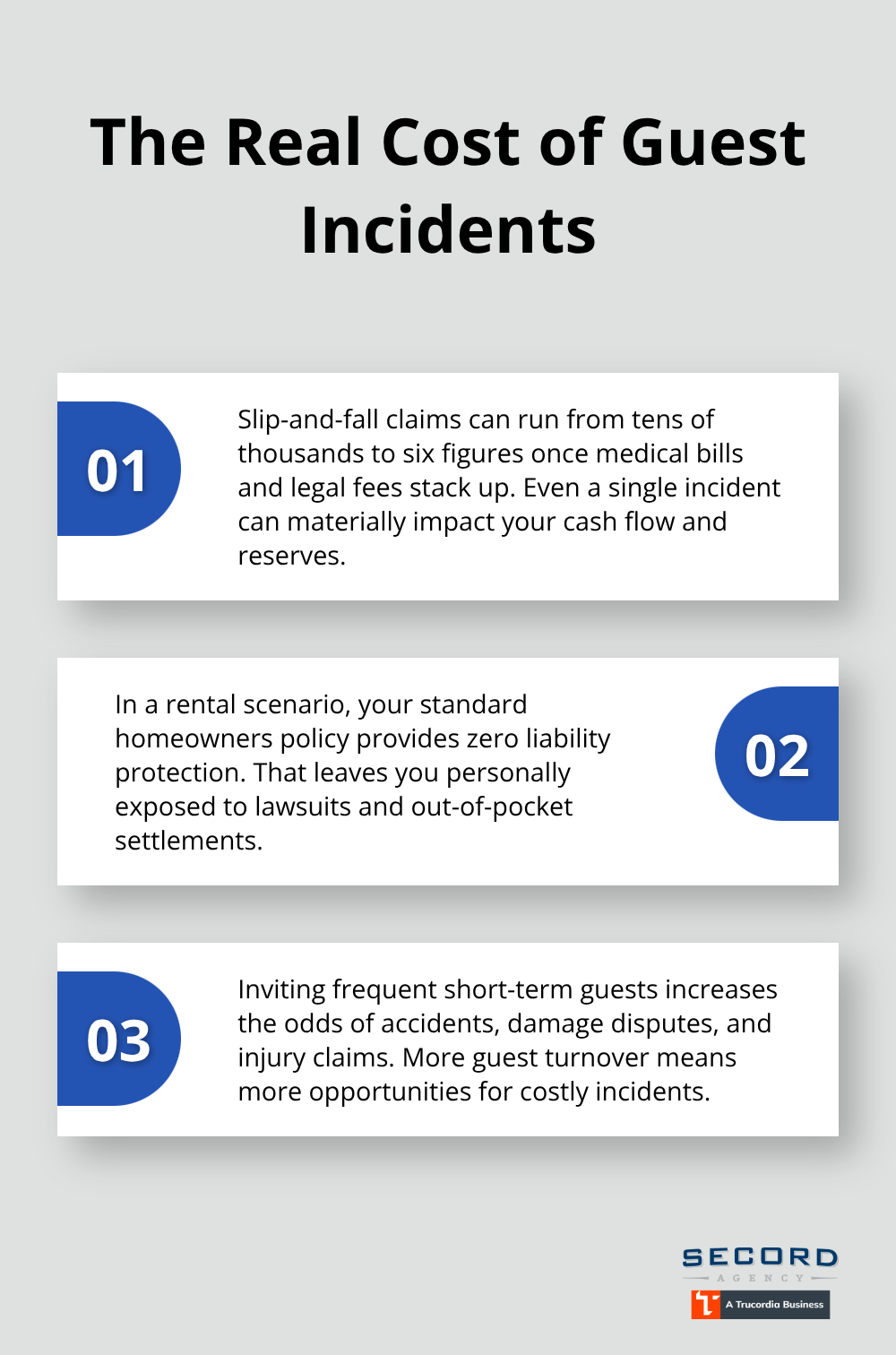
Standard homeowners insurance policies and landlord insurance policies only include specific covered events and almost always exclude coverage for business purposes, which includes short-term rentals. When you rent out your property-even occasionally-your standard policy becomes invalid the moment a paying guest arrives. Most insurers include specific language stating that coverage lapses if the property is used for business purposes, which includes short-term rentals. This isn’t a gray area or something negotiable with your agent. The policy simply doesn’t apply to rental situations, and filing a claim after a guest injury will result in denial and a lawsuit you’ll face alone.
The Real Cost of Guest-Related Incidents
The financial exposure from guest-related incidents far exceeds what most property owners anticipate. A single slip-and-fall claim can easily reach $50,000 to $100,000 when medical expenses and legal fees combine. If a guest suffers a serious injury at your property, they can sue you personally for damages beyond what your homeowners policy covers-which is zero dollars in a rental scenario. Liability risks escalate dramatically with vacation rentals because you invite strangers into your home regularly, which increases the probability of accidents, property damage disputes, and injury claims.
Coverage Gaps That Leave You Exposed
Your homeowners policy was designed to protect you as an occupant, not as a business operator managing multiple guest interactions annually. Water damage from a guest’s negligence, theft claims, or injuries sustained during their stay all fall outside standard homeowners coverage. The policy gap isn’t small-it’s complete. Without proper vacation rental liability insurance, you operate with zero protection despite significant financial risk.
What Happens When Claims Arise
Property owners often assume their standard coverage will handle rental situations, only to discover otherwise during a claim. The moment you accept payment from a guest, your homeowners insurer can deny any claim related to that rental activity. This leaves you personally liable for all damages and legal costs. Understanding these gaps matters because the right vacation rental liability coverage exists-you simply need to know which options actually protect your income and your assets.
Your Coverage Options
Host Protection Programs Fall Short
Booking platform host protection programs sound convenient, but they function as liability shields for the platforms themselves, not comprehensive protection for your property. Airbnb’s $1 million in liability coverage, but only after you exhaust your own homeowners insurance and only for specific claim types-it won’t cover damage to your rental furnishings, lost income during repairs, or guest injuries that fall outside their narrow definitions. Vrbo offers similar limitations with their Host Protection Program. These platform programs exist primarily to reduce the company’s legal exposure, not to fully protect your income.
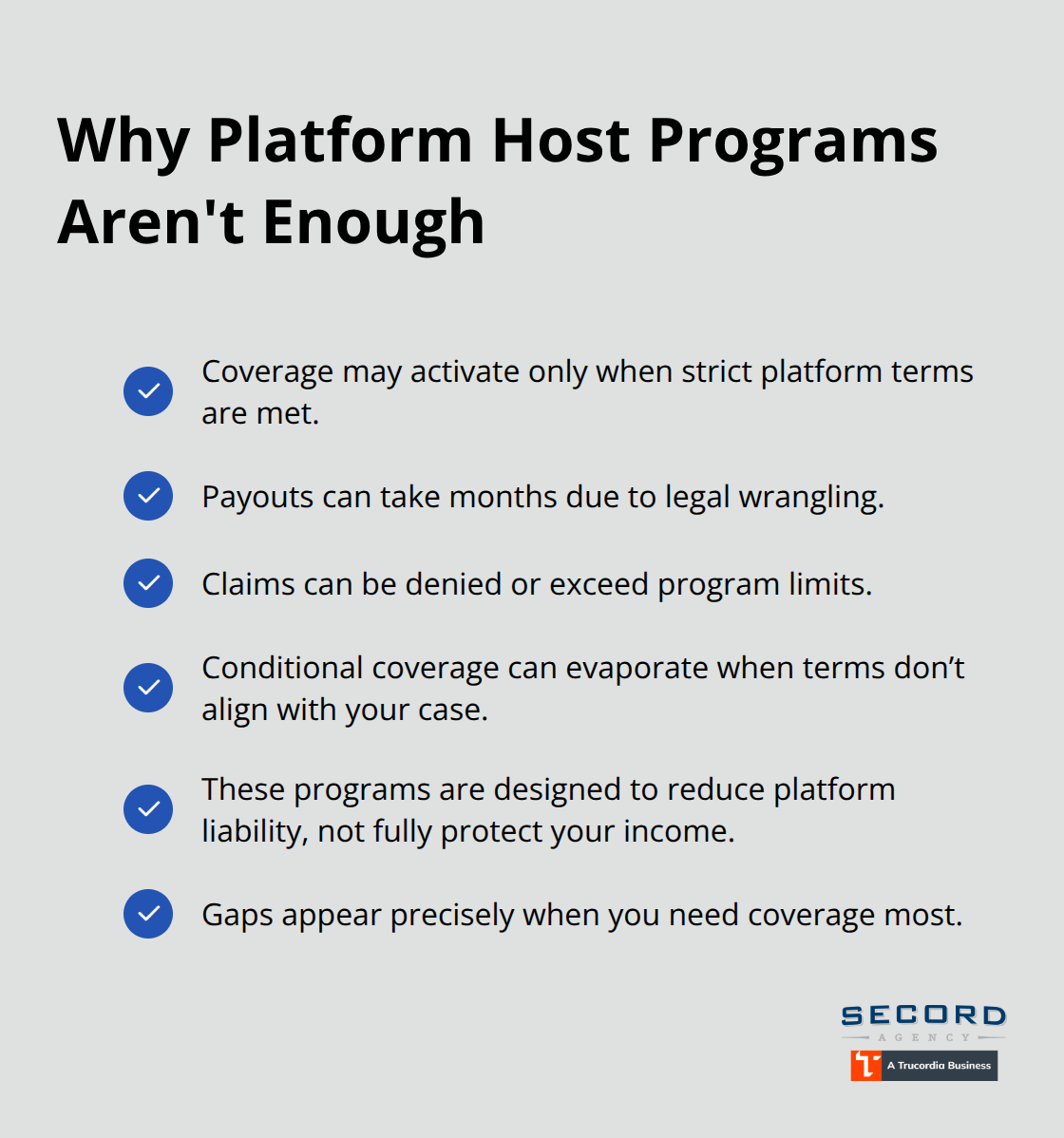
Property owners who rely solely on these programs face critical gaps the moment a claim gets denied or exceeds coverage limits. The platform’s insurance activates only when their terms are met, which often means months of legal wrangling before any payout arrives. You can’t count on conditional coverage that evaporates when the platform’s terms don’t align with your situation.
Standalone Vacation Rental Insurance Provides Real Protection
Standalone vacation rental insurance policies from specialized carriers like Proper Insurance, Vacasa, or Hippo actually understand short-term rental operations and build coverage around them rather than around traditional homeownership. These policies typically cover liability for guest injuries, property damage caused by guests, loss of rental income during property repairs, and additional living expenses if your rental becomes uninhabitable. A standalone policy costs between $1,500 and $3,500 annually (depending on your property value, location, and rental frequency), but it provides actual protection rather than conditional coverage.
Commercial General Liability as an Alternative
Commercial general liability coverage offers another route, though it’s often overkill for small-scale rental operations and typically runs $2,000 to $5,000 per year. This option works better for property owners who operate multiple rentals or manage their properties as a formal business entity. The coverage breadth exceeds what most occasional rental operators actually need.
Your rental frequency matters significantly when selecting a policy type. Occasional rentals have different risk profiles than properties rented fifty weeks annually, which means your coverage needs differ substantially. Understanding your actual rental activity helps you avoid overpaying for unnecessary coverage or underpaying for inadequate protection.
How to Choose the Right Coverage for Your Property
Your rental frequency determines which insurance option actually makes financial sense. A property rented twelve weekends annually operates under completely different risk parameters than one generating income forty-eight weeks per year, yet most property owners fail to quantify this distinction before purchasing coverage. If you rent fewer than thirty days annually, a standalone vacation rental policy becomes economical because you’ll pay roughly $125 to $290 monthly for protection that covers your specific exposure without the overhead of commercial general liability. Properties rented more than fifty days yearly justify the higher cost of specialized vacation rental insurance because the annual premium spreads across significantly more rental days, reducing your per-day insurance cost. Calculate your actual rental days over the past two years and project forward honestly-this number drives your coverage decision more than anything else. A property in a desirable market like Colorado ski towns or coastal Florida generates more bookings and higher liability exposure than a rural property, which means your coverage limits should reflect actual guest volume rather than theoretical capacity.
Location and Property Characteristics Shape Your Risk Profile
Geographic location directly impacts both your premium costs and the coverage limits you need. Properties in areas with higher litigation frequency and medical costs-typically urban centers and coastal regions-face steeper insurance premiums and warrant higher liability limits. A slip-and-fall claim in San Francisco carries different financial exposure than the same incident in rural Montana. Similarly, property type matters substantially: a beachfront home with hot tub and pool carries exponentially higher liability risk than a modest apartment without amenities. Insurance carriers price accordingly, and you should too. If your property contains attractions that invite guest injuries (pools, hot tubs, trampolines, fire pits), your liability limits should start at minimum $500,000 and ideally reach $1,000,000 to cover serious injury scenarios. Properties in flood zones or earthquake-prone regions require additional specialized coverage beyond standard vacation rental policies-most standard policies exclude these losses entirely. Check your property’s flood zone designation through the Federal Emergency Management Agency’s flood map tool and your local geological survey for earthquake risk before finalizing coverage.
Deductibles and Coverage Limits Demand Honest Assessment
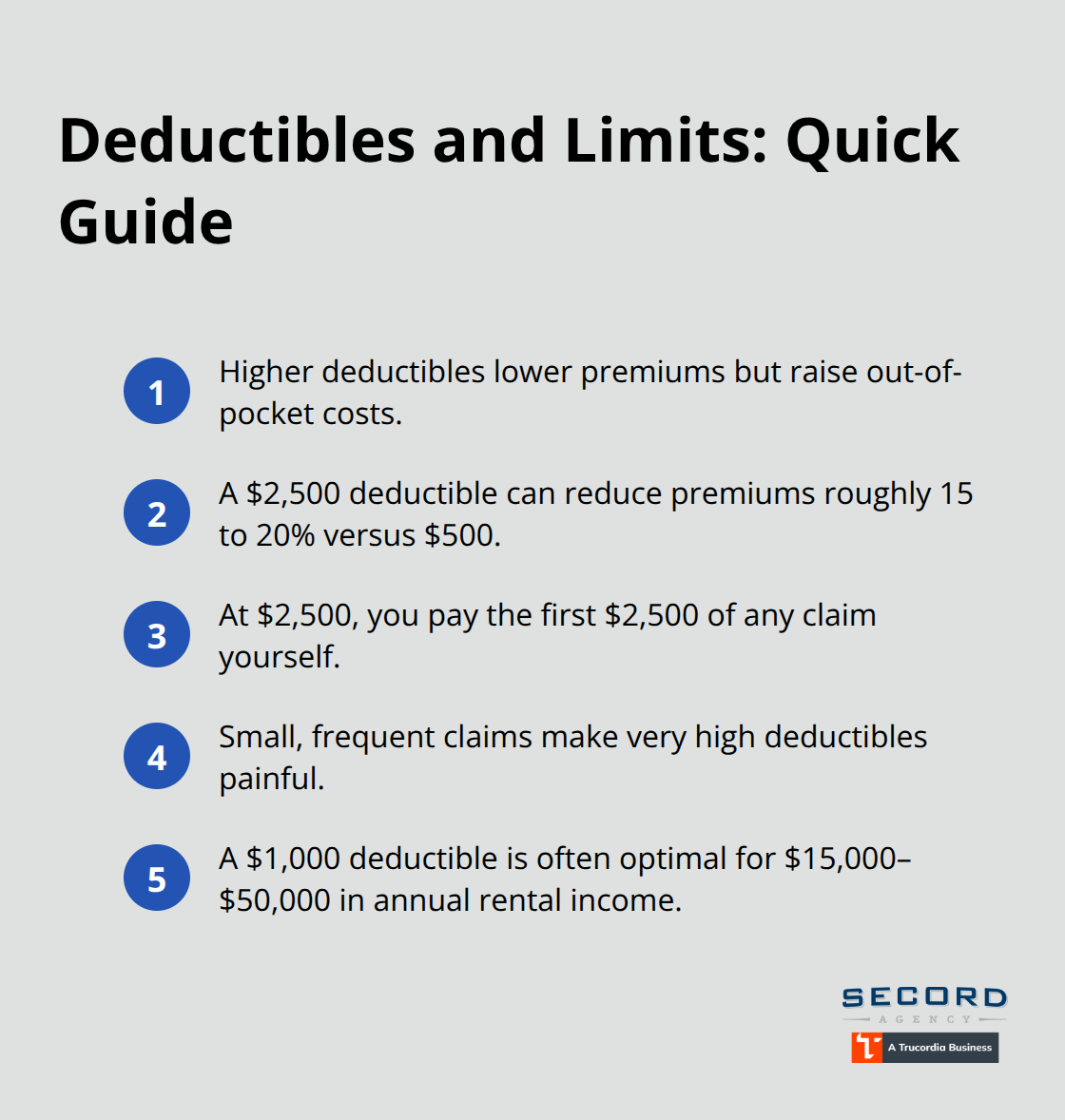
Your deductible choice represents a direct trade-off between monthly premium costs and out-of-pocket exposure when claims occur. A $2,500 deductible reduces your annual premium by roughly fifteen to twenty percent compared to a $500 deductible, but it means you absorb the first $2,500 of any claim personally. Most property owners underestimate how frequently small claims occur-guest damage to furnishings, broken appliances, or minor injuries happen regularly enough that a higher deductible compounds financial pain. A $1,000 deductible typically provides the optimal balance for rental properties generating $15,000 to $50,000 annually.
Coverage limits should never match your property value; they should match your actual liability exposure. A $500,000 liability limit sounds substantial until you consider that a single catastrophic injury claim involving permanent disability can easily exceed $1,000,000 in total damages. Your coverage limits protect your personal assets if a judgment exceeds policy limits, making this decision about protecting your home and savings rather than just insuring rental income.
Final Thoughts
Standard homeowners insurance won’t protect your vacation rental income, and platform host protection programs fall short of actual coverage. The financial exposure demands real protection designed for short-term rental operations, not conditional coverage that evaporates when claims arise. Standalone vacation rental liability coverage from specialized carriers like Proper Insurance, Vacasa, or Hippo provides the protection your property needs without unnecessary overhead or platform limitations.
Your coverage decision rests on three concrete factors: how many days annually you rent your property, your property’s location and amenities, and your personal risk tolerance for out-of-pocket expenses. Calculate your actual rental days over the past two years and project forward honestly, then check your property’s flood zone designation through FEMA’s flood map tool and assess your local earthquake risk. Compare quotes from specialized carriers to understand what vacation rental liability coverage costs for your specific situation, and try a $1,000 deductible to balance premium costs with manageable out-of-pocket exposure.
Contact us at secordagency.com to discuss your vacation rental liability coverage needs and receive a quote tailored to your property. Our team reviews your current homeowners policy, assesses your rental frequency and property characteristics, and recommends specific coverage limits that protect your income and personal assets.