
Vacation Rental Insurance WA: Coverage Tailored for WA Hosts
Your standard homeowners policy won’t protect your vacation rental business. Most insurers explicitly exclude income loss, guest injuries, and property damage tied to short-term rentals.
At Secord Agency – A Trucordia Business, we help Washington hosts find vacation rental insurance WA that actually covers what matters. The right policy fills these gaps and keeps your investment safe.
Why Your Homeowners Policy Won’t Cover Your Rental Business
Standard homeowners insurance treats your property as a primary residence. The moment you list it on Airbnb or VRBO, you’ve transformed it into a business enterprise-and your policy no longer applies. Insurance companies view vacation rentals as fundamentally different from owner-occupied homes because the risk profile changes dramatically. Guest turnover increases property damage likelihood, liability exposure multiplies, and income becomes dependent on continuous occupancy. Your insurer didn’t price your policy for these conditions, which is why most standard homeowners insurance policies exclude short-term rental activity.
The Business Use Exclusion Blocks Your Claims
When you rent your property short-term, your homeowners insurer will deny claims related to guest injuries or property damage caused by renters. This isn’t a gray area-it’s written directly into policy language. A guest slips on your stairs and breaks their arm, or a renter damages your kitchen appliances? Your standard homeowners policy won’t pay. Washington hosts commonly discover this gap only after filing a claim, at which point denial letters arrive citing the business use exclusion. Insurance companies apply this exclusion aggressively because they didn’t collect premiums calculated for commercial activity. The liability exposure from transient guests far exceeds what a homeowners policy accounts for.
Income Loss Leaves You Vulnerable When Disaster Strikes
Your homeowners policy covers physical damage to your home, but it won’t replace lost rental income when that damage forces you offline. If a fire damages your kitchen and you need two months of repairs, a standard policy pays to fix the kitchen-not the thousands of dollars in bookings you’ll lose. Washington vacation rental hosts depend on consistent occupancy to cover their mortgages and expenses. A single covered event can eliminate months of income while your homeowners insurer provides no compensation. This gap creates financial devastation for hosts who’ve built their business model around steady rental revenue.
Liability Gaps Create Catastrophic Exposure
Guest liability extends far beyond simple slip-and-fall incidents. A guest becomes seriously ill from food poisoning at your property, or another guest suffers injury during an activity on your grounds. Your homeowners policy provides minimal liability coverage-typically $100,000 to $300,000 (which disappears instantly in serious injury cases). Medical costs, legal fees, and settlement demands in Washington can easily exceed these limits. Homeowners policies also exclude liability coverage for rental-related incidents entirely, leaving you personally responsible for judgments above your policy limits.
Understanding these gaps reveals why standard homeowners insurance fails vacation rental hosts. The right vacation rental insurance policy addresses each of these vulnerabilities directly, protecting both your property and your income stream.
What Vacation Rental Insurance Actually Covers
Vacation rental insurance in Washington fills the exact gaps your homeowners policy creates. These policies are built specifically for short-term rental operations, meaning carriers price coverage around guest turnover, transient occupancy, and income dependency. Unlike standard homeowners policies that treat your property as a residence, vacation rental insurance recognizes your home as a business asset generating consistent revenue. Washington hosts need to understand what protection they’re actually purchasing, because coverage varies dramatically between carriers and policy tiers. The difference between adequate protection and financial ruin often comes down to specific coverage limits and exclusion language.
Guest Liability Coverage That Matches Real-World Injury Costs
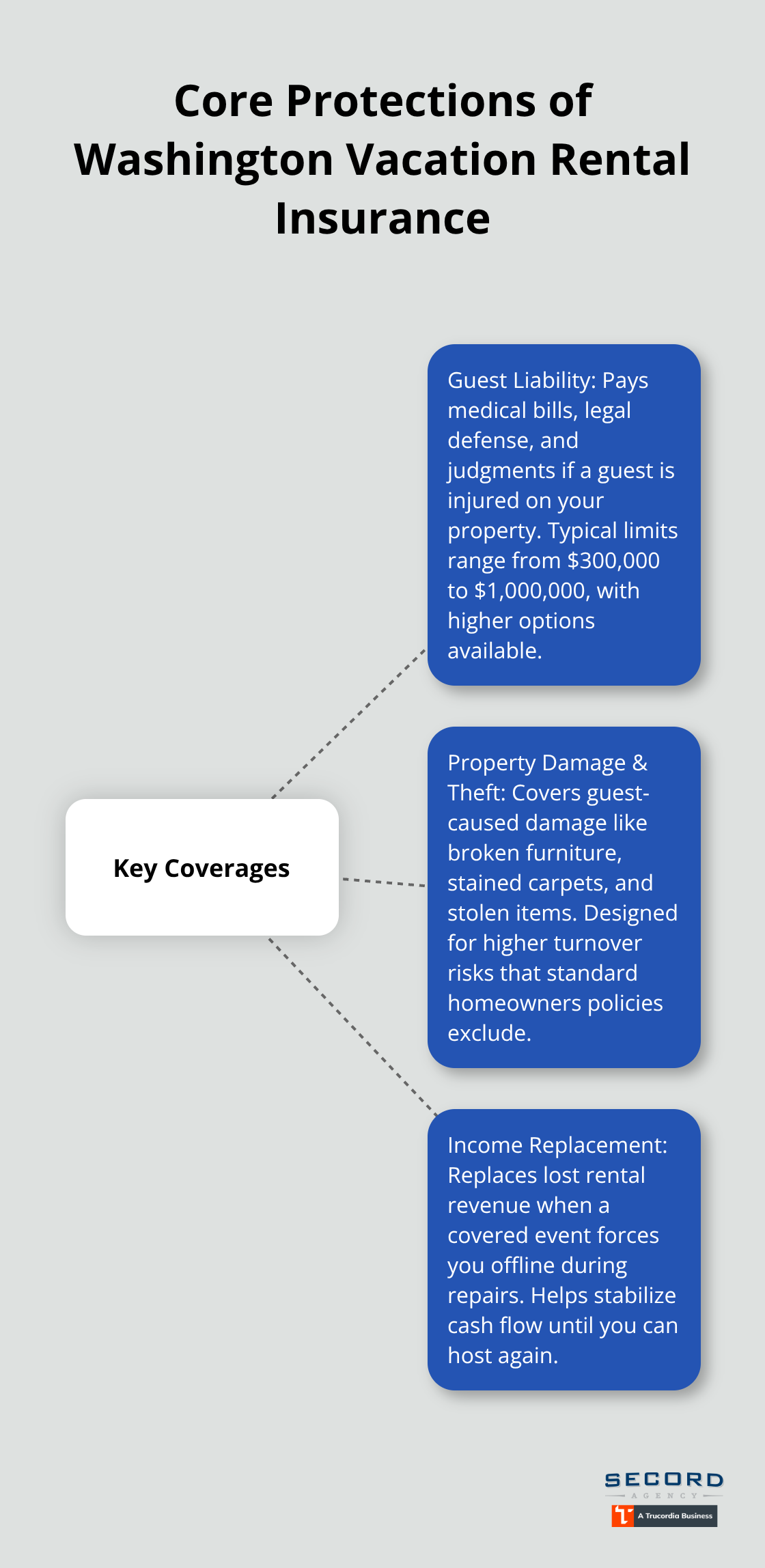
Guest liability coverage is where vacation rental insurance proves its worth. Standard homeowners policies cap liability at $100,000 to $300,000, but a serious injury claim from a guest can easily exceed $500,000 in medical costs, legal fees, and settlements. Vacation rental insurance policies typically offer $300,000 to $1,000,000 in guest liability coverage, with some carriers providing higher limits for an additional premium. This coverage pays for medical expenses, legal defense costs, and court judgments if a guest is injured on your property.
Medical payments coverage within these policies also covers immediate treatment costs for guest injuries, regardless of fault. If a guest slips on your deck and needs emergency care, the policy covers their hospital bills directly.
Property Damage and Theft Protection for Guest-Related Losses
Property damage coverage protects against the reality of guest behavior: broken furniture, damaged appliances, stained carpets, and stolen items. Washington vacation rental hosts experience significantly higher damage rates than long-term rental properties because guests lack the same investment in property care.
Theft coverage is essential in Washington’s rental market, where portable items like electronics, artwork, and personal belongings disappear at higher rates than in owner-occupied homes. This protection covers losses that your standard homeowners policy would deny outright.
Income Replacement When Damage Forces You Offline
Loss of income protection addresses the financial catastrophe most hosts fear. If a covered event like fire or severe weather damages your property and forces you offline, this coverage replaces your lost rental revenue during repair periods. If you’re generating $3,000 monthly in rental income and need three months of repairs, this coverage compensates you for the $9,000 in bookings you would have earned.
Some policies cap income replacement at specific percentages of your annual rental revenue, typically 12 to 24 months of coverage, so verify these limits when comparing quotes. This distinction separates policies that truly protect your business from those that leave significant gaps in your financial security.
Understanding what each coverage type actually protects helps you evaluate which policies align with your specific rental operation. The next step involves assessing your property’s unique characteristics and rental model to determine which coverage limits and policy features matter most for your situation.
How to Choose the Right Vacation Rental Insurance Policy
Assess Your Property Type and Rental Frequency
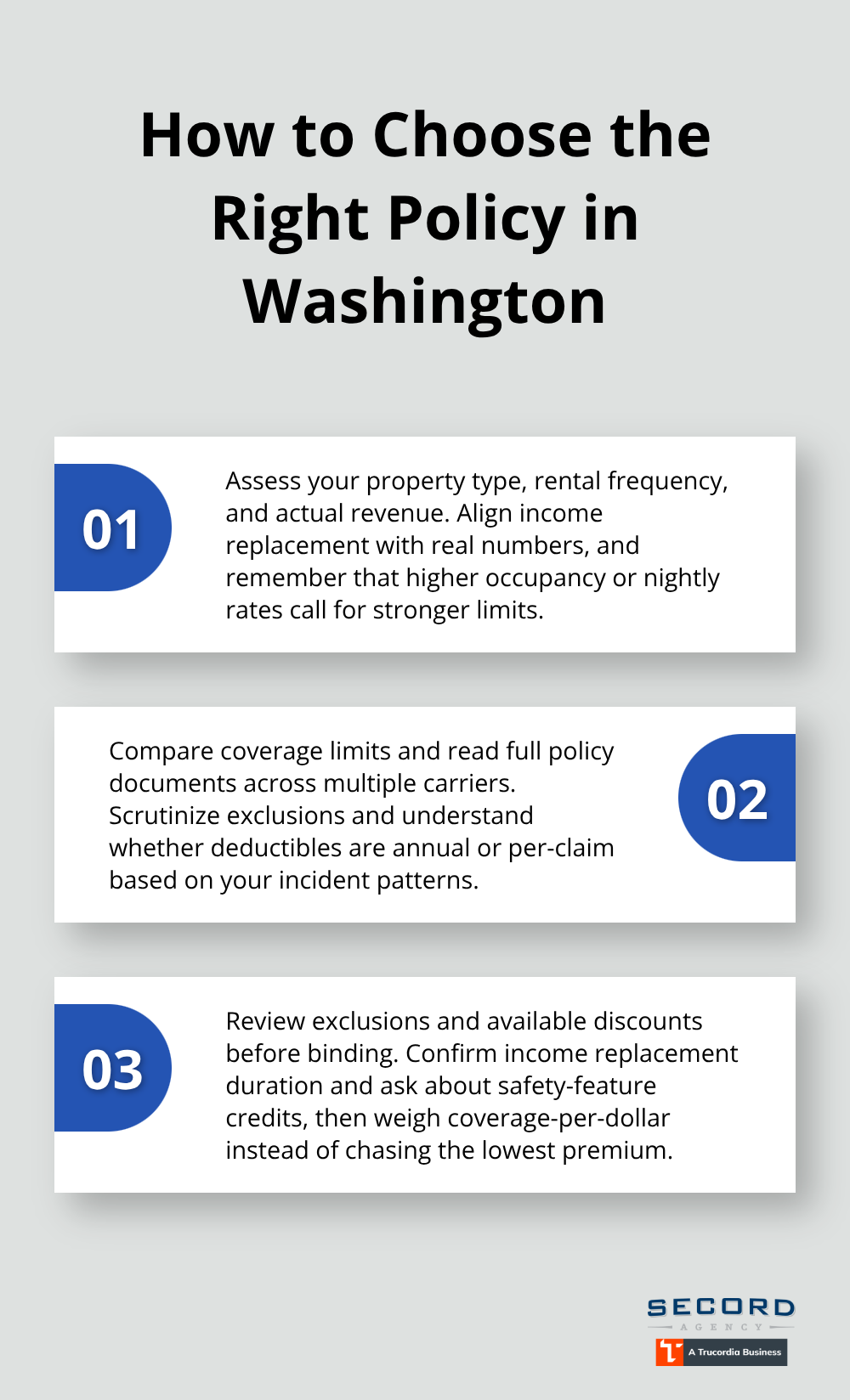
Your property type and rental model determine which coverage limits actually matter. A single-family home rented 200 days annually requires different protection than a multi-unit property with year-round occupancy or a luxury cabin commanding $500 nightly rates. Start by calculating your actual annual rental revenue, not your aspirational numbers. If you’re generating $24,000 yearly, a policy offering $100,000 in income replacement provides far more protection than you need, while one capping at $12,000 leaves you exposed.
Washington hosts operating properties in high-risk areas like coastal regions or forested zones face elevated damage exposure from weather events, which should push you toward higher property damage limits. Your specific guest profile matters too. A property attracting families with children presents different liability scenarios than one hosting bachelor parties or event gatherings.
Document your typical occupancy patterns and guest demographics before shopping carriers, because insurers price policies based on these operational details. Most Washington carriers offer online quote tools, but these preliminary estimates miss important details that affect your actual premium and coverage scope. Gather specifics about your property’s square footage, year built, distance from fire departments, pool or hot tub presence, and number of bedrooms before requesting quotes. This information directly influences underwriting decisions and final pricing.
Compare Coverage Limits Across Multiple Carriers
Comparing policies across multiple carriers reveals dramatic differences in what you’re actually purchasing. Two carriers might both offer $500,000 liability coverage, but one excludes damage from guest parties while another excludes damage from pets, creating vastly different protection levels depending on your rental model. Request detailed policy documents from at least three carriers rather than relying on summary sheets, because exclusions often hide in dense language.
Pay specific attention to deductible structures-some policies charge per-claim deductibles while others use annual deductibles, and this distinction dramatically affects your out-of-pocket costs during claim periods. A $2,500 annual deductible means you cover the first $2,500 in damages each year regardless of how many separate incidents occur, while a per-claim deductible applies to each individual loss. For Washington properties experiencing multiple small incidents annually, annual deductibles provide significantly better protection.
Review Policy Exclusions and Deductibles
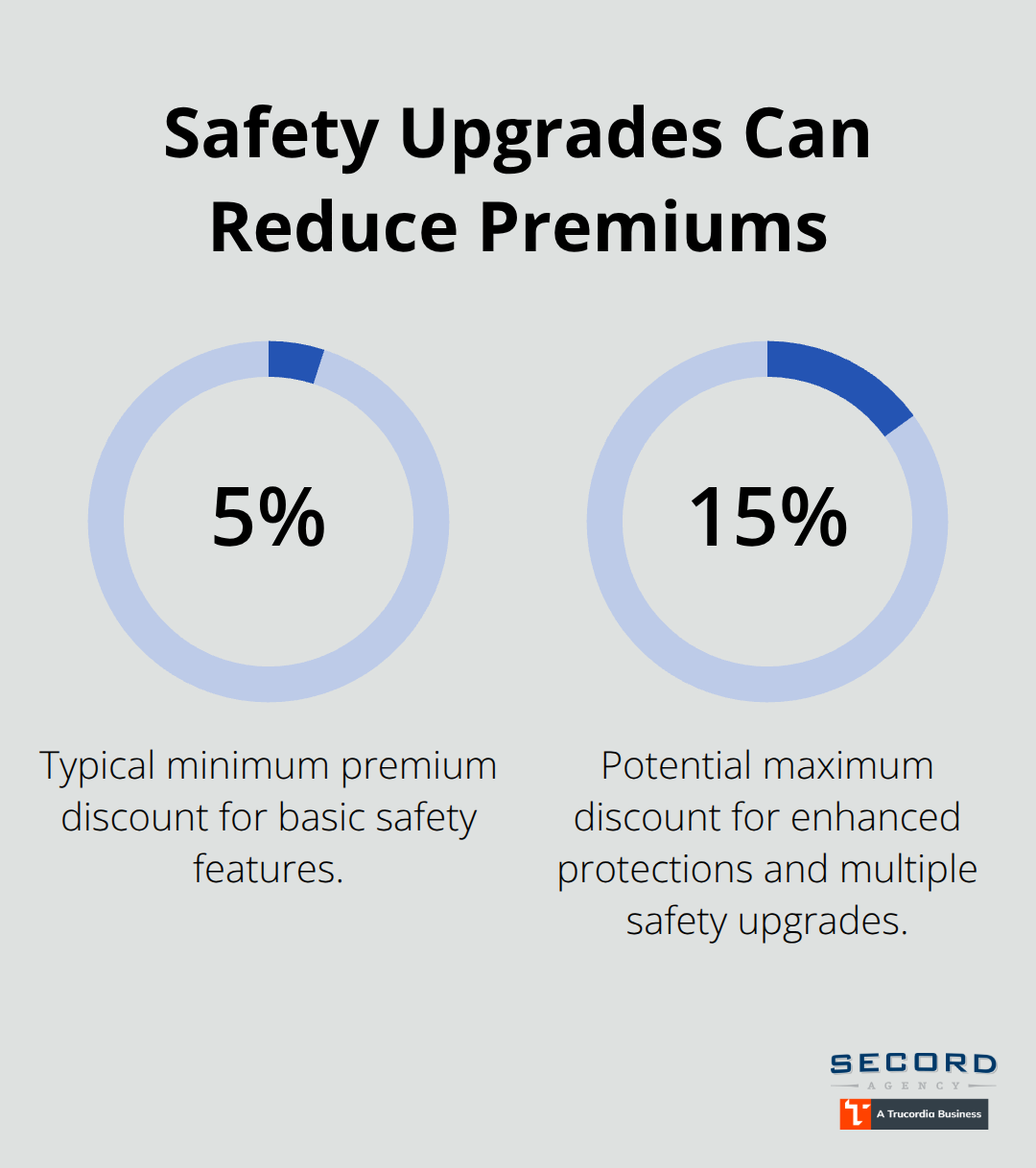
Verify whether income replacement coverage includes the full repair period or caps out after 30 or 60 days, since major damage requiring extended repairs can easily exceed shorter coverage windows. Ask carriers whether they offer discounts for safety features like deadbolts, security systems, or fire suppression equipment, because these often reduce premiums by 5 to 15 percent.
Don’t assume the lowest premium represents the best value-an $800 annual policy with $100,000 liability limits and $50,000 income replacement offers far less protection than a $1,200 policy providing $750,000 liability and $150,000 income replacement. Calculate your coverage-per-dollar spent rather than fixating on raw premium costs. The difference between adequate protection and financial ruin often comes down to specific coverage limits and exclusion language that you’ll only spot by reading the full policy text.
Final Thoughts
Your vacation rental business in Washington needs protection that matches your actual operational reality, not the generic coverage homeowners policies offer. Standard homeowners insurance explicitly excludes guest liability, property damage from renters, and income loss-gaps that create financial devastation when claims arrive. Vacation rental insurance WA policies address each of these vulnerabilities with guest liability coverage, property damage protection, and income replacement that homeowners policies refuse to cover.
The right policy depends entirely on your specific property, rental frequency, and revenue model. A luxury waterfront cabin generating $60,000 annually requires dramatically different coverage than a modest single-family home renting 100 days yearly, and your deductible structure, liability limits, and income replacement caps must align with your actual financial exposure. Comparing policies across multiple carriers reveals these differences-the lowest premium rarely represents the best protection.
We at Secord Agency – A Trucordia Business work with Washington hosts every day and understand the specific coverage gaps that threaten your rental business. Contact us today to discuss your property’s unique coverage needs and receive a quote tailored to your situation.