
Vacation Rental Hosting Coverage WA: Protect Your Short-Term Property
Renting out your property short-term in Washington comes with real financial exposure. Standard homeowners insurance won’t cover guest-related incidents, leaving you vulnerable to liability claims and income loss.
We at Secord Agency – A Trucordia Business help property owners understand vacation rental hosting coverage WA options that actually protect their investment. The right policy makes the difference between a profitable rental and a financial disaster.
What Vacation Rental Insurance Actually Covers
How Vacation Rental Coverage Differs from Standard Homeowners Insurance
Vacation rental hosting coverage operates on entirely different principles than standard homeowners insurance because it addresses the specific risks of short-term guest occupancy. This type of policy protects your property, liability exposure, and lost rental income when guests stay in your home for days or weeks rather than years as tenants. Standard homeowners policies explicitly exclude rental activity-most carriers will deny claims if they discover your property generates short-term rental income. Insurance companies treat vacation rentals as commercial ventures, not residential properties, because guest turnover creates higher liability risk and greater potential for property damage. Property owners operating vacation rentals need proper coverage to protect their investment and financial interests.
The Three Core Coverage Types You Need
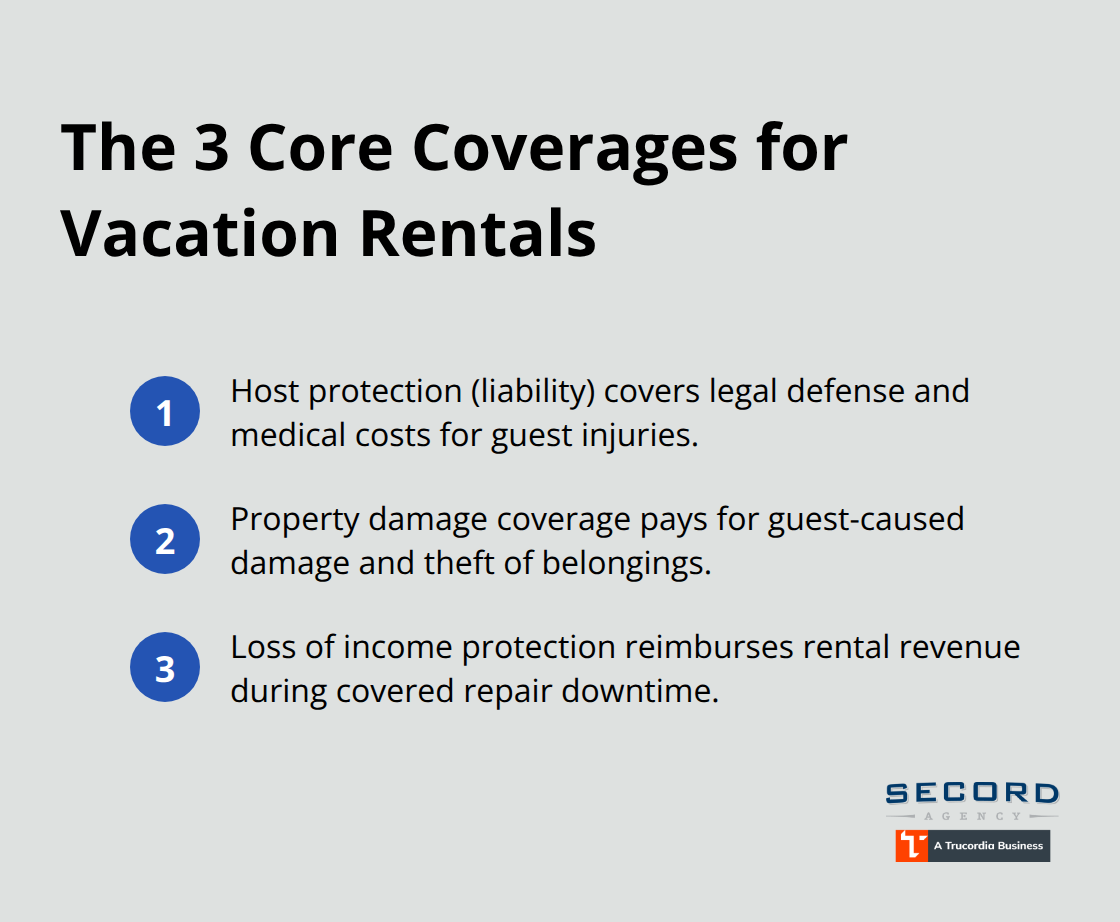
Host protection insurance covers liability when guests suffer injuries on your property-if someone falls down your stairs or claims you failed to disclose a hazard, this coverage handles legal defense and medical expenses up to your policy limits. Property damage coverage reimburses you when guests break furniture, damage walls, or steal belongings, addressing one of the primary financial risks of short-term rental hosting. Loss of income protection pays your lost rental revenue when your property becomes temporarily uninhabitable due to fire, theft, or guest damage, preventing financial collapse during repairs.
Some policies also include coverage for guest cancellations, though this remains less common and more expensive. Each coverage type addresses a distinct financial threat that standard homeowners insurance ignores entirely. Your property value, guest volume, and risk tolerance determine which combination makes sense for your situation-not generic recommendations from online guides.
Finding the Right Policy for Your Washington Property
Comparing vacation rental policies requires you to look beyond premium prices and examine what actually happens when you file a claim. Different carriers impose different limits on liability coverage, deductibles, and exclusions that can leave significant gaps in your protection. Your next step involves assessing your specific property characteristics and guest patterns so you can match them to a policy that covers your actual exposure.
What Puts Your Washington Vacation Rental at Real Financial Risk
Guest Injuries Create Your Largest Liability Exposure
Guest injuries represent your largest liability exposure as a vacation rental operator. Slip-and-fall accidents cause significant injury claims on rental properties, and your property is a prime location for these incidents. A guest who trips on your deck, falls in your bathroom, or claims you failed to disclose a hazard can file a liability claim that standard homeowners insurance will outright reject. Washington courts have awarded settlements exceeding $500,000 in premises liability cases where property owners bore responsibility for guest injuries.
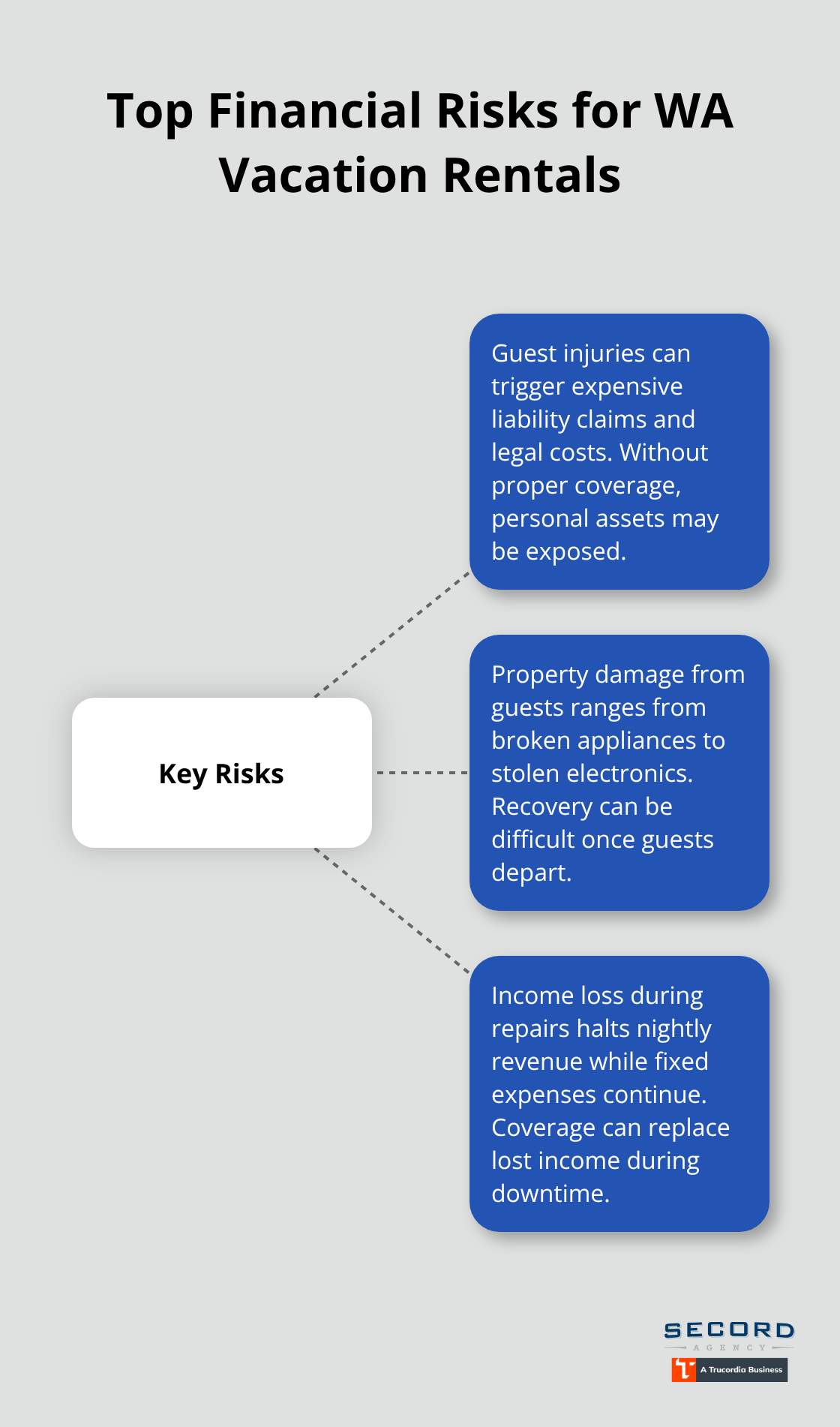
Your personal assets stand directly exposed to these claims without proper vacation rental hosting coverage.
Property Damage from Guests Drains Your Finances
Property damage from guests creates a second financial drain that catches many owners unprepared. Unlike long-term tenants bound by lease agreements and security deposits, short-term guests have minimal financial incentive to protect your belongings, and your recourse options are severely limited once they depart. Guests have damaged rental properties to the tune of thousands of dollars for incidents ranging from broken appliances to wall damage to stolen electronics, with many owners unable to recover costs because small claims court battles exceed the actual damage value. Some guests deliberately cause damage when disputes arise over cleaning fees or cancellation policies, knowing the owner must pursue expensive legal action to collect. Your property insurance excludes these guest-caused damages because rental activity falls outside residential coverage, leaving you absorbing the full cost of repairs and replacement.
Income Loss During Downtime Threatens Your Business
Income loss during property downtime creates financial pressure that forces many vacation rental owners toward inadequate coverage decisions. When a fire, theft, or significant guest damage forces your property offline for repairs, you lose all rental income during that period while still paying your mortgage, property taxes, and maintenance costs. A two-week closure on a property generating $300 per night represents $4,200 in lost revenue, and major damage can sideline your property for months. Loss of income coverage addresses this specific risk by reimbursing your lost rental revenue during necessary repairs, preventing the financial cascade that damages your business and personal finances simultaneously.
Understanding these three financial threats shapes how you approach selecting the right coverage for your property. The next section walks you through assessing your specific property characteristics and matching them to policies that actually cover your exposure.
Matching Your Property to the Right Coverage
Calculate Your Coverage Needs Based on Property Type and Guest Volume
Your property type and guest volume determine which coverage limits you actually need, and underestimating either one creates dangerous gaps in protection. A three-bedroom house in Seattle hosting 40 guests annually operates under completely different risk profiles than a downtown studio apartment with 200 annual bookings, yet many owners select policies based on price rather than exposure. Start by calculating your average nightly rate and annual guest count, then multiply those figures to establish your total annual rental income-this number drives your loss of income coverage requirement because you need protection equal to at least three to six months of revenue during extended property closures.
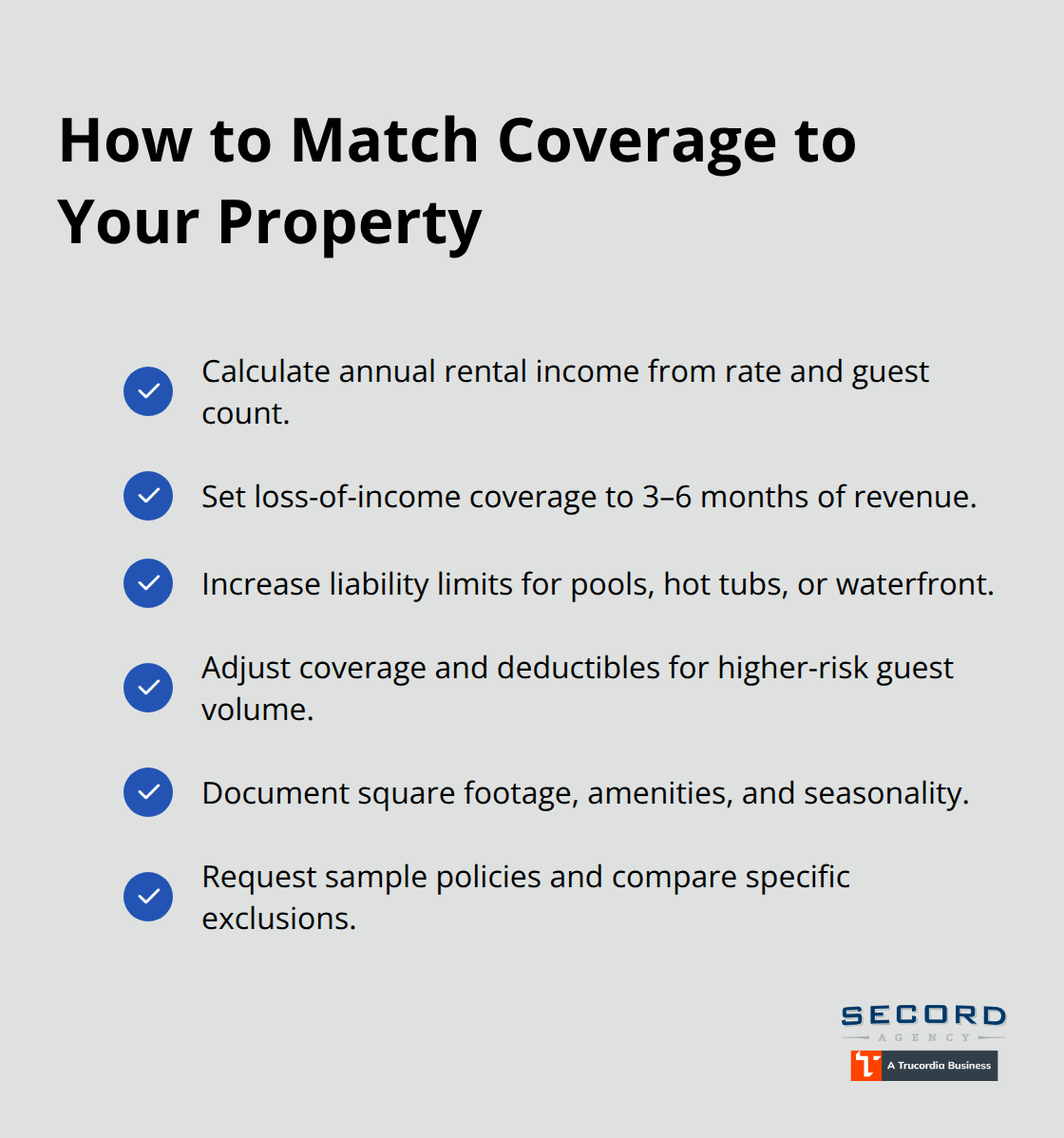
Properties with swimming pools, hot tubs, or waterfront access face substantially higher liability exposure and require minimum liability limits of $500,000 to $1,000,000, while standard residential properties often operate adequately with $300,000 coverage. Guest volume matters equally: properties hosting university groups or weekend party guests experience significantly higher damage rates than those serving families or business travelers, which should push you toward higher property damage deductibles or more selective guest screening rather than accepting lower coverage limits to save premium dollars.
Document Your Property’s Specific Characteristics
Document your property’s specific characteristics-square footage, amenities, location, seasonal occupancy patterns-because carriers price policies based on concrete risk factors, not generic assumptions. This documentation becomes essential when you compare quotes across multiple carriers and need to explain why your property warrants specific coverage limits. Insurance companies evaluate each property individually, and vague descriptions lead to inaccurate quotes that don’t reflect your actual exposure.
Compare Policies Across Multiple Carriers
Comparing policies across multiple carriers reveals shocking differences in what actually gets covered when you file a claim, and most owners never discover these gaps until damage occurs. Some carriers exclude damage from parties, impose sublimits on electronics or artwork, or require you to prove guest identity before covering theft claims-requirements that become nearly impossible to meet after guests depart. Deductibles vary across carriers, and selecting a higher deductible reduces your premium but leaves you covering small damage incidents personally, which defeats the purpose of insurance entirely.
Request Sample Policies and Review Specific Language
Request sample policies from at least three carriers and compare the specific language around guest damage, liability defense costs, and income replacement calculations rather than focusing solely on premium prices. Work directly with an insurance professional who understands vacation rental operations and can explain exactly what happens when you file different types of claims-a premium difference becomes meaningless if a carrier denies your damage claim due to policy exclusions you never noticed. An independent agent who shops multiple carriers (rather than representing a single company) provides the most objective guidance on which policies actually match your property’s risk profile.
Final Thoughts
Vacation rental hosting coverage WA protects your property from three financial threats that standard homeowners insurance completely ignores: guest liability claims, property damage, and lost rental income. Without proper coverage, a single injury claim or major damage incident wipes out months of rental profits and exposes your personal assets to lawsuits. The right policy transforms your vacation rental from a financial liability into a sustainable income source.
Your next step involves calculating your actual coverage needs based on your property type, guest volume, and annual rental income rather than selecting a generic policy that leaves gaps in protection. A three-bedroom house with a pool requires different limits than a studio apartment, and properties hosting 200 annual guests face different risks than those with 40 bookings. Document your property’s specific characteristics and request sample policies from multiple carriers so you can compare what actually gets covered when you file a claim.
Contact Secord Agency – A Trucordia Business to discuss your vacation rental protection needs and receive quotes from carriers that understand short-term rental operations. We shop multiple carriers to help you find tailored coverage with competitive rates and local service. Reach out today to protect your investment.