
Seattle personal umbrella policy: Extra Liability Protection When It Matters
Your homeowners and auto insurance policies have limits. For many Seattle residents, those limits aren’t enough to protect everything you’ve worked for.
A Seattle personal umbrella policy fills that gap. It activates when your standard coverage maxes out, shielding your assets from major lawsuits and judgments. We at Secord Agency help you understand exactly how much protection you actually need.
Why Standard Coverage Falls Short in Seattle
Washington’s minimum liability requirements sit at $25,000 per person and $50,000 per accident for bodily injury, plus $10,000 for property damage. These thresholds were set decades ago and haven’t kept pace with real-world injury costs. A single serious accident involving a pedestrian or cyclist can easily generate medical bills, lost wages, and pain-and-suffering claims exceeding $500,000. Your standard auto policy maxes out long before covering that gap, leaving your home, retirement accounts, and future earnings exposed. High-net-worth Seattle residents face particular risk because plaintiffs’ attorneys actively pursue assets beyond insurance limits when significant damages exist. A judgment against you doesn’t disappear if your insurance runs out-creditors can pursue wage garnishment, home liens, and bank account levies for years afterward.
When a Claim Exceeds Your Limits
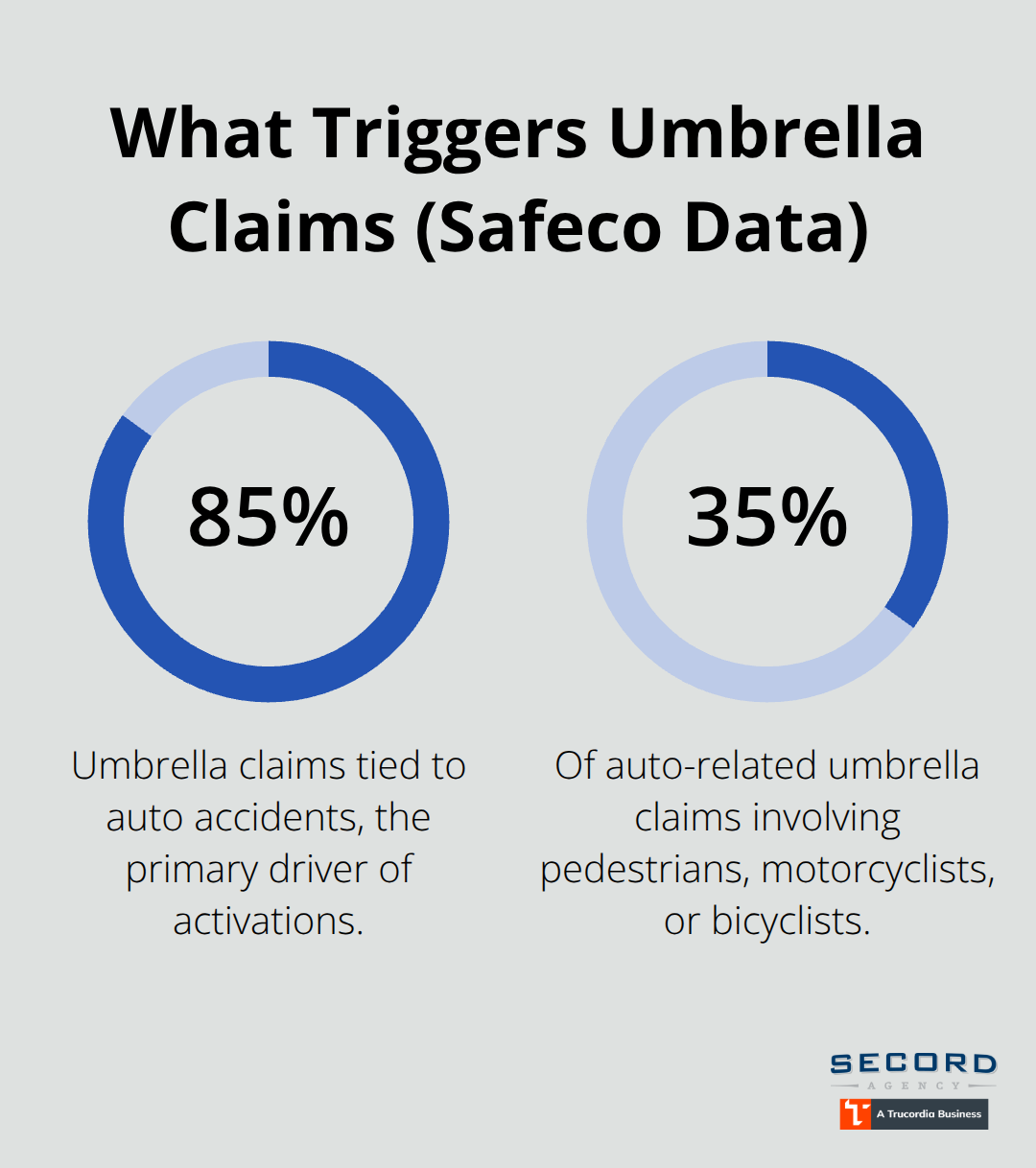
Data from Safeco Insurance show that roughly 85% of umbrella claims stem from auto accidents, with about 35% of those involving pedestrians, motorcyclists, or bicyclists. These aren’t rare edge cases-they’re the most common reason umbrella policies activate.
Consider a scenario where you’re at fault in a collision with a cyclist who sustains permanent injuries. Medical costs, ongoing care, and lost earning capacity could easily reach $1.2 million. If your auto policy covers only $250,000, you’re personally liable for the remaining $950,000 plus legal defense costs. An umbrella policy covering $1 million would step in after your auto policy exhausts, protecting those remaining damages. Without it, the injured party can pursue your assets directly through the court system. The legal and adjuster fees alone for defending such a claim can reach $50,000 to $100,000, which your standard policy may not fully cover.
The Real Cost of Being Unprotected
Most Seattle homeowners and renters significantly underestimate their exposure. Your home likely represents your largest asset, and a serious liability claim can threaten it directly. If someone is injured on your property-a guest falling on icy steps, a contractor electrocuted while working-medical expenses and permanent disability awards can dwarf your homeowners liability limit. A $1 million umbrella policy costs less than $200 per year according to industry data, often dropping further if you bundle it with existing auto and home coverage. That’s roughly $17 monthly for protection that shields everything you’ve built. Without it, you’re gambling that no serious accident will ever occur on your property or involve your vehicle. That bet works until it doesn’t, and when liability claims hit, they hit hard.
What Happens Next
The gap between your standard coverage limits and actual claim costs creates a financial trap that many Seattle residents don’t see coming. Understanding how umbrella policies actually work-and when they activate-shows why this protection matters far more than most people realize.
How Personal Umbrella Coverage Activates in Washington
Your homeowners and auto policies form the foundation of your liability protection, but they work in a specific order when a claim hits. An umbrella policy doesn’t replace those underlying policies-it sits on top of them and only activates after your primary coverage exhausts. Here’s how the mechanics work in practice.
The Layered Protection System
Suppose you face liability in a serious accident where damages total $800,000. Your auto policy covers the first $250,000. The umbrella policy then covers the remaining $550,000, up to its limit. The critical detail most Seattle residents miss is that your underlying policies must remain in force and active for the umbrella to function. Insurance companies won’t sell you standalone umbrella coverage without adequate home and auto policies underneath. This isn’t a technicality-it’s how the entire system is designed.
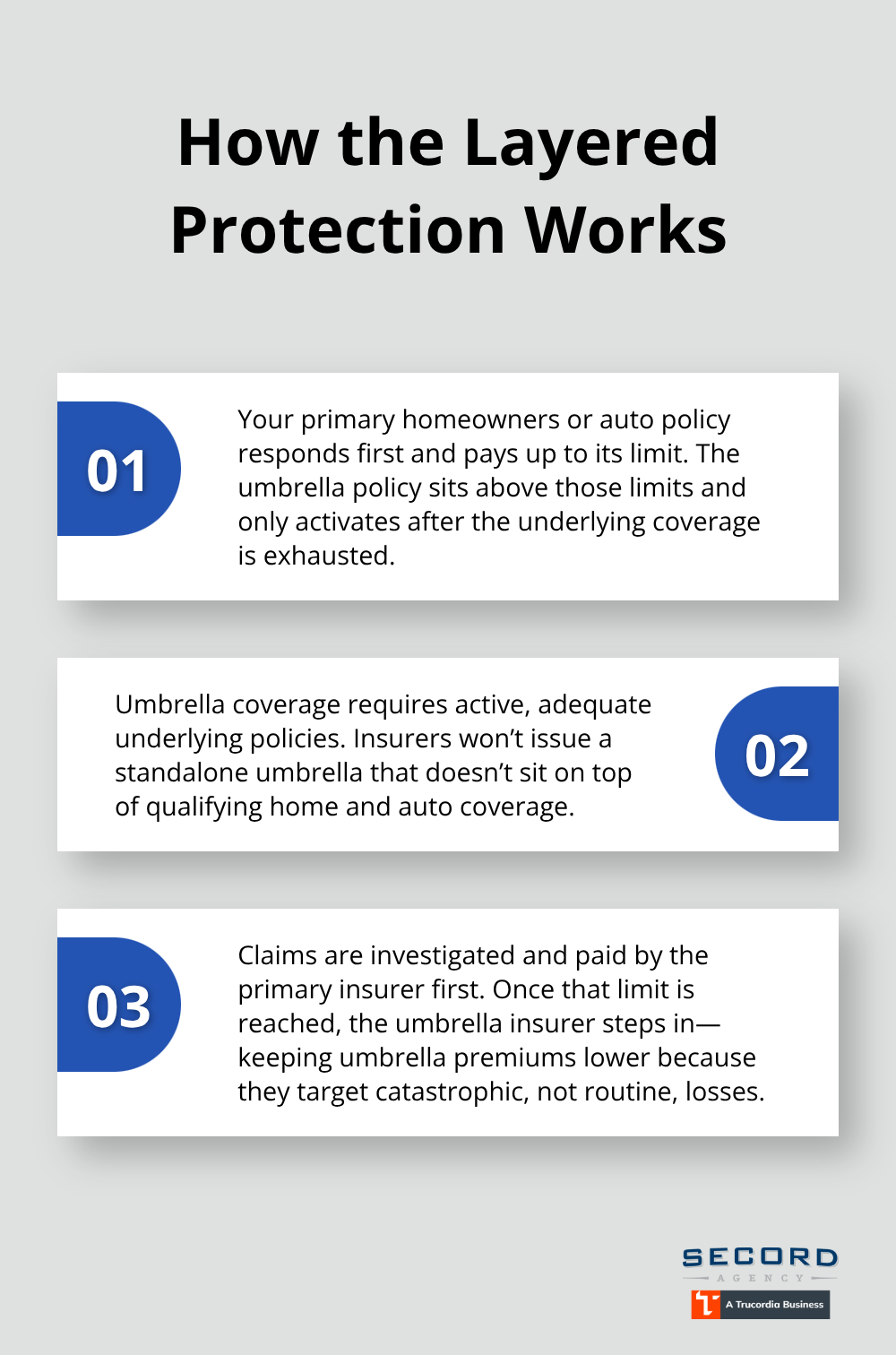
Your auto insurer investigates the claim, determines fault, and pays out first. Only after that limit exhausts does your umbrella insurer step in. This layered approach keeps premiums low because umbrella carriers know they’re protecting against catastrophic claims, not routine incidents.
Defense Costs That Drain Standard Policies
Legal defense costs represent one of the most overlooked benefits of umbrella coverage, yet they often exceed the actual damages awarded. When a serious injury claim lands, both sides hire attorneys, expert witnesses, and medical evaluators. These costs accumulate rapidly-depositions, discovery processes, and trial preparation can easily reach $50,000 to $100,000 before any settlement or judgment occurs. Standard homeowners and auto policies cover some defense costs, but those expenses deplete your policy limit before any actual damages are paid. An umbrella policy covers defense costs separately in many cases, protecting your underlying policy limits for actual damages. This distinction matters enormously in practice.
How Defense Coverage Strengthens Your Position
A plaintiff’s attorney knows your auto policy maxes at $250,000, so they demand $400,000 to settle, betting you’ll pay extra from your own pocket rather than proceed to trial. With umbrella coverage, you’re protected for that gap, and your attorney can confidently proceed to trial if the settlement demand is unreasonable. Without it, you’re forced to settle questionable claims simply to avoid bankruptcy. The umbrella also provides what’s called defense coordination, meaning your umbrella insurer works alongside your primary insurer to manage the claim efficiently rather than creating competing interests or coverage gaps.
What Happens When Claims Exceed Your Limits
The mechanics of umbrella activation reveal why this protection matters far more than most Seattle residents realize. Understanding the next layer-what types of incidents actually trigger umbrella claims-shows exactly where your exposure lies.
What Umbrella Coverage Actually Protects
Serious Injuries on Your Property
Umbrella policies activate in far more situations than most Seattle residents expect, and understanding where your exposure actually lies changes how you should approach coverage limits. Serious injuries on your property represent one category, but the specifics matter enormously. A guest slips on ice during winter and generates different liability exposure than a contractor injured while working on your home. Medical costs for a permanent spinal injury range from $0.7 million to $2.5 million when accounting for lifetime care, lost wages, and pain-and-suffering awards. Your homeowners policy typically caps liability at $100,000 to $300,000, meaning an umbrella policy covers the remaining exposure directly.
Vehicle Accidents and High-Risk Scenarios
Auto accidents dominate umbrella claims according to Safeco Insurance data, which shows 85% of umbrella activations stem from vehicle-related incidents. Within those auto claims, roughly 35% involve pedestrians, motorcyclists, or bicyclists-the exact scenarios that generate the highest damage awards. A driver hits a cyclist on Seattle’s growing network of bike lanes and faces serious exposure; permanent injuries to a young professional cyclist result in $1.5 million to $3 million in damages when accounting for lost career earnings. Your $250,000 auto policy exhausts immediately, and the umbrella covers the remaining $1.25 million to $2.75 million in damages plus defense costs. These claim amounts appear regularly in Washington court records and settlement databases, not in theoretical scenarios.
Property Damage and Rental Exposures
Property damage claims follow similar patterns to injury cases. A guest’s car sustains damage in your driveway, expensive equipment gets destroyed in a garage accident, or structural damage occurs from something you own-all trigger liability. Teen drivers represent another concentrated risk area; a young driver at fault in a serious accident generates substantial liability because courts view young drivers as less financially responsible and award higher damages to protect injured parties. Watercraft, off-road vehicles, and rental properties create additional exposure beyond standard auto and homeowners coverage. If you own a vacation property in Washington or rent out a portion of your primary residence, your liability exposure multiplies because multiple people enter your property regularly, each representing a potential injury claim. A guest injured in a rental unit pursues damages for medical costs, lost wages, and permanent disability-amounts frequently exceeding standard homeowners limits.
Identifying Your Specific Exposure Points
The practical reality is that umbrella claims cluster around specific high-risk scenarios rather than spreading evenly across all possible incidents. The gap between what people think they’re protected against and what actually activates umbrella claims explains why this coverage remains underutilized despite its low cost and high value.
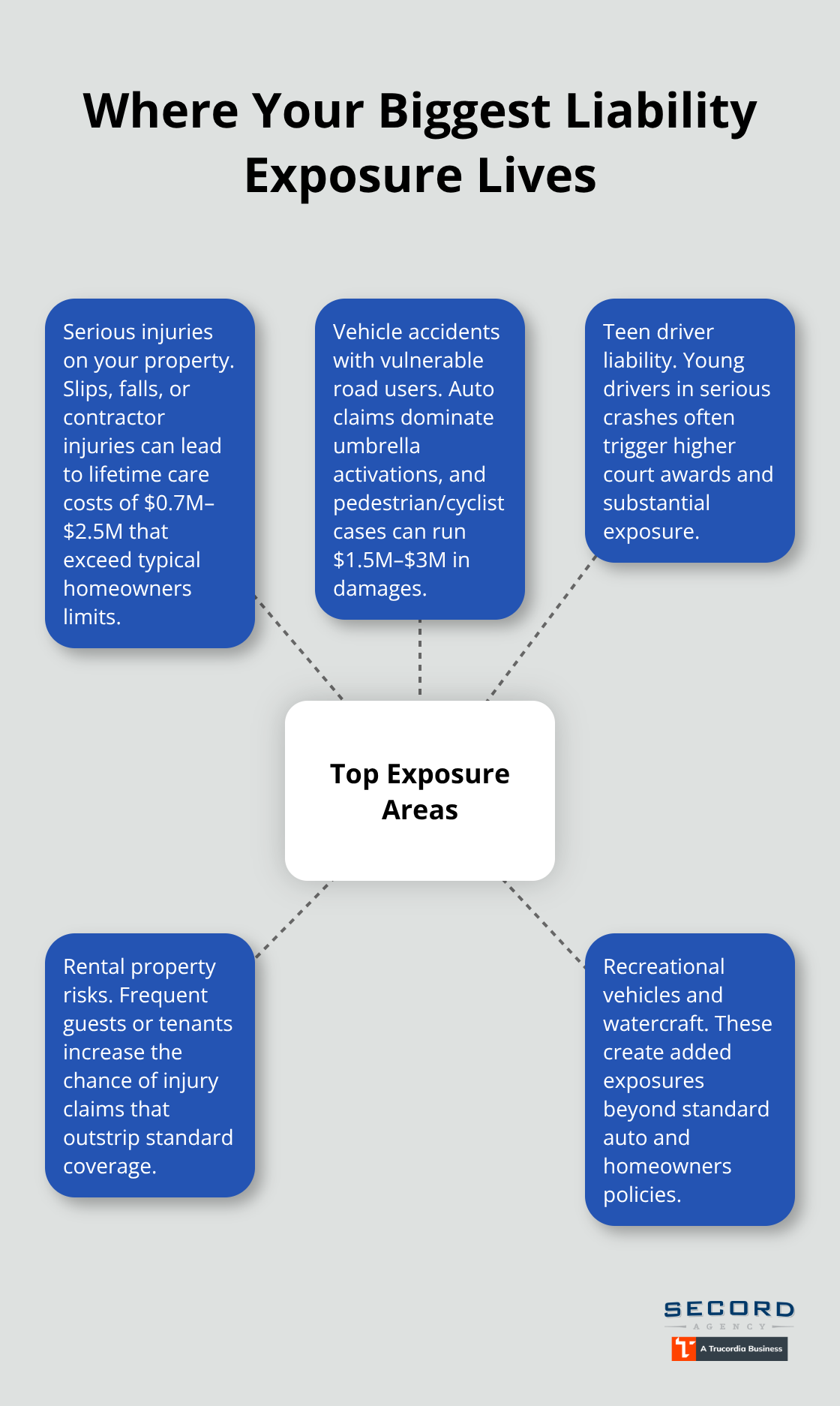
Your exposure depends on your specific situation-whether you host frequent guests, operate rental properties, drive regularly in urban areas, or own recreational vehicles. Identifying these exposure points rather than applying generic coverage recommendations matters enormously when determining your actual protection needs.
Final Thoughts
A Seattle personal umbrella policy costs under $200 annually yet protects everything you’ve built. That’s roughly $17 monthly for coverage that shields your home, retirement accounts, and future earnings from catastrophic liability claims. Standard homeowners and auto policies leave significant gaps, especially when injuries involve pedestrians, cyclists, or permanent disabilities.
The real question isn’t whether you can afford umbrella protection-it’s whether you can afford to go without it. A single serious accident or injury claim can exceed your current coverage limits by hundreds of thousands of dollars. Your assets deserve protection that goes beyond minimum requirements, and a Seattle personal umbrella policy delivers exactly that at a fraction of what most people expect to pay.
Contact Secord Agency to review your current liability exposure and explore coverage options that fit your situation. We shop multiple carriers to deliver competitive rates alongside personalized advice, ensuring your umbrella policy works seamlessly with your existing auto and homeowners coverage.