Specialty vehicle insurance WA: Protecting Your High-Performance Rides
Your high-performance car, classic ride, or custom build deserves more than standard coverage. Most off-the-shelf auto policies simply don’t account for the unique value and specialized needs of specialty vehicles in Washington.
At Secord Agency – A Trucordia Business, we’ve seen too many owners discover their regular insurance leaves them underprotected when something goes wrong. That’s why specialty vehicle insurance WA exists-and why understanding your options matters.
What Qualifies as a Specialty Vehicle in Washington
Sports cars and high-performance vehicles command higher insurance premiums because of their repair costs, theft risk, and accident likelihood, according to the Washington State Insurance Commissioner. A Porsche 911, Ferrari, or Lamborghini will cost significantly more to insure than a standard sedan-not because insurers are punitive, but because a single collision on one of these vehicles can easily exceed $50,000 in repairs. Theft risk compounds the problem; specialty vehicles attract thieves more than ordinary cars, which is why location matters enormously.
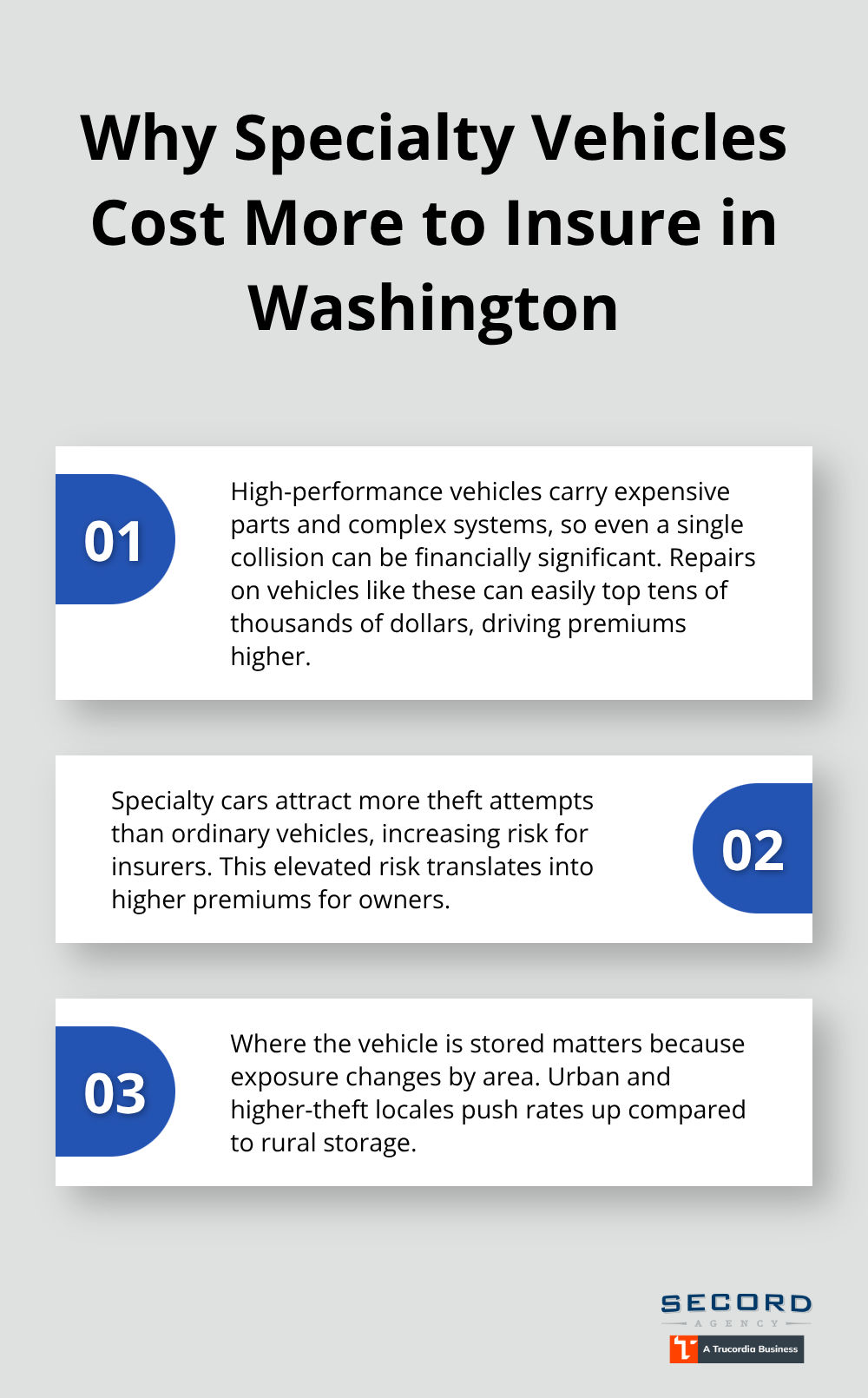
A collector car stored in Bellevue faces higher premiums due to theft exposure compared to the same vehicle in a rural area.
High-Performance Vehicles Need Specialized Rates
Sports cars trigger higher premiums because insurers know the data: males under 30 who drive sports cars represent elevated accident risk, according to the Washington State Insurance Commissioner. A 25-year-old male driving a Dodge Challenger will pay substantially more than a 25-year-old female driving the same car, reflecting documented per-mile accident rates. Location amplifies this effect; densely populated areas like Seattle and Tacoma see higher premiums than suburban or rural Washington due to increased exposure and claims frequency. Mileage matters too-if you drive your sports car 15,000 miles annually versus 3,000 miles, your premium rises because greater exposure increases incident probability.
Collector Vehicles Require Agreed Value Protection
Washington law defines a collector vehicle as 30 or more years old, maintained or restored to original condition or better, and used mainly for exhibitions or leisure. Under this definition, a 1965 Mustang or 1972 Chevelle qualifies as a collector vehicle, but only if you don’t use it as a daily driver. Standard auto policies depreciate vehicle value over time, meaning a classic car worth $80,000 might only receive $30,000 in coverage under a typical policy if it’s totaled. Agreed value coverage is a distinct feature of a classic auto insurance policy where you and your insurer determine your vehicle’s value upfront-you agree the car is worth $80,000, and that’s what you receive if it’s declared a total loss.
Hagerty’s 2024 Market Rating shows collectible vehicles in the national market appreciated about 7 percent over the past year, with Northwest muscle cars typically appreciating faster than the national average. This appreciation makes standard depreciation-based policies obsolete; your 1970 Chevelle SS grows more valuable each year, yet a regular auto policy treats it as depreciating property. Spare parts coverage becomes essential too-whether you store original trim, NOS parts, period-correct accessories, or show memorabilia, specialty policies can cover these items up to $2,000 or more, with optional increases to $10,000.
Custom-Built and Modified Rides Demand Transparency
Custom-built and modified rides fall into the most complex category. Any modification beyond factory specifications-a turbocharged engine, custom suspension, widebody kit, or interior overhaul-changes the vehicle’s value and risk profile. Standard policies explicitly exclude coverage for modifications, meaning if your custom work costs $40,000 and your car sustains damage, that investment receives zero protection. Modified vehicles require transparent documentation about what you’ve changed, what it cost, and whether those modifications are permanent or temporary additions.
Understanding what makes your vehicle specialty is the first step toward proper protection. The next section explores the specific coverage options that actually address these unique needs.
Coverage Options for Specialty Vehicles in Washington
Agreed Value Coverage Protects Your Investment
Agreed value coverage separates specialty vehicle insurance from standard policies, and it’s non-negotiable for collector cars. When you insure a 1970 Chevelle SS with agreed value coverage, you and your insurer determine upfront that the vehicle is worth $65,000-that’s the exact amount you receive if it’s totaled, regardless of market fluctuations. This differs fundamentally from stated value policies, which pay up to a declared amount but may apply depreciation, or actual cash value policies, which depreciate your vehicle annually. The premium difference between agreed value and stated value typically amounts to less than $25 per year according to specialty insurers, making agreed value the obvious choice for any collector vehicle appreciating in value.
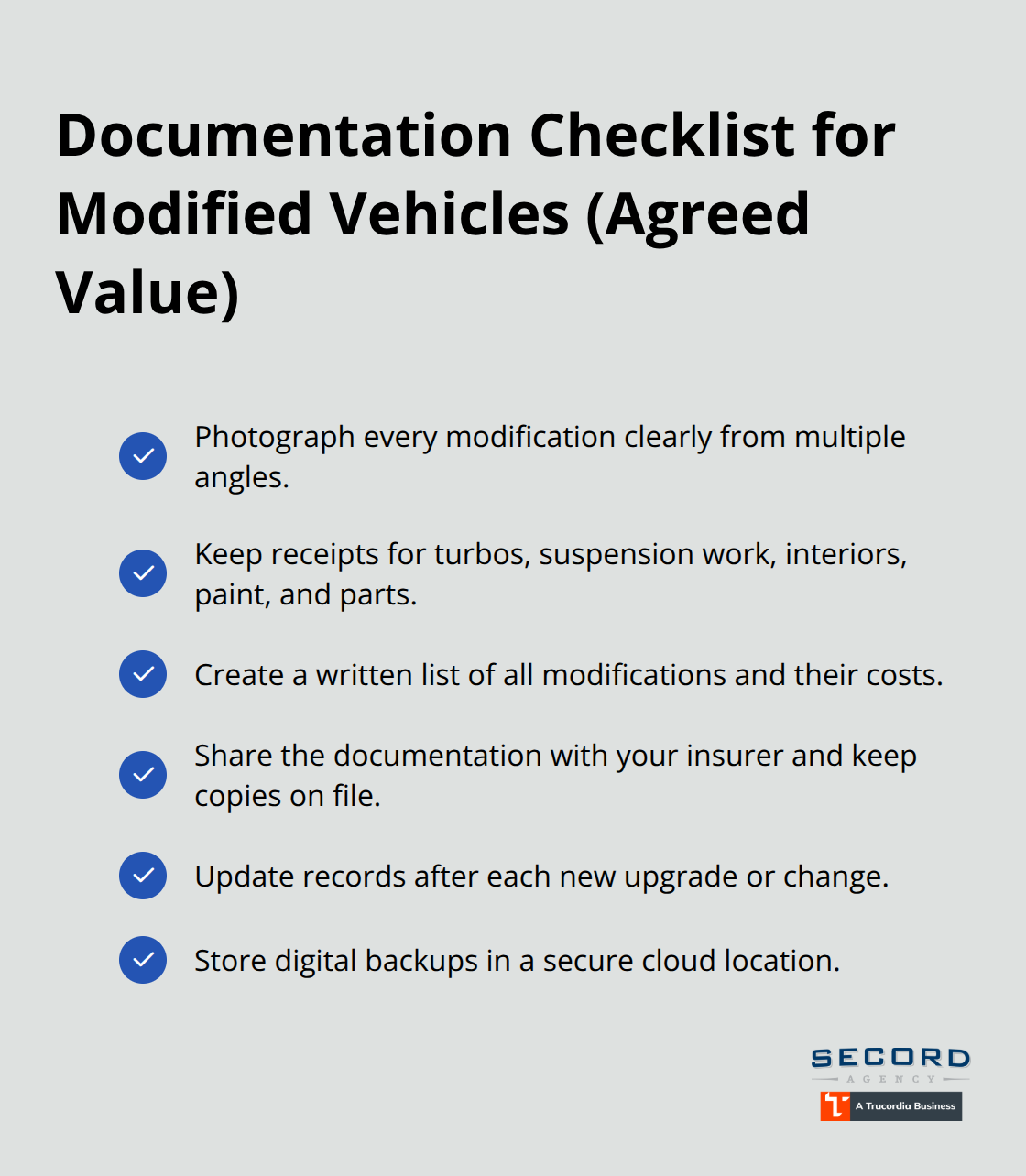
For modified vehicles, agreed value documentation becomes your protection. Photograph and document every custom component, retain receipts for turbos, suspension work, interior upgrades, and paint jobs, then list these modifications and their costs with your insurer. Without this documentation, a $40,000 custom build receives zero coverage if damaged.
Comprehensive and Collision Coverage Work Together
Comprehensive and collision coverage protect against different damage types, and you need both for any financed or leased specialty vehicle. Comprehensive coverage handles theft, fire, vandalism, weather, and animal strikes-exactly the risks collectors face when storing vehicles long-term or displaying them at shows. Collision coverage pays for damage from accidents, rollovers, or contact with other vehicles or objects.
Washington lenders and leasing companies require both coverages on financed or leased specialty vehicles, and they’ll purchase forced coverage if you lapse, charging you for it. Choose your deductible strategically: raising your deductible from $500 to $1,000 lowers your premium, but only if you can afford out-of-pocket costs after a claim. When comparing insurance carriers in Washington, evaluate how each handles these coverage requirements for specialty vehicles.
Roadside Assistance Matters for Specialty Vehicles
For specialty vehicles, roadside assistance coverage and towing protection matter more than standard vehicles because repair shops capable of handling high-performance or classic work are specialized and often distant. Flat-bed towing to a restoration shop costs $500–$2,000 out-of-pocket without coverage; roadside assistance programs cover these costs plus lockout service and fuel delivery.
Washington’s densely populated areas like Seattle and Tacoma see faster claims processing when you have roadside assistance bundled with your policy, eliminating delays waiting for standard tow trucks unfamiliar with specialty vehicles. This coverage becomes your safety net when your vehicle needs expert care far from home. Keeping toy insurance year-round ensures continuous protection for vehicles in storage or seasonal use.
The coverage you select directly impacts how well your specialty vehicle stays protected-and how much you’ll pay out-of-pocket when something goes wrong. Understanding why standard auto insurance fails to address these needs reveals why specialty policies exist in the first place.
Why Standard Auto Insurance Falls Short for Specialty Vehicles
Standard auto insurance policies treat all vehicles identically, which creates serious problems when you own a high-performance car, custom build, or collector vehicle. The Washington State Insurance Commissioner confirms that specialty vehicles require higher coverage limits than standard policies typically provide. A standard homeowner policy caps liability at $100,000 to $300,000, but if your collector car causes a serious accident, that cap disappears fast. Standard policies also apply actual cash value depreciation, meaning your 1970 Chevelle SS loses value every year on paper, even as the market appreciates it 7 percent annually according to Hagerty’s 2024 Market Rating. A $65,000 collector car might receive only $40,000 in coverage under a standard policy after five years of depreciation schedules, leaving you personally liable for the $25,000 difference if totaled.
Modified Vehicles Receive Zero Coverage for Custom Work
Modified vehicles face the worst treatment under standard policies. Custom turbos, suspension work, widebody kits, and interior upgrades receive zero coverage because insurers explicitly exclude modifications beyond factory specifications. If you’ve invested $40,000 in custom work, that entire amount disappears from coverage when damage occurs. Standard deductibles also fail specialty owners; a $1,000 deductible on a $150,000 high-performance vehicle represents less protection than the same deductible on a $25,000 sedan.
Custom vehicles require documentation that standard policies never contemplate. You must photograph every modification, retain receipts, and list components with your insurer before damage occurs-something standard auto insurance agents rarely request or understand.
Roadside Assistance and Towing Fall Short
Roadside assistance under standard policies covers basic towing to the nearest shop, not flat-bed transport to specialized restoration facilities that handle exotic or classic work. That transport costs $1,500 to $2,500 in Washington’s geography, paid entirely out-of-pocket without proper coverage. Standard policies also exclude spare parts coverage for NOS components, original trim, and show memorabilia that collectors accumulate. If you store $3,000 in period-correct accessories or show signage, standard coverage ignores those items completely.
Age and Gender Trigger Inflated Premiums
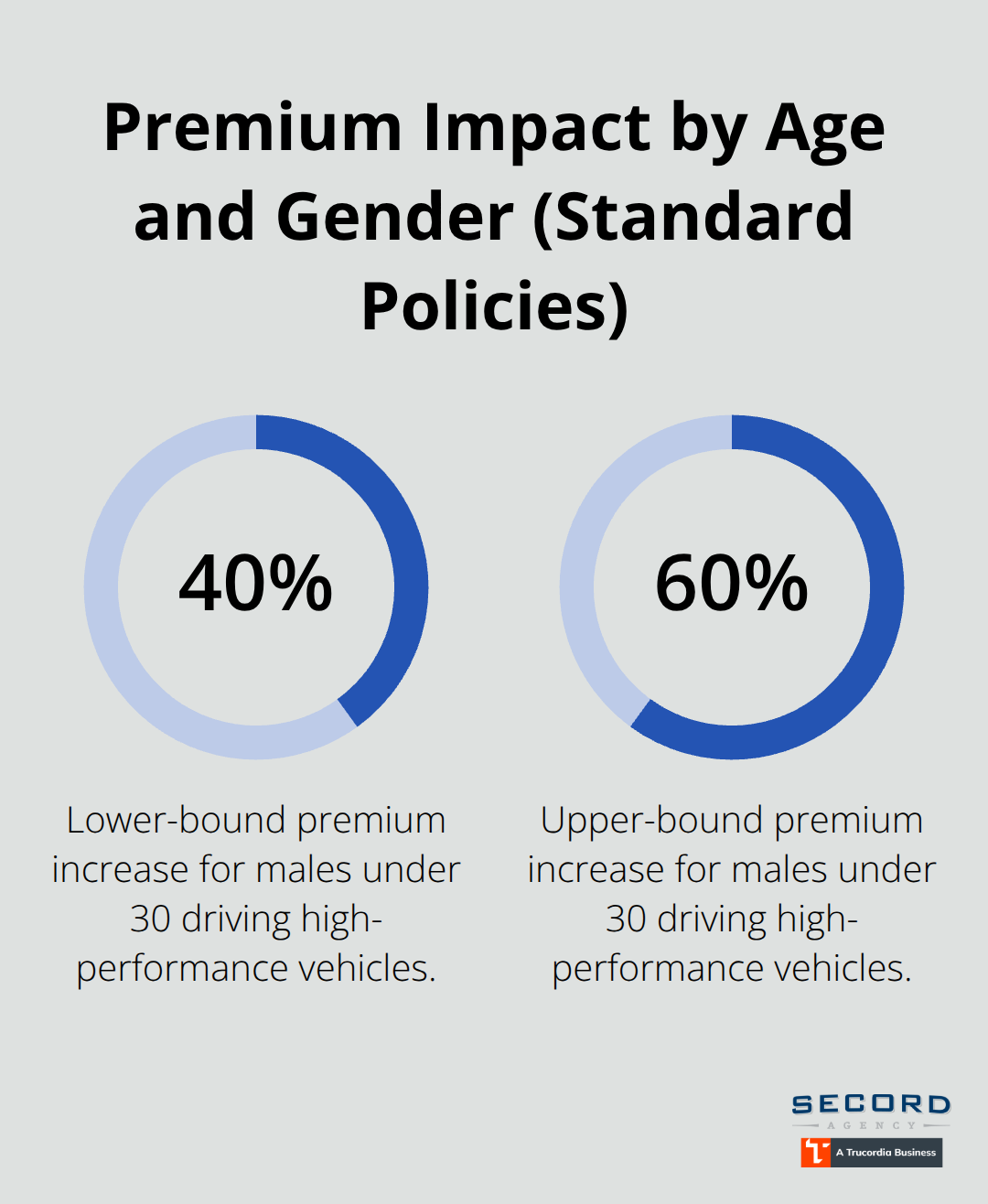
Males under 30 driving high-performance vehicles face premiums 40 to 60 percent higher under standard policies because insurers apply blanket risk categories, not specialty-vehicle adjustments that account for limited mileage or secure storage. A 25-year-old male driving a Dodge Challenger 2,500 miles annually to car shows should pay differently than one driving it 15,000 miles to work daily, but standard policies don’t distinguish. Specialty vehicle insurance recognizes these distinctions, mileage caps, storage conditions, and modification investments because that’s the entire point-policies built specifically for vehicles that don’t fit standard categories.
Final Thoughts
Specialty vehicle insurance WA protects what standard policies ignore, covering your high-performance car, custom build, or collector vehicle with agreed value protection and comprehensive coverage that actually reflects your investment. Standard auto insurance applies depreciation schedules, excludes modifications, and caps liability at levels insufficient for specialty vehicles, leaving you personally responsible for the gap between what you owe and what you receive. Honest documentation before damage occurs-photographs of modifications, receipts for custom work, and lists of spare parts or memorabilia-transforms your coverage from theoretical to practical protection.
Finding an insurance partner who understands specialty vehicles matters enormously, since most agents lack experience with agreed value coverage, mileage caps, and storage conditions that specialty owners require. We at Secord Agency – A Trucordia Business shop multiple carriers to deliver tailored coverage specifically designed for specialty vehicles, pairing competitive rates with fast, local service that protects your investment across Washington. Contact Secord Agency today to discuss your specialty vehicle’s unique coverage needs and receive a quote that reflects what your ride actually deserves.