WA Vacation Rental Protection: Shielding WA Vacation Rentals with Short-Term Coverage
Your Washington vacation rental is a valuable asset, but standard homeowners insurance won’t protect it the way you need. Guest injuries, property damage, and lost income from cancellations create real financial risks that typical policies simply don’t cover.
At Secord Agency – A Trucordia Business, we’ve seen vacation rental owners face unexpected gaps in their protection. The right short-term rental insurance makes all the difference between a thriving business and a financial disaster.
Why Standard Homeowners Insurance Won’t Protect Your Vacation Rental
The Coverage Gap That Catches Owners Off Guard
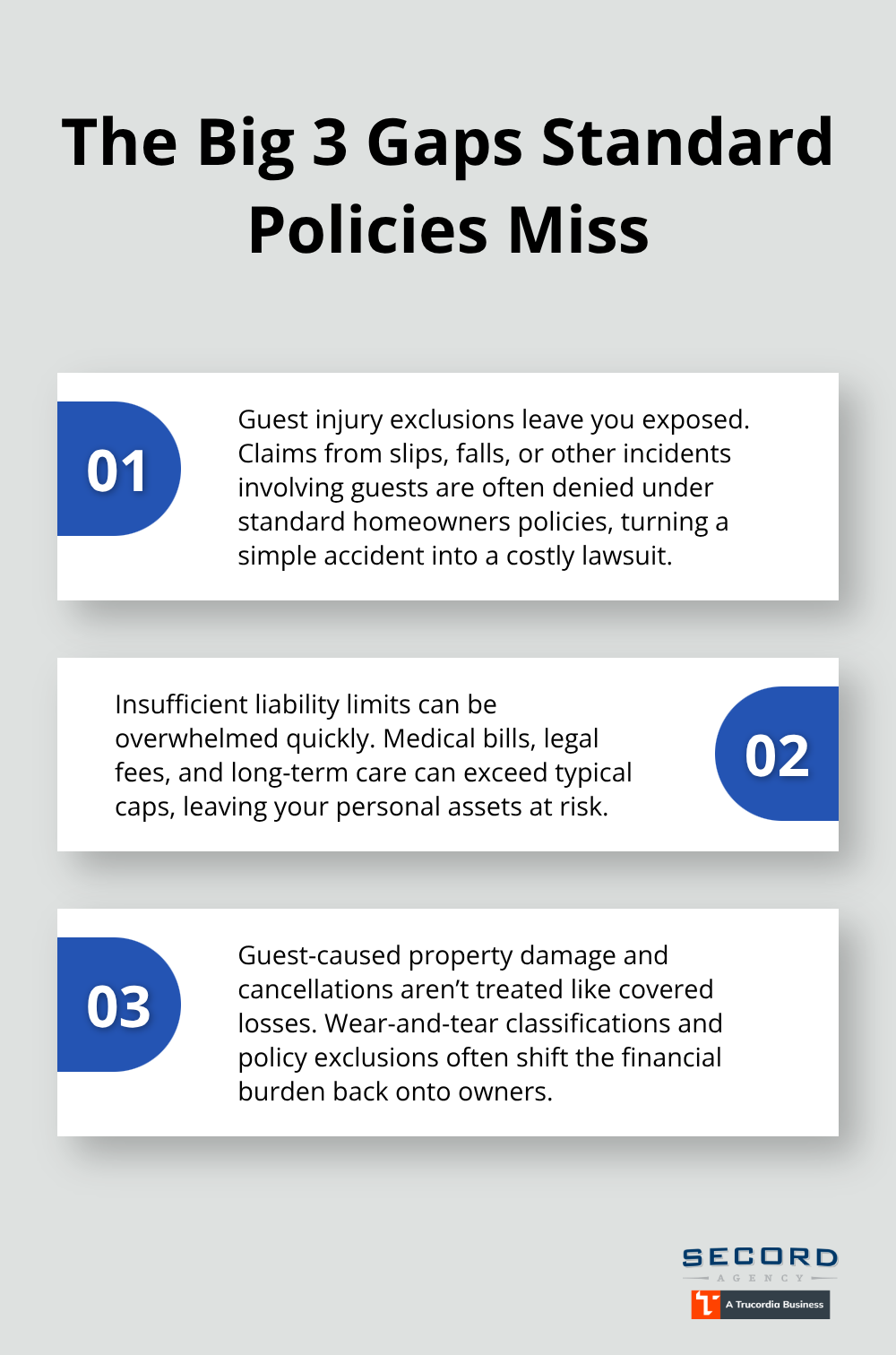
Standard homeowners insurance was designed for one purpose: protecting a primary residence where you and your family live. The moment you rent out your property to guests, even occasionally, that policy becomes inadequate and potentially void. Most homeowners policies explicitly exclude or severely limit coverage for rental income, guest injuries, and damage caused by short-term occupants. Insurance companies view vacation rentals as commercial operations, not residential properties, which means your existing coverage has massive blind spots.
When a guest slips on your deck and sues for medical bills, or a party causes significant damage to your furnishings, your standard policy will likely deny the claim entirely. Property damage claims from short-term rentals have increased significantly in recent years, yet most owners still rely on inadequate homeowners coverage. Your liability exposure skyrockets the moment guests arrive.
Liability Limits That Fall Short When You Need Them Most
Traditional policies typically cap liability at $300,000 to $500,000, which sounds substantial until a serious injury occurs. A guest hospitalization, surgery, and ongoing medical care can easily exceed $250,000 in direct costs alone. Add attorney fees and you’re looking at exposure that far outpaces standard coverage limits.
Vacation rental owners face additional risks that homeowners policies simply don’t address: business income loss when you need to close for repairs, damage from parties or events, theft by guests, and damage to guest belongings you might be held liable for. The exclusions are written into your policy in plain language, yet most owners never read them until problems surface.
The Hidden Costs of Property Damage and Cancellations
Property damage in short-term rentals happens faster and more severely than in owner-occupied homes. Guests have no financial stake in your property, so they’re less careful with appliances, furniture, and fixtures. Stains on carpeting, broken fixtures, damaged walls, and destroyed kitchen equipment represent real financial losses that standard homeowners insurance won’t cover.
Your standard policy treats this as normal wear and tear, which falls under your responsibility, not the insurance company’s.
Cancellation losses devastate many owners. If a pipe bursts or mold is discovered, you lose rental income during repairs, potentially weeks or months of revenue. Standard homeowners policies don’t reimburse lost rental income. A property generating $4,000 per month in rental revenue could cost you $12,000 or more if repairs take three months. Short-term rental insurance specifically addresses this exposure with business income coverage that replaces lost revenue during covered losses.
Understanding these gaps is the first step toward real protection. The next section explores the specialized insurance solutions that actually cover what vacation rental owners need.
What Coverage Do Washington Vacation Rental Owners Actually Need
Host Protection Liability Covers Guest Injuries
Washington vacation rental owners operate in a unique insurance environment. The state’s short-term rental market has grown substantially, with platforms like Airbnb and Vrbo driving increased demand for specialized coverage that addresses the specific risks these properties face. Standard vacation rental insurance in Washington typically includes three critical components that homeowners policies ignore entirely.
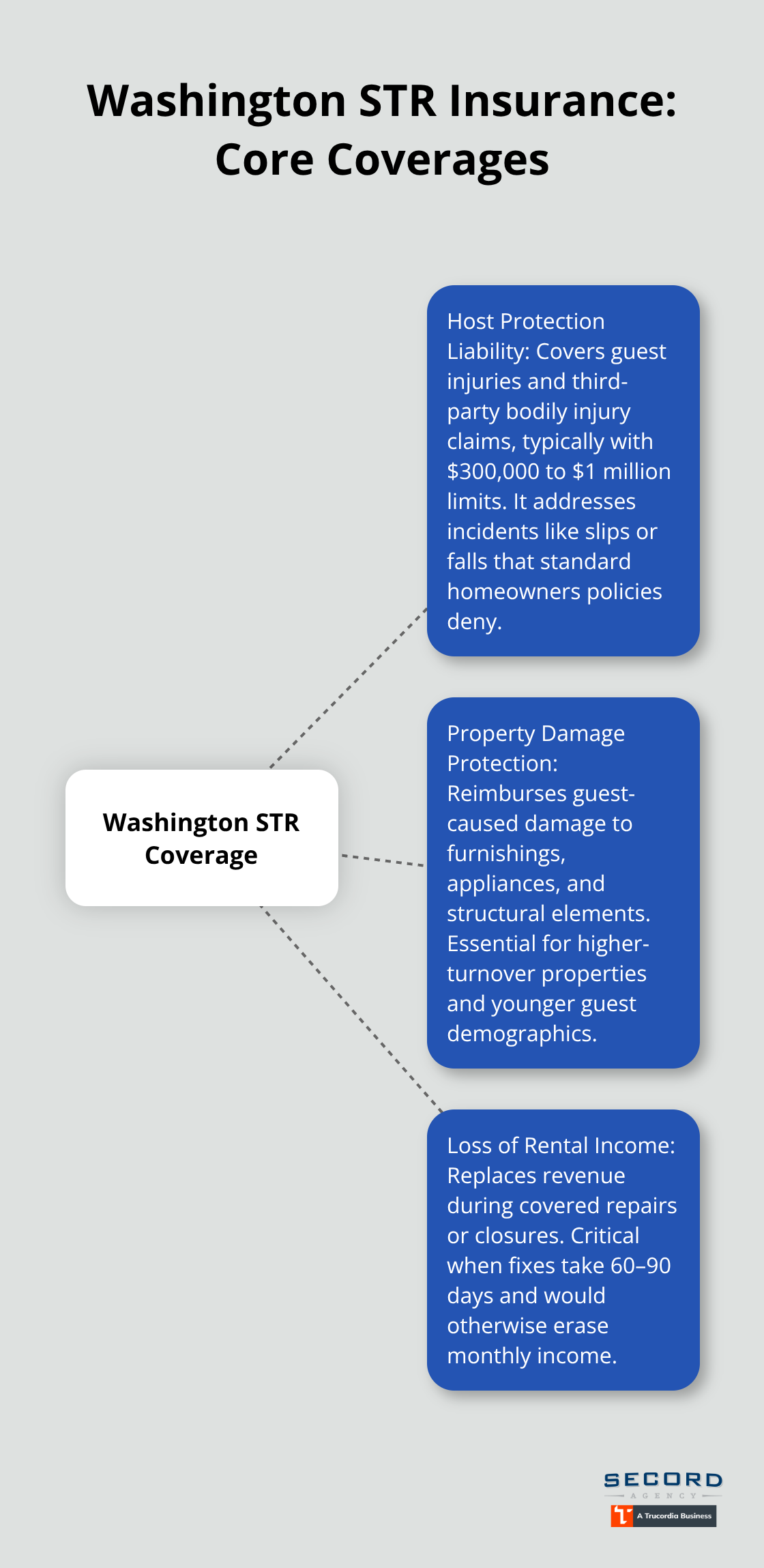
First, host protection liability covers guest injuries and third-party bodily injury claims, with most policies offering $300,000 to $1 million in coverage limits. A guest who slips on your stairs or suffers an injury on your property can file a claim that standard homeowners insurance will deny outright.
Property Damage Protection Reimburses Guest-Caused Losses
Property damage protection reimburses you for damage caused by guests to your furnishings, appliances, and structural elements, which can easily reach $15,000 to $50,000 per incident depending on your property’s condition and guest turnover rate. Guests without financial stake in your property treat it differently than owner-occupied homes. Stains on carpeting, broken fixtures, damaged walls, and destroyed kitchen equipment represent real financial losses that standard homeowners insurance won’t cover. This protection proves essential for properties with high turnover rates and younger guest demographics, which typically experience more damage claims than properties attracting older, established professionals.
Loss of Rental Income Replaces Revenue During Repairs
Loss of rental income coverage replaces your revenue during covered losses, which proves invaluable when unexpected repairs force temporary closures. A property generating $5,500 monthly in rental income faces significant exposure if a pipe bursts or mold surfaces. Repairs often take 60 to 90 days, meaning you could lose $11,000 to $16,500 in revenue without this protection. Washington-specific policies also address weather-related risks like flooding and windstorms, which affect properties across Seattle, the Puget Sound region, and eastern Washington differently.
Assess Your Property’s Actual Risk Profile
Selecting the right policy requires honest assessment of your operational details. Calculate your actual monthly rental income and multiply by three to determine appropriate business income limits. Examine your guest review history and cancellation patterns to understand your property’s risk profile. A beachfront property in Long Beach faces entirely different exposure than a property manager in Snoqualmie, so your coverage must reflect your actual guest volume, property condition, and local climate risks.
Compare Quotes and Find Competitive Rates
Request quotes from multiple carriers since pricing varies significantly based on your specific location, property age, guest screening practices, and claims history. An independent insurance agency that shops multiple carriers can help you find the most competitive rates and appropriate coverage limits for Washington rental properties. This approach prevents you from overpaying for unnecessary coverage or remaining underinsured on critical exposures. The right policy structure depends on your specific situation, which is why comparing options across carriers matters far more than selecting the first quote you receive.
Choosing the Right Coverage for Your Specific Property
Calculate Your Business Income Protection Needs
Start with your actual monthly rental income and multiply it by at least three months. This number becomes your target for business income coverage, preventing financial hardship if repairs force a temporary closure. A property generating $5,500 monthly needs minimum coverage to weather a typical repair period. This calculation protects you against extended downtime that could otherwise drain your savings. Most owners underestimate how quickly repair timelines extend, so erring toward higher coverage limits makes financial sense.
Assess Your Property’s Unique Risk Profile
Audit your property’s condition and guest demographics honestly. A newer waterfront home in Long Beach with older, professional guests faces different risks than a downtown Seattle apartment hosting younger travelers. Review your past guest reviews and damage incidents over the last year to identify patterns. Properties with turnover rates exceeding 40 guests annually typically experience more property damage claims, so they need higher limits on guest-caused damage coverage. Document your property’s replacement cost for furnishings, appliances, and fixtures through photographs and detailed inventory lists. This prevents underinsurance when damage occurs and helps you understand whether $25,000 or $50,000 in property damage coverage makes sense for your situation.
Shop Multiple Carriers for Competitive Rates
Comparing quotes across multiple carriers reveals substantial price differences for identical coverage. One carrier might charge $1,200 annually for $500,000 liability and $30,000 property damage protection, while another charges $1,800 for the same limits. Washington-based independent agencies that represent multiple carriers can save you 15 to 25 percent compared to shopping single carriers directly. Request quotes from at least three carriers and compare deductible options carefully, as raising your deductible from $500 to $1,500 often reduces premiums by 10 to 15 percent.
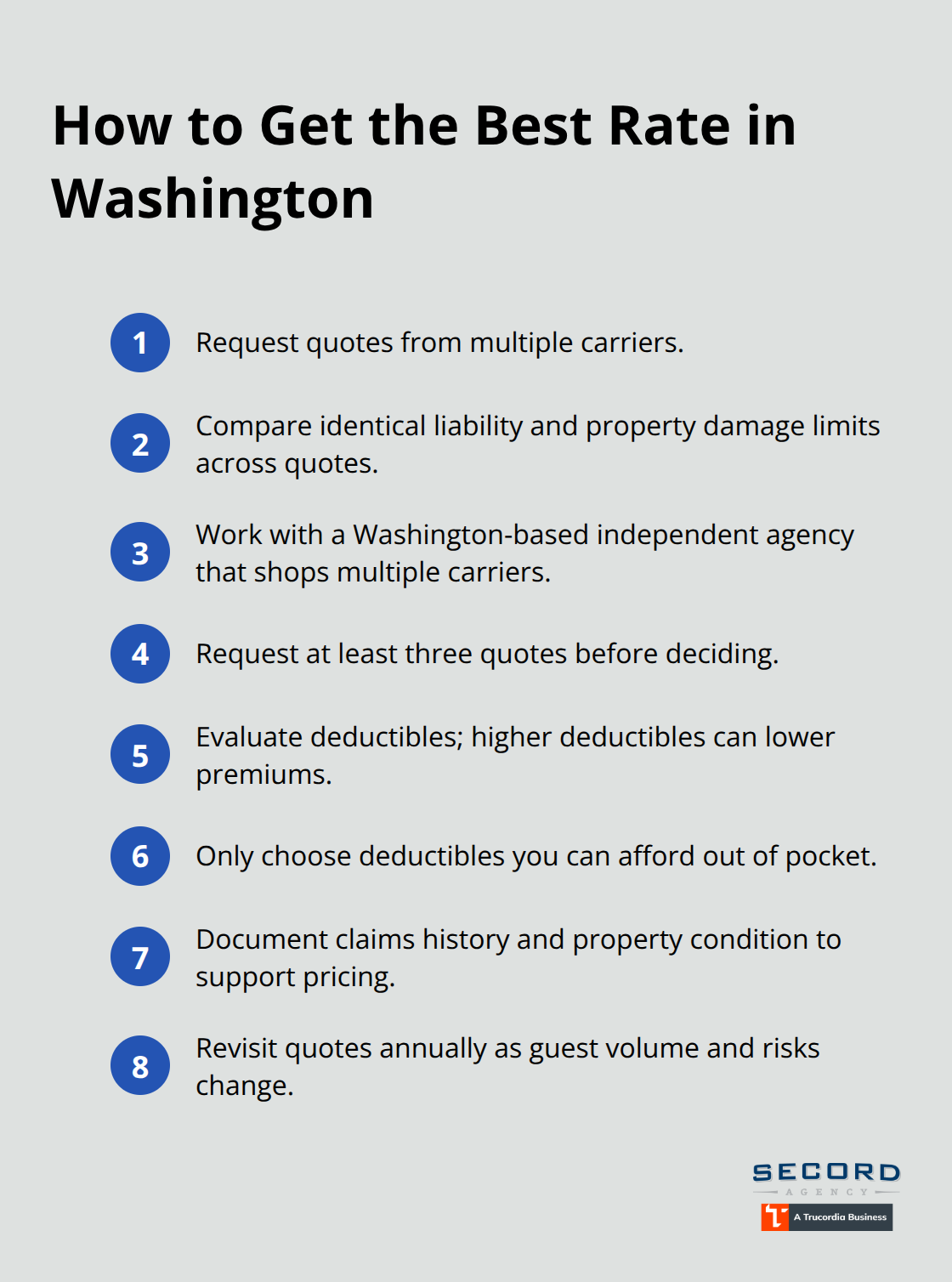
Only increase deductibles you can actually afford to pay out of pocket when claims occur.
Work with a Local Agent Familiar with Washington Conditions
Schedule a consultation with a local agent before finalizing your decision, since someone familiar with Washington’s specific climate risks, local rental market conditions, and regulatory environment can identify coverage gaps you might otherwise miss. An independent agency that shops multiple insurance companies (like Secord Agency, a Trucordia business based in Seattle’s Wallingford neighborhood) can handle quotes and policy reviews without the runaround, pairing competitive rates with personalized advice tailored to your property’s actual exposure.
Final Thoughts
Your Washington vacation rental deserves protection that matches your business reality. Standard homeowners insurance leaves you exposed to guest injuries, property damage, and lost income that can devastate your finances. The specialized short-term rental policies we’ve covered address these gaps directly, offering liability coverage, property damage protection, and business income replacement that homeowners policies simply won’t provide.
Calculate your actual monthly rental income and multiply by three months to determine your business income coverage needs. Gather quotes from multiple carriers to compare rates and coverage limits, since pricing varies significantly across insurers. Schedule a consultation with a local agent who understands Washington’s specific climate risks and rental market conditions. WA vacation rental protection isn’t a one-time decision-your policy needs change as your property ages, guest demographics shift, and your rental income grows.
We at Secord Agency, a Trucordia business based in Seattle’s Wallingford neighborhood, specialize in helping Washington vacation rental owners find the right coverage without the runaround. As an independent agency, we shop multiple carriers to deliver competitive rates paired with personalized advice tailored to your property’s actual risks. Visit Secord Agency to discuss your vacation rental protection needs with someone who understands Washington’s rental market.