
High Value Umbrella Protection: Elevating Your Personal Risk Coverage
Your standard home and auto insurance policies have limits. When a lawsuit or judgment exceeds those limits, your personal assets face real risk.
High value umbrella protection fills that gap. At Secord Agency – A Trucordia Business, we help clients understand how umbrella coverage works and why it matters for their financial security.
When Liability Exposure Really Matters
Certain life events create genuine liability risk that standard homeowners and auto policies simply cannot handle. A teenage driver in your household increases accident exposure significantly. According to the Insurance Information Institute, pools on your property attract liability claims that can exceed your standard home policy limits. Landlords face tenant-related lawsuits that typical coverage doesn’t anticipate. High-net-worth individuals with substantial assets become targets for larger judgments. These aren’t hypothetical concerns-they’re situations where umbrella protection becomes a practical necessity rather than an optional add-on.
The Gap Your Current Policies Leave Open
Your current auto policy likely caps liability at $100,000 to $300,000, and homeowners policies typically max out around $100,000 to $300,000 as well. A single serious accident or injury incident can generate legal costs and damages that dwarf these limits. According to the Insurance Information Institute, umbrella liability insurance starts at $1 million in coverage and fills exactly this gap. The average cost for a $1 million personal umbrella policy is $383 per year for an individual with one home, two cars, and two drivers. This affordability makes it difficult to justify going without.
How the Coverage Actually Works
Your umbrella policy activates only after your underlying auto and homeowners policies are exhausted. If you’re sued and damages total $450,000, your auto policy pays its $300,000 limit, and your umbrella policy covers the remaining $150,000. The Insurance Information Institute notes that umbrella coverage also pays legal defense costs on top of the settlement amount, within your umbrella limit. This distinction matters because legal fees alone can reach six figures in serious liability cases.
Insurers typically require minimum underlying limits-usually $250,000 to $300,000 in liability on auto and homeowners policies-before they’ll issue umbrella coverage. This requirement actually protects you by ensuring your primary policies have adequate limits. Coverage extends to bodily injury, property damage, and certain personal injury claims like libel or slander. According to the National Association of Insurance Commissioners, umbrella policies can also cover liability incidents involving your family members away from home, though specifics vary by insurer and policy language.
When Standard Policies Fall Short
A judgment from a serious car accident, a guest injured at your home, or a dog bite claim can easily exceed what your standard policies cover. The gap between a $300,000 auto policy limit and a $750,000 judgment leaves your personal assets exposed. Umbrella protection eliminates this vulnerability by providing the additional $450,000 in coverage. Without it, creditors can pursue wage garnishment, bank accounts, and other assets to satisfy the judgment.
Forbes Advisor research shows that even households with modest assets benefit from umbrella protection because everyday incidents create outsized liability exposure. A wrongful injury claim doesn’t require wealth to bankrupt someone-it requires inadequate insurance. The question isn’t whether you can afford umbrella coverage; it’s whether you can afford the consequences of not having it. Understanding your actual cost options and available limits helps you move forward with confidence in your protection strategy.
How Umbrella Coverage Layers on Top of Your Existing Policies
Your auto and homeowners policies pay first up to their stated limits, and your umbrella policy activates only after those limits are exhausted. This is not optional or negotiable-it’s how the product works. According to the National Association of Insurance Commissioners, insurers require you to maintain minimum underlying liability limits before they’ll issue umbrella coverage. Insurers want to know your primary policies will handle the initial claim. If you carry a $300,000 auto limit and face a $500,000 judgment, your auto policy pays $300,000 and your umbrella covers the remaining $200,000. If you only carried a $100,000 auto limit, most insurers would either deny the umbrella claim or require you to increase your underlying limits first. This stacking approach means you never pay umbrella premiums to cover gaps your primary policies should handle.
What Your Umbrella Actually Covers
Your umbrella policy covers bodily injury, property damage, and personal injury claims like libel or slander, according to the Insurance Information Institute. The coverage extends to liability incidents involving family members away from home, though exact language varies by insurer. One critical advantage: umbrella policies pay legal defense costs in addition to settlements and judgments, within your umbrella limit.
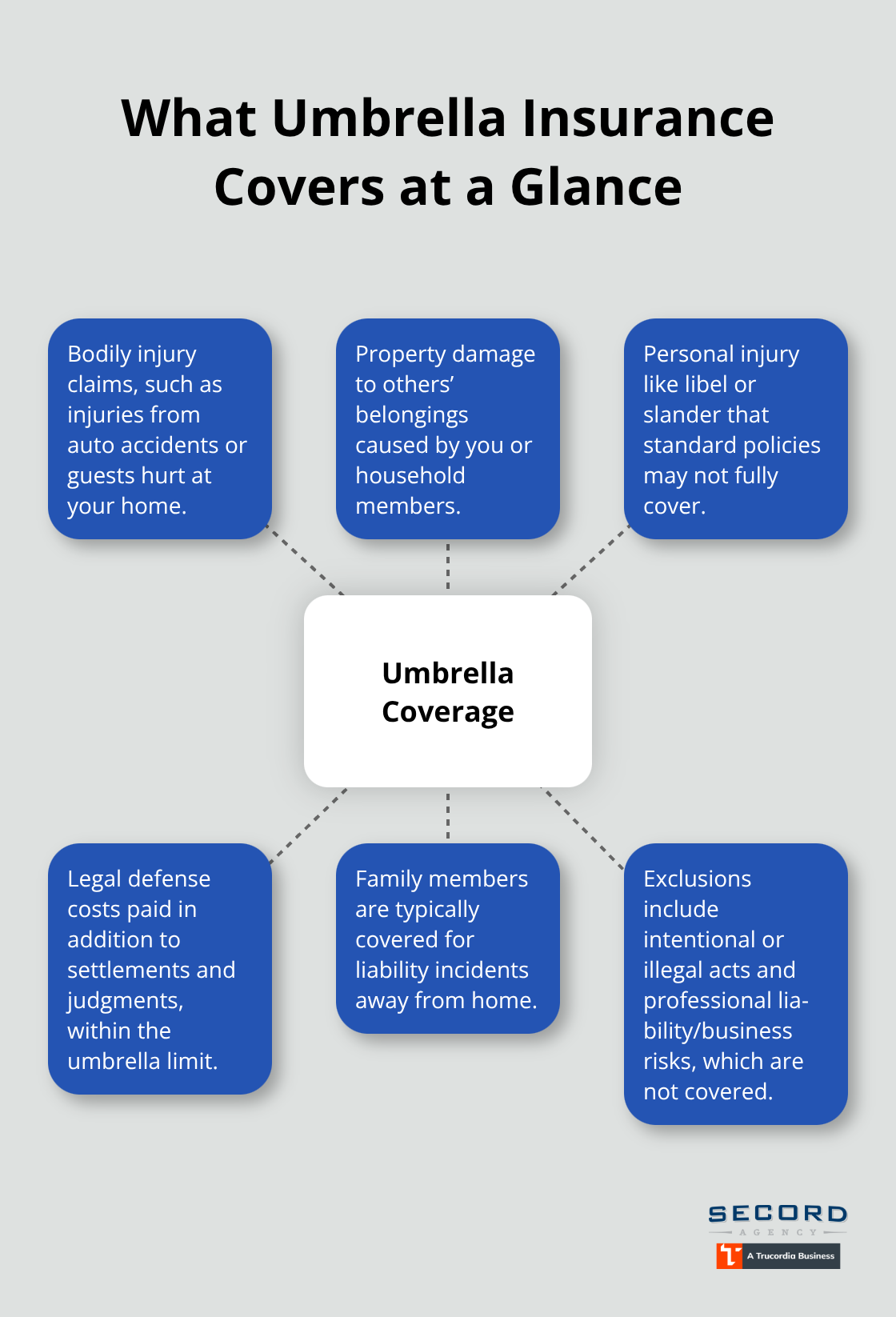
In serious liability cases, legal fees alone can reach $100,000 to $300,000 before trial even begins. Without umbrella protection, those costs consume your primary policy limits, reducing what remains available for actual damages. A guest injured at your home, a dog bite claim, or a wrongful injury claim from a car accident all trigger coverage. The Insurance Information Institute notes that umbrella policies do not cover intentional acts or illegal activities, and they do not replace professional liability insurance if you operate a business. Understanding these boundaries prevents the costly mistake of assuming your umbrella covers something it doesn’t.
Matching Coverage Limits to Your Net Worth
Most umbrella policies start at $1 million, and you can increase limits to $2 million, $5 million, or higher depending on your asset base and risk profile. Selecting an umbrella limit that aligns with your net worth ensures adequate protection without overpaying for unnecessary coverage. If you own a home worth $400,000, carry investment accounts totaling $300,000, and have retirement savings of $200,000, your net worth is approximately $900,000. A $1 million umbrella limit provides coverage slightly above that threshold. If your net worth reaches $2 million, stepping up to a $2 million umbrella limit makes sense. Research shows the typical annual cost for $1 million of umbrella protection ranges from $150 to $300 depending on risk factors. Increasing to $2 million might cost an additional $100 to $150 annually. This pricing structure means higher limits become increasingly affordable as your assets grow. Many households underestimate their exposure by overlooking future earnings potential and inheritance.
Why Minimum Underlying Limits Matter
Insurers enforce minimum underlying limits because they protect you as much as they protect them. A floor on your auto and homeowners policies ensures your primary coverage handles routine claims without forcing your umbrella to activate prematurely. This requirement also prevents you from paying umbrella premiums for protection that should come from your base policies. When you shop for umbrella coverage, your insurer will verify your underlying limits and may refuse to bind coverage until you meet their minimums. This verification process, while sometimes frustrating, actually works in your favor by preventing gaps in your protection strategy. The cost difference between maintaining higher limits and dropping to $100,000 limits is minimal, but the protection difference is substantial. Your next step involves reviewing your current auto and homeowners declarations to confirm you meet these minimum thresholds before you approach an insurer about umbrella protection.
What Does Umbrella Insurance Actually Cost
Premium Rates for Standard Coverage
The typical annual cost for $1 million of umbrella protection ranges from $300 to $600, making it one of the most affordable risk-management tools available. Some insurers offer $1 million policies for as low as $14 to $30 per month, which breaks down to roughly $168 to $360 annually. This pricing assumes you maintain the minimum underlying liability limits on your auto and homeowners policies that insurers require. If you increase your umbrella limit to $2 million, you pay an additional $100 to $150 per year. Moving to $5 million in coverage typically adds another $200 to $300 annually beyond the $2 million baseline.
How Limits Affect Your Annual Premium
The cost structure reveals an important truth: higher limits become increasingly cost-effective as your asset base grows. A household with $500,000 in net worth pays essentially the same $300 to $600 annually for $1 million as a household with $2 million in assets, yet receives identical per-dollar protection value. This pricing advantage means waiting to purchase umbrella coverage until your wealth increases costs you nothing, but the protection gap you carry in the interim exposes everything you’ve built.
Factors That Influence Your Rate
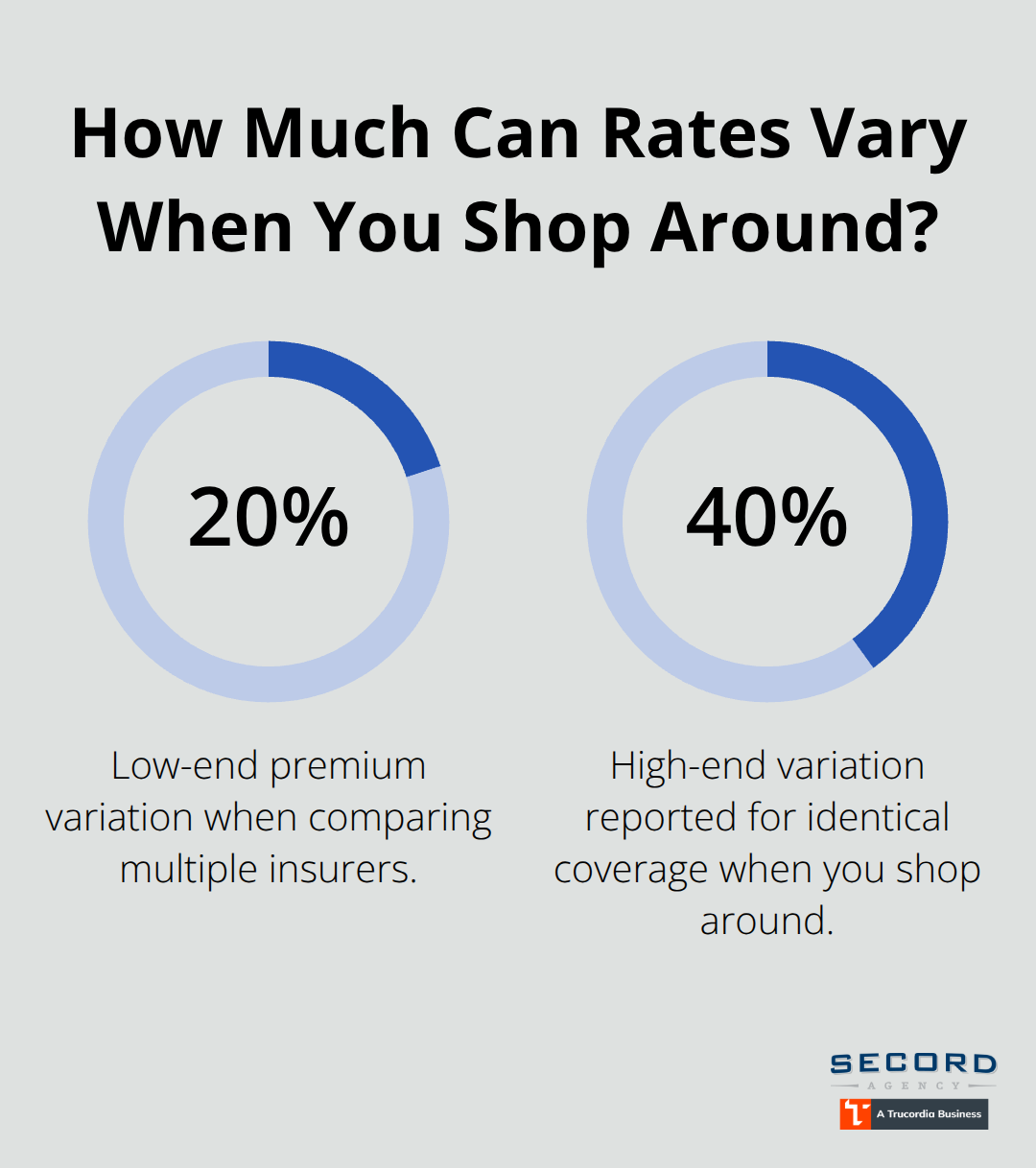
Your age, driving record, claims history, and the number of drivers in your household all affect your premium. Insurers also consider whether you own a pool, have a trampoline, or rent out property, since these increase liability exposure. Most carriers offer bundling discounts when you purchase umbrella coverage alongside your auto and homeowners policies. Forbes Advisor notes that shopping multiple insurers typically yields rate variations of 20 to 40 percent for identical coverage, making quotes from at least three carriers essential before committing.
Matching Coverage to Your Assets
Your net worth should guide your coverage selection more than affordability concerns, since the protection gap creates the actual financial risk. A household with $1.5 million in assets carrying only $1 million of umbrella coverage leaves $500,000 exposed to judgment claims. Stepping up to $2 million costs roughly $100 to $150 more annually but eliminates that exposure entirely. The decision should reflect your financial reality and risk tolerance, not simply chase the lowest premium available.
Final Thoughts
Umbrella insurance fills a protection gap that standard policies leave exposed. Without it, a single serious liability claim threatens everything you’ve built. The financial exposure is real, the cost is minimal, and the peace of mind is substantial.
High value umbrella protection makes sense for homeowners with pools, households with teenage drivers, landlords, and anyone with meaningful assets to protect. Even modest net worth benefits from umbrella coverage because everyday incidents create outsized liability exposure. A guest injured at your home, a dog bite claim, or a serious car accident generates judgments that dwarf your standard policy limits. The Insurance Information Institute confirms that umbrella policies starting at $1 million cost only $150 to $300 annually, making the protection accessible regardless of your income level.
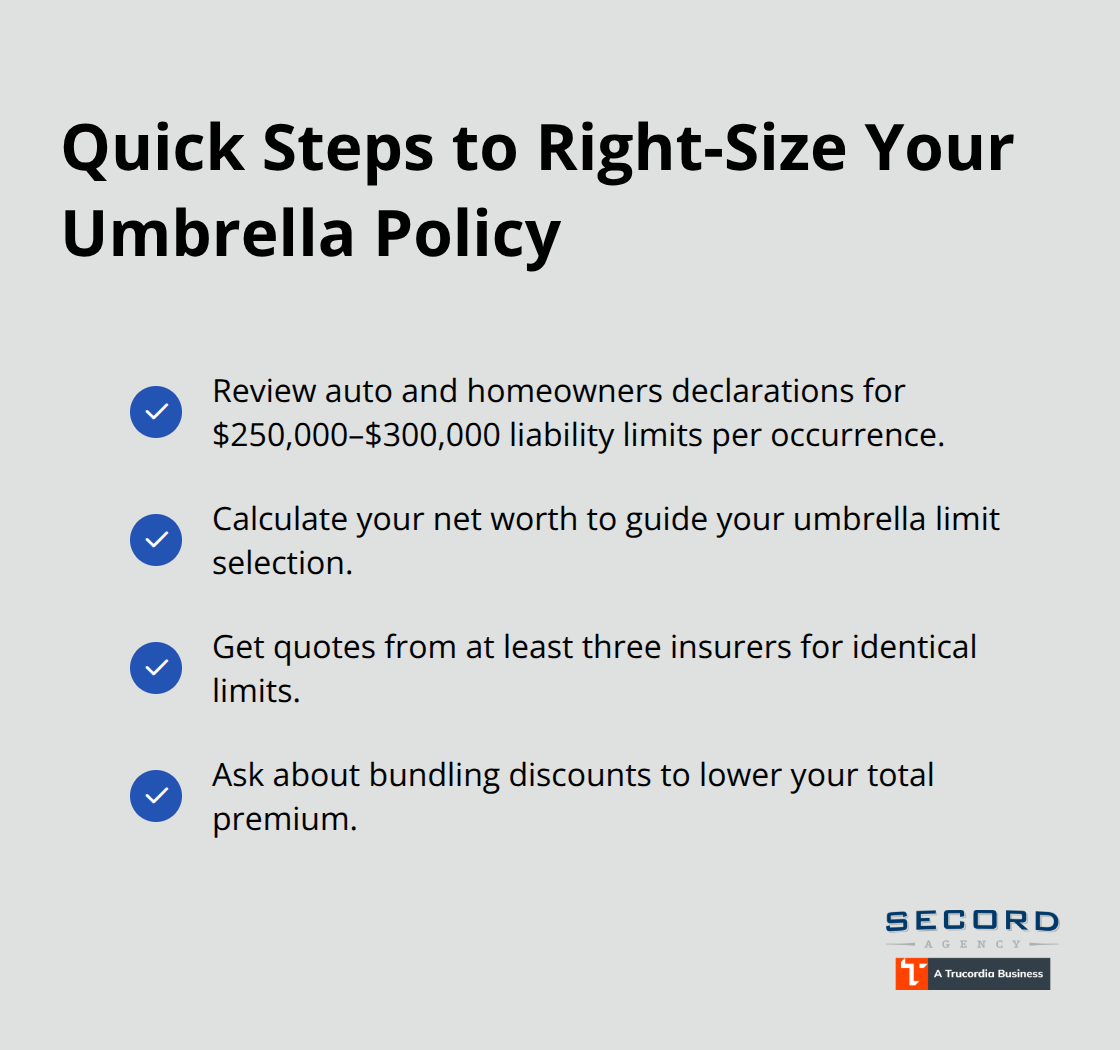
Start by reviewing your current auto and homeowners declarations to verify your liability limits meet the minimum thresholds insurers require (typically $250,000 to $300,000 per occurrence). Calculate your net worth by adding your home equity, investment accounts, retirement savings, and other assets-this number should guide your umbrella limit selection more than cost considerations. Contact at least three insurers for quotes on identical coverage limits, since rate variations of 20 to 40 percent are common, and bundling discounts with your existing policies can reduce your overall cost significantly.
Visit Secord Agency – A Trucordia Business to discuss your coverage needs and get started protecting what matters most.