Renters insurance Washington state: A Practical Guide to Coverage
Renters insurance in Washington state is one of the most affordable ways to protect your belongings and finances. Most renters skip it, thinking they don’t need coverage-but one fire, theft, or accident can cost thousands.
We at Secord Agency – A Trucordia Business created this guide to show you exactly what coverage you need, how to compare policies, and what steps to take next.
What Renters Insurance Covers in Washington
Personal Property Protection
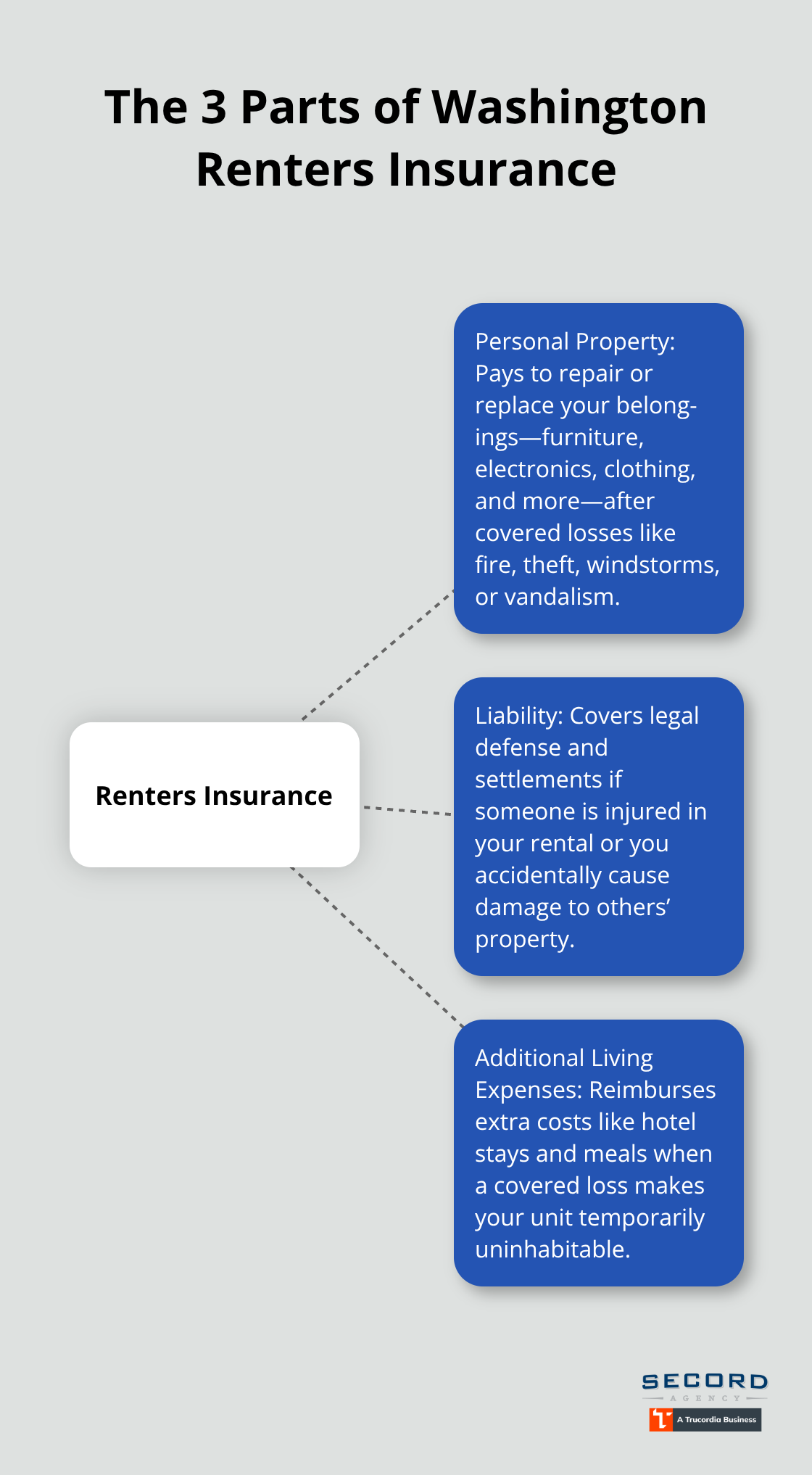
Renters insurance in Washington covers three distinct areas, and understanding each one matters because they protect you in completely different situations. Personal property protection covers your belongings inside the rental unit, including furniture, electronics, clothing, and kitchen appliances. This coverage pays to repair or replace these items if fire, theft, windstorms, or vandalism damages them.
Washington renters typically need between $20,000 and $40,000 in personal property coverage depending on what they own. Photograph every room in your apartment and create a detailed inventory with purchase prices to avoid underestimating your belongings’ value. Most renters find they need more coverage than expected once they list items like laptops, televisions, bikes, and winter clothing.
Liability Coverage
Liability coverage protects you financially if someone gets injured in your rental unit and sues you for medical bills or damages. If a guest slips on your floor and breaks their arm, or your negligence causes a fire that spreads to neighboring units, liability coverage handles legal defense costs and settlement payments. Washington state doesn’t require liability coverage, but landlords often do, and most policies include at least $100,000 in liability protection as standard.
Additional Living Expenses
The third component, additional living expenses, covers hotel stays, meals, and other costs if your unit becomes temporarily uninhabitable due to fire or another covered event. This coverage typically reimburses you for the difference between your normal living expenses and emergency costs, up to your policy limit. In Washington’s rental market, where finding temporary housing can cost $1,500 to $2,500 monthly, this protection prevents financial disaster when disaster strikes.
Most renters underestimate how quickly these expenses add up, making this coverage far more valuable than people assume when they first purchase a policy. Understanding what each component covers helps you select appropriate limits that match your actual situation and financial needs.
Why Renters Insurance Matters in Washington
The Real Cost of Going Without Coverage
Renters insurance costs between $10 and $20 monthly in Washington, which works out to $120 to $240 annually for coverage that protects tens of thousands of dollars worth of belongings. That’s cheaper than a single dinner out per month, yet most renters skip it entirely. The math is stark: a laptop costs $1,000, a TV runs $800, and a single apartment fire can destroy $30,000 in possessions within minutes. Renters without coverage file claims they cannot recover from at rates significantly higher than insured renters, and many end up in debt or forced to replace everything from savings they don’t have. Washington renters who carry the policy sleep better knowing one accident won’t derail their finances for years.
Lease Agreements Often Require It
Your lease agreement likely demands renters insurance already, even if you haven’t noticed it. Landlords across Washington increasingly require it as a condition of tenancy, viewing it as protection for themselves and incentive for tenants to prevent losses. Some landlords won’t accept your deposit or process your lease until you prove coverage. This requirement protects both parties and makes the policy non-negotiable in most rental situations.
Pacific Northwest Weather Creates Specific Risks
Washington’s climate presents hazards that renters often underestimate. Heavy rains cause water damage, windstorms topple trees onto buildings, and winter conditions lead to frozen pipes and flooding. Renters without coverage face thousands in replacement costs when water damages electronics, furniture, and clothing. Fires from cooking accidents, electrical failures, or nearby units also happen unexpectedly, and renters insurance covers your belongings even when the fire starts outside your control.
Understanding these three factors-affordability, lease requirements, and regional weather risks-shows why renters insurance isn’t optional in Washington. The next step involves selecting the right coverage limits and policy features that match your specific situation.
How to Choose the Right Renters Insurance Policy
Assess Your Personal Property Value
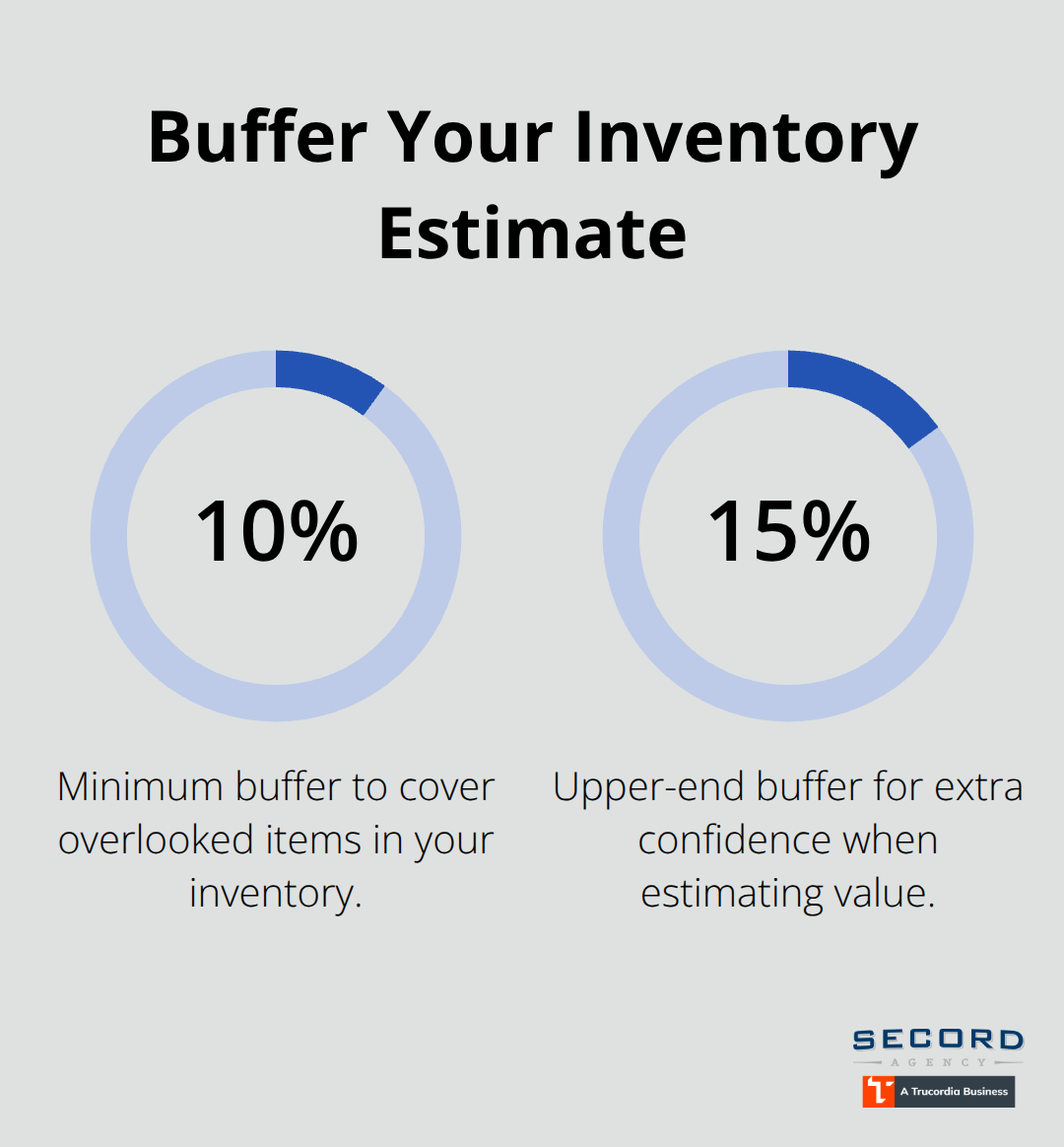
Start with an honest inventory of what you actually own, not what you think you own. Walk through your apartment with your phone and photograph every room, then list items with approximate purchase prices. Most Washington renters discover they own far more than they initially estimated once they account for electronics, furniture, kitchen equipment, clothing, and seasonal items. After you total everything, add 10 to 15 percent as a buffer for items you forgot. This number becomes your personal property coverage target, and it’s the single most important figure in your entire policy.
Compare Coverage Limits and Deductibles
Deductibles work differently than most renters expect, and selecting the wrong one wastes money every single year. A $500 deductible means you pay $500 out of pocket when you file a claim, while the insurer covers the rest. A $1,000 deductible costs less monthly but costs more when disaster strikes. Washington renters should select deductibles based on what they can actually afford to pay if a loss happens tomorrow, not based on the cheapest monthly premium. If you have $2,000 in savings, a $1,000 deductible makes sense because you can cover it. If you have $500 in savings, stick with a $250 or $500 deductible even if it costs slightly more monthly, because you’ll actually be able to file claims without financial panic. The monthly savings from a higher deductible rarely justify the stress of not being able to afford your deductible when you need coverage most.
Evaluate Additional Endorsements and Riders
Endorsements and riders add specific protections for items or situations your base policy doesn’t fully cover. Valuable items like jewelry, cameras, or musical instruments often have sub-limits in standard policies, meaning the insurer caps what they’ll pay for those categories even if your total coverage is higher. If you own a laptop worth $2,000 but your policy has a $500 sub-limit for electronics, you lose $1,500 of coverage. A scheduled personal property endorsement lets you list specific high-value items and insure them for their full replacement cost. Water damage from floods and earthquakes requires separate endorsements in Washington because standard renters policies exclude both, yet Pacific Northwest weather makes water damage one of the most common losses renters face. We at Secord Agency – A Trucordia Business help Washington renters evaluate these options and find the right combination of endorsements for their specific situation.
Final Thoughts
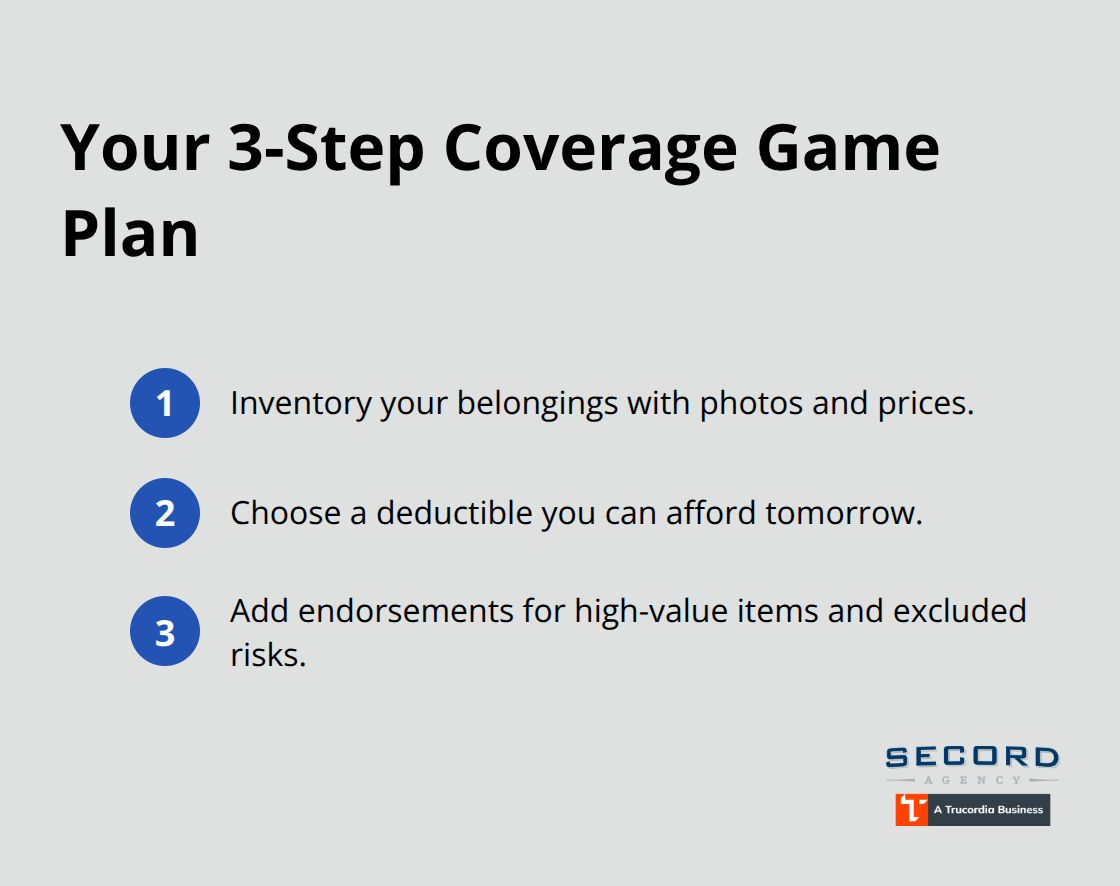
Renters insurance in Washington state protects your finances when accidents happen, and the cost is so low that skipping it makes no financial sense. You now understand what coverage actually protects you, why your landlord likely requires it, and how to select limits that match your real belongings and budget. The three-step process of inventorying your possessions, comparing deductibles, and adding endorsements for high-value items takes a few hours but prevents thousands in potential losses.
Getting covered starts with a simple quote from an insurance agent who understands Washington’s specific risks. Secord Agency helps you shop multiple carriers to find competitive rates paired with personalized advice, so you’re not guessing about coverage limits or missing important endorsements. Our team handles everything from quotes to claims, making the process straightforward instead of frustrating.
After you purchase a policy, review it annually because your belongings and financial situation change. A policy that covered you perfectly two years ago might leave gaps today if you’ve bought new electronics or expensive furniture (like a new couch or bedroom set). Life changes like moving to a different neighborhood, getting roommates, or acquiring valuable items all affect what coverage you actually need, so contact your agent each year to confirm your protection matches your current situation.