Boat marine insurance WA: Safeguarding Watercraft Investments
Boat owners in Washington face unique risks on the water, from sudden storms to liability claims that can drain savings fast. Boat marine insurance WA protects your watercraft and finances when accidents happen, yet many policies leave owners exposed to costly gaps.
At Secord Agency – A Trucordia Business, we’ve seen firsthand how the right coverage makes the difference between a manageable claim and financial disaster. This guide walks you through what you actually need to know about marine insurance in Washington.
What Coverage Types Actually Protect Your Boat
Liability Coverage: Your First Line of Defense
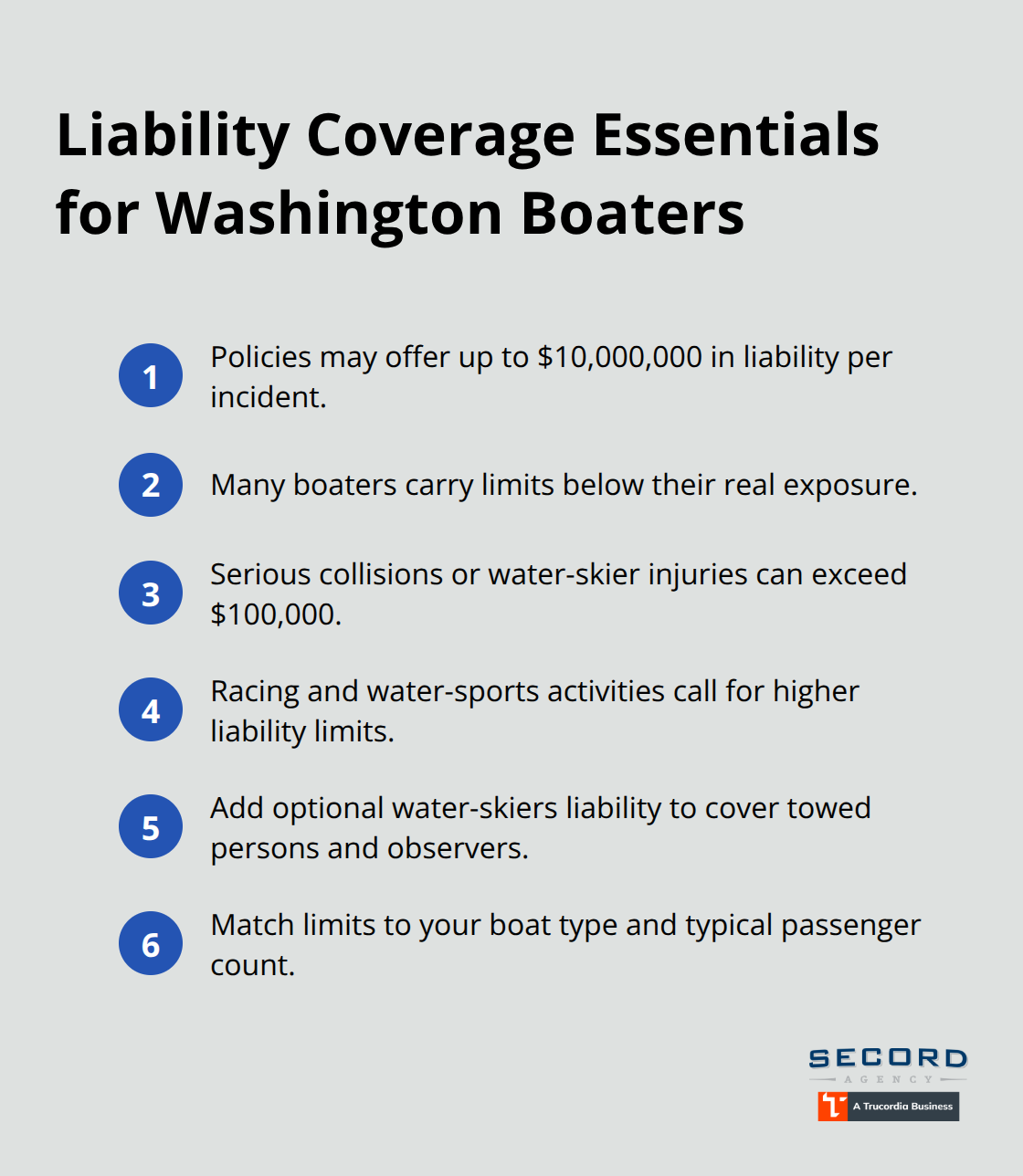
Liability coverage sits at the foundation of any marine policy, and Washington boaters often underestimate their exposure. Standard marine policies typically offer legal liability limits up to $10,000,000 per incident, but this headline number masks a critical problem: most Washington boat owners carry far less than they need. If your boat causes injury to another person or damages their property, you personally face the financial fallout. A serious collision involving multiple boats or a water-skier injury can easily exceed $100,000 in medical costs and property damage.
Your actual risk depends on your boat type, the number of passengers you typically carry, and whether you tow water-skiers. Racing sailboats and water-sports activities warrant higher liability limits because the injury potential jumps dramatically. Many Washington boat owners skip optional water-skiers coverage, which extends liability protection specifically for towed water-skiers and observers-a decision that leaves them exposed if someone gets hurt during that activity.
Hull Coverage: Protecting Your Boat’s Physical Structure
Hull coverage protects the physical structure and motor of your boat, and this is where most claims actually happen. Accidental loss or damage, weather events, fire, and theft all fall under hull protection, with coverage applying whether your boat sits on land, on a trailer, or in the water. The real issue surfaces with coverage limits on high-value vessels: many policies cap eligible boat values at $150,000, which excludes larger yachts and custom builds.
If your boat gets written off within two years and you’re the first registered owner, some policies trigger new boat replacement coverage rather than depreciation-based payouts-a significant advantage that saves thousands. Submerged motors present a specific risk in Washington’s waters; policies typically cover flushing, cleaning, drying and oiling costs if you act immediately after submersion. Towing coverage usually caps at $1,000 to move your boat to the nearest approved repairer, which may fall short if you need long-distance recovery.
Personal Belongings and Equipment Protection
Personal belongings aboard your boat receive limited protection, typically capped at $1,500 total, and money or financial cards are excluded entirely. This gap matters more than many owners realize, especially if you store expensive fishing equipment, electronics, or safety gear on board. You should inventory what you actually keep on your boat and compare that value against your policy limits.
Uninsured and Underinsured Boater Coverage
Uninsured and underinsured boater coverage functions like a safety net when another boat operator causes damage but lacks adequate insurance to cover your losses-a scenario that happens more often than most owners realize in Washington waters. This protection activates when the at-fault operator either carries no insurance or carries limits too low to cover your actual damages. Without this layer, you absorb the financial impact yourself, which can mean thousands in out-of-pocket costs for repairs or medical expenses.
The gaps in standard marine policies often emerge only after an incident occurs, which is why comparing your current coverage against your actual boating activities and vessel value matters now. Whether you operate a small runabout or a larger cruiser, the right combination of liability, hull, and supplemental coverages protects both your investment and your finances. Understanding what your policy actually covers-and what it doesn’t-positions you to make informed decisions before you need to file a claim.
Why Washington Boat Owners Must Have Marine Insurance
Legal Liability Exposes Your Personal Assets
Washington’s boating environment demands insurance that goes far beyond theoretical protection. The state’s combination of coastal waters, inland lakes, and unpredictable weather creates genuine financial exposure that catches too many boat owners unprepared. Legal liability in Washington extends beyond simple accidents-if another person gets injured or their property gets damaged because of your boat, you face potential lawsuits that can reach hundreds of thousands of dollars. A single serious injury to a water-skier or collision involving multiple vessels can generate medical bills, lost wages, and pain-and-suffering claims that exceed $250,000 without much difficulty.
Washington doesn’t mandate boat insurance across all vessels, but operating without it exposes your personal assets to seizure if you’re found liable in a major incident. Your home, savings, and future wages become vulnerable when a court judgment exceeds your boat’s value. The state’s maritime rescue operations also create unexpected costs; marine search and rescue services charge significant fees when government authorities conduct rescue operations, with costs sometimes reaching $5,000 or more depending on the distance and complexity of the operation.
Natural Disasters and Weather Threats Strike Without Warning
Natural disasters and severe weather strike Washington waterways with regularity, and standard homeowners policies specifically exclude boats moored or stored at residential properties. Storm surge, heavy wind, flooding, and hail damage your hull, motor, and equipment, yet these losses fall completely outside home coverage. Washington’s Puget Sound experiences sudden weather changes that can capsize or swamp boats within minutes, and the cold water temperatures mean hypothermia becomes a medical emergency within hours.
Emergency Medical and Rescue Costs Escalate Rapidly
Emergency medical treatment on the water costs substantially more than land-based care, with Coast Guard helicopter rescue operations running $10,000 to $20,000 per incident. Marine insurance covers accidental injury to operators and passengers aboard your boat, including death benefits in cases of fatal accidents, which protects your family from the financial devastation of losing a wage earner. Towing services alone cost hundreds of dollars when your engine fails in open water, but marine policies typically cover towing costs to get your boat to a repair facility or safe location.
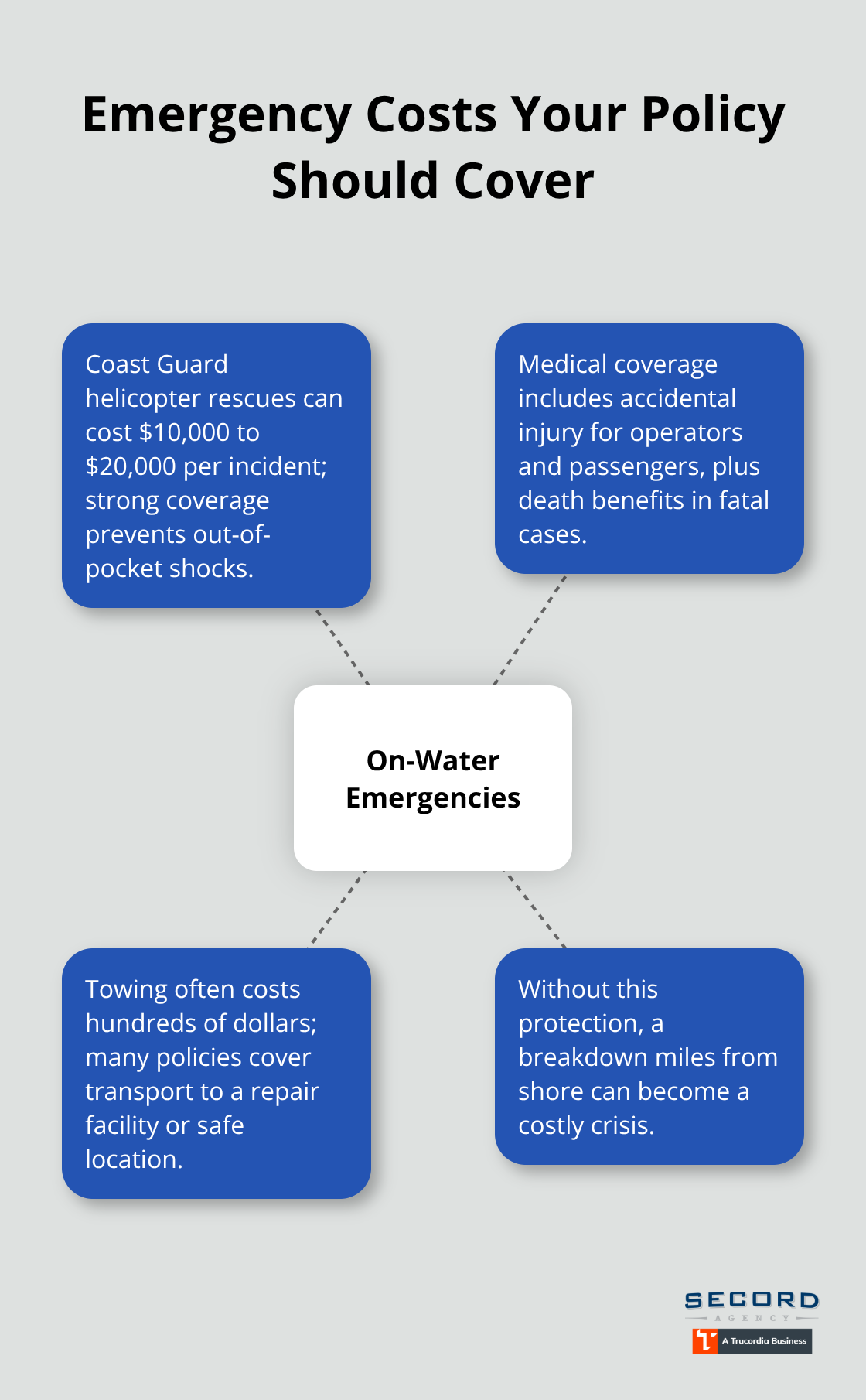
Without this protection, a mechanical breakdown miles from shore becomes a financial crisis on top of the inconvenience and danger. The combination of liability exposure, weather threats, and emergency response costs means that Washington boat owners who operate without marine insurance face catastrophic financial risk. Your next step involves evaluating your current coverage against these real-world scenarios and identifying the specific gaps that leave you vulnerable on Washington waters.
Common Gaps in Marine Insurance Policies
Value Caps Exclude Larger Vessels
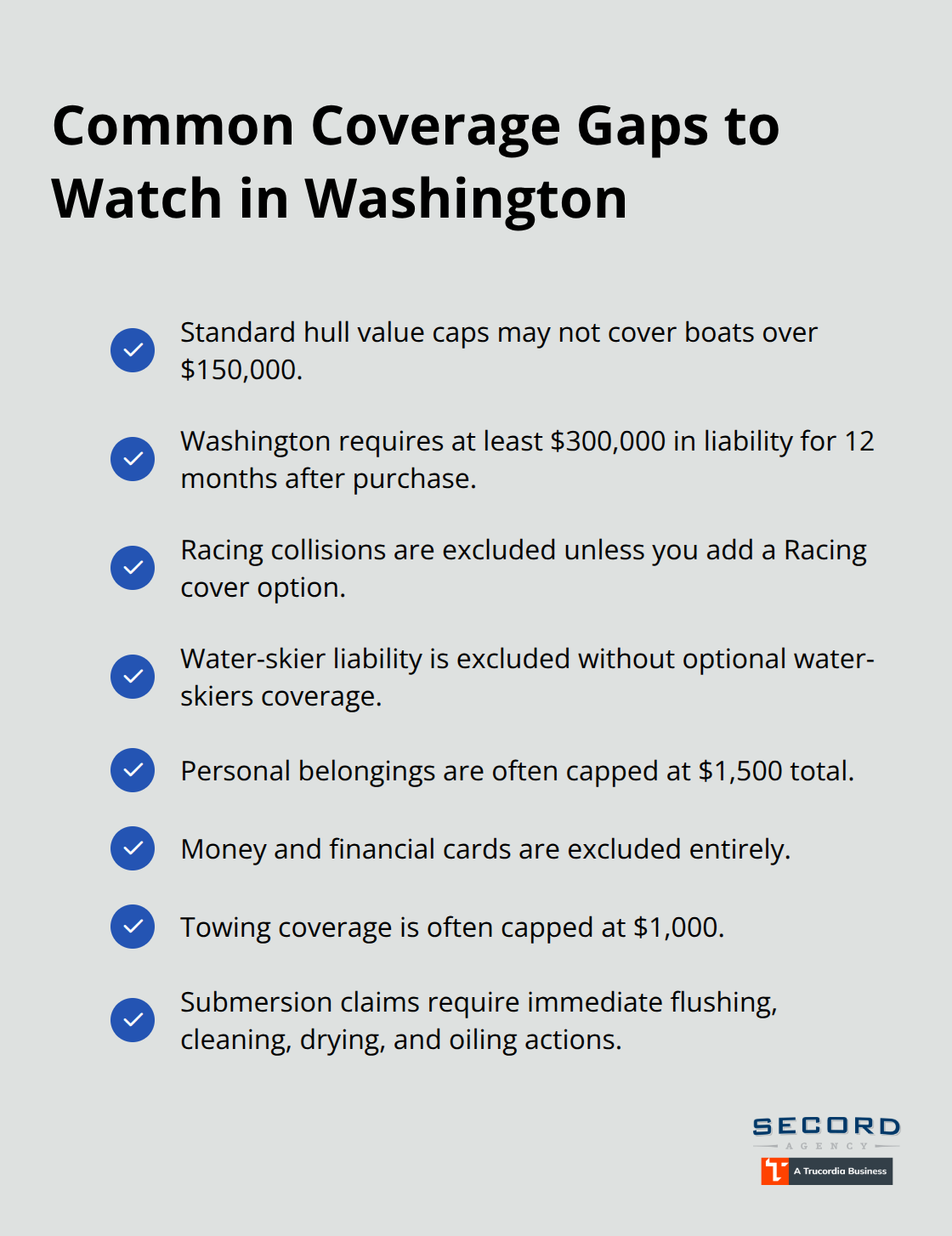
Most Washington boat owners discover coverage gaps only after an incident occurs, which is far too late. Standard marine policies come with hard limits that fail to match real-world vessel values and boating activities, leaving owners to absorb thousands in unexpected costs. Washington requires buyers to carry at least $300,000 in marine insurance covering general, legal, and pollution liability for 12 months after taking ownership, yet many policies fall short of this requirement for larger vessels. If your boat exceeds this threshold, you remain essentially uninsured on the excess value, meaning a total loss becomes a financial catastrophe.
Racing and Water-Sports Activities Face Exclusions
Racing sailboats face specific exclusions under standard hull coverage unless you add a Racing cover option explicitly, which means collision damage during a race falls completely outside your protection. Water-sports activities present another critical blind spot: standard policies exclude liability for water-skier injuries unless you purchase optional water-skiers coverage, yet many boat owners skip this add-on thinking their base liability covers everything. A single water-skiing accident generating $200,000 in medical costs becomes your personal responsibility if you lack this specific protection.
Personal Belongings and Equipment Limits Fall Short
Personal belongings aboard your boat receive only $1,500 in coverage under most policies, which fails to protect expensive fishing electronics, dive equipment, or safety gear that boaters regularly keep on board. Money and financial cards receive zero protection, making cash storage on your boat a complete loss if theft occurs. Equipment like outboard motors, anchors, and navigation systems face the same $1,500 ceiling, meaning a single stolen motor can exceed your entire personal property limit.
Towing and Submersion Claims Require Immediate Action
Towing coverage caps at $1,000, which barely covers recovery from the middle of Puget Sound to a repair facility on the mainland. Submerged motor claims require immediate action to qualify for coverage (flushing, cleaning, drying and oiling costs apply only when you act fast), and many boat owners fail to understand this time-sensitive requirement until it’s too late. A mechanical breakdown miles from shore becomes a financial crisis on top of the inconvenience and danger when towing costs exceed your policy limit.
Finding Coverage That Matches Your Actual Exposure
Secord Agency works with multiple carriers to identify policies that match your specific vessel type and boating activities, helping you align coverage limits with your actual exposure rather than accepting gaps that cost far more than the premium difference.
Final Thoughts
Marine insurance protects your boat, your finances, and your family from the real risks that Washington waters present. The gaps we’ve covered-inadequate liability limits, exclusions for water sports, and personal belongings caps that fall short-represent thousands of dollars in potential out-of-pocket costs when incidents occur. Your boat marine insurance WA policy should match your actual vessel value and boating activities, not force you into coverage that leaves you exposed.
Start by pulling your current policy and comparing it against how you actually use your boat. If you tow water-skiers, you need that optional coverage explicitly added. If your boat exceeds $150,000 in value, standard policies won’t fully protect your investment. If you keep expensive electronics or fishing gear aboard, the $1,500 personal belongings limit probably falls short.
We at Secord Agency – A Trucordia Business work with multiple carriers to find policies that actually match your exposure rather than leaving you with gaps that cost far more than premium savings. Contact us to review your current policy or get a quote that reflects your actual needs on Washington waters.